Introduction
A major hurricane makes landfall. Within hours, 119 agencies mobilize—fire, EMS, law enforcement, utilities, National Guard, and federal responders. Communications flood in via radio, phone, email, and text.
Who's responding to the nursing home evacuation? Which shelter has capacity? Has anyone dispatched generators to the hospital?
Without a centralized incident response ticketing system, this scenario becomes chaos. The 2014 Oso landslide response illustrates the cost: 119 agencies struggled with jurisdictional confusion and inconsistent Incident Command System implementation, creating significant operational delays.
Incident response ticketing systems are purpose-built for emergency management, crisis response, and security operations—fundamentally different from IT help desk software.
This guide covers what incident response ticketing is, why agencies need it, which features matter most, and how to select and implement the right system.
TLDR:
- Incident response ticketing tracks emergencies from detection through resolution, coordinating multi-agency responses
- Federal grants now require NIMS-compliant systems, making proper software a funding prerequisite
- Effective systems provide real-time collaboration, automated workflows, and comprehensive after-action documentation
- BCG's DisasterLAN is the only FEMA NIMS STEP-evaluated, fully compliant system
- Successful implementation requires stakeholder engagement, standardized templates, and continuous improvement
What Is Incident Response Ticketing?
Incident response ticketing is specialized software designed to track, manage, and coordinate responses to emergencies, security incidents, disasters, and crisis situations from detection through resolution.
Unlike general IT ticketing systems that handle password resets and software issues, these platforms manage life-safety incidents, multi-agency coordination, resource deployment, and situational awareness.
IT Ticketing vs. Incident Response Ticketing
IT service desk tickets and emergency incident tickets serve fundamentally different purposes:
IT Ticketing:
- Single organization, internal focus
- Predictable workflows (password reset, hardware replacement)
- Limited real-time collaboration requirements
- Minimal regulatory compliance burden
Incident Response Ticketing:
- Multi-agency, multi-jurisdictional coordination
- Unpredictable, rapidly evolving scenarios
- Real-time collaboration across organizations
- Integrates with NIMS and ICS protocols; supports field operations and mobile responders
The Incident Response Lifecycle
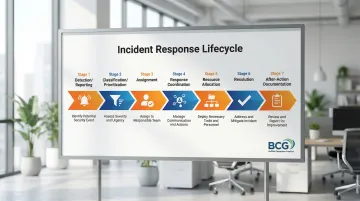
Effective incident response ticketing systems manage the complete operational lifecycle:
- Detection/Reporting — Incidents enter the system via multiple channels (911 dispatch, automated sensors, radio reports, public notifications)
- Classification/Prioritization — Incidents are typed according to NIMS standards and prioritized by severity and resource requirements
- Assignment — Appropriate response teams receive notifications based on incident type, location, and capability requirements
- Response Coordination — Multiple agencies collaborate with shared situational awareness, tracking actions and resource deployment
- Resource Allocation — Personnel, equipment, and supplies are requested, tracked, and managed according to NIMS Resource Management principles
- Resolution — Incident status is updated as objectives are met and operations transition to recovery
- After-Action Documentation — Complete incident records support compliance reporting, continuous improvement, and legal requirements
Where These Systems Operate
These systems handle the full lifecycle outlined above, serving as the operational backbone for:
- Emergency Operations Centers (EOCs) — Coordinating multi-agency response and resource support for field operations
- Security Operations Centers (SOCs) — Managing security incidents, threat responses, and protective measures
- Multi-Agency Coordination — Facilitating information sharing and resource allocation across jurisdictions and mutual aid partners
Why Organizations Need Incident Response Ticketing Systems
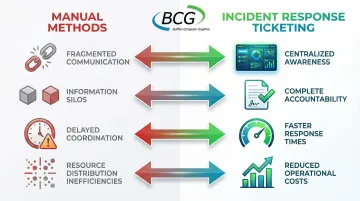
Modern emergency response involves coordinating multiple agencies, tracking dozens of resources, and documenting every decision under pressure. Manual methods create information silos, communication breakdowns, and delayed response times that put lives at risk.
Compliance Drives Adoption
Federal funding now explicitly requires NIMS-compliant incident management systems. The FY 2025 Homeland Security Grant Program requires recipients to ensure adoption and implementation of NIMS, including the Incident Command System.
Assets supported by HSGP funding must be NIMS-typed and deployable per Emergency Management Assistance Compact agreements.
This isn't optional guidance—it's a funding gate. Agencies that cannot demonstrate NIMS compliance risk losing eligibility for federal preparedness grants that fund critical equipment, training, and personnel.
Operational Benefits
Compliance requirements aside, incident response ticketing systems deliver measurable operational improvements:
- Centralized situational awareness — Real-time incident data enables informed decision-making during fast-moving crises. Research shows that fragmented interprofessional communication during COVID-19 hindered response coordination, leading to resource distribution inefficiencies
- Complete accountability — Audit trails document who did what, when, and why, protecting agencies during after-action reviews and legal proceedings
- Faster response times — Automated workflows eliminate manual coordination delays. Emergency managers report frustration with manual methods that cannot match supply with demand quickly
- Reduced operational costs — Optimized resource allocation prevents duplicate efforts, reduces overtime costs, and demonstrates ROI to grant administrators
Documentation That Protects and Improves
Comprehensive incident documentation serves multiple critical functions:
- After-Action Reports — Systematic review of what worked and what didn't drives continuous improvement
- Legal Protection — Complete records defend against liability claims
- Grant Justification — Documented resource utilization supports funding requests and demonstrates accountability
- Compliance Reporting — Standardized data collection meets federal reporting requirements
Key Features of Effective Incident Response Ticketing Systems
Not all incident management software meets the specialized requirements of emergency operations. The most effective systems incorporate specific capabilities aligned with federal standards and operational realities.
NIMS/ICS Compliance Capabilities
Compliance forms the foundation of effective incident management architecture. Systems must support:
- Standardized Incident Typing — Classification schemes aligned with NIMS Resource Typing Library Tool
- Resource tracking aligned with NIMS management principles (identify, order, mobilize, track, demobilize, reimburse)
- Incident Action Plans — Template-guided IAP creation following ICS guidelines
- Support for EMAC and other mutual aid agreements
BCG's DisasterLAN is the first and only system evaluated by FEMA's NIMS STEP program as fully compliant with NIMS and ICS principles and interoperability communications standards.
Multi-Channel Incident Reporting
Emergencies rarely announce themselves through a single communication channel. During large-scale incidents, responders may be operating across radio networks, phone systems, and mobile devices simultaneously. Robust systems must accept incident reports via:
- Radio communications
- Phone calls
- Mobile applications
- Web portals
- Automated sensors and alerts
- Integration with 911/CAD systems
This multi-channel capability ensures no incident goes unreported because someone couldn't access the "right" reporting method during a crisis.
Once incidents are reported through multiple channels, coordinating the response across agencies becomes the next critical challenge.
Real-Time Collaboration Tools
Multi-agency coordination requires shared understanding. Essential collaboration features include:
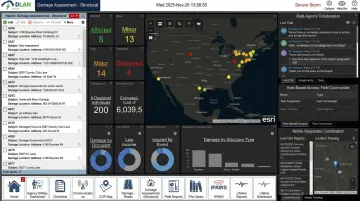
- Shared Situational Awareness Dashboards — Common operating picture accessible to all authorized agencies
- Role-Based Access — Appropriate information sharing across agencies and jurisdictions while maintaining security
- Secure Communications — Encrypted channels for sensitive operational information
- Mobile Access — Field responders can update status, request resources, and view assignments from any location
Automated Workflows and Intelligent Routing
Manual coordination introduces delays that cost lives. Automation capabilities should include:
- Automatic escalation based on incident severity
- Smart assignment to appropriate response teams
- Integration with duty rosters and on-call schedules
- Automated notifications to stakeholders
- Pre-configured response protocols for common incident types
Reporting and Analytics
After-action improvement requires data. Comprehensive systems provide:
- After-action report generation with complete incident timelines
- Resource utilization tracking for cost recovery and planning
- Response time metrics to identify improvement opportunities
- Trend analysis for preparedness planning
- Compliance reporting for federal grant requirements
How to Choose the Right Incident Response Ticketing System
Selecting incident management software requires evaluating multiple dimensions—from regulatory compliance to vendor track record. Apply these criteria systematically.
Verify Compliance and Certification
Regulatory compliance forms the foundation of any enterprise system:
- Confirm FEMA NIMS compliance (preferably NIMS STEP evaluation)
- Check for ISO/IEC 27001 information security certification
- Verify the system meets federal, state, and local regulatory requirements
- For cloud deployments, confirm FedRAMP authorization
Cloud-based systems must navigate rigorous FedRAMP authorization processes to ensure adequate security controls and continuous monitoring.
Assess Scalability and Deployment Options
System capacity matters most during peak demand. Evaluate these scalability factors:
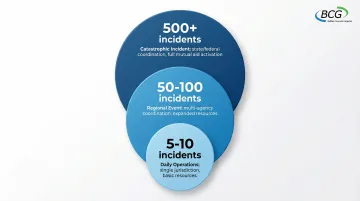
- Can the system handle your incident volume during major events?
- Does it scale from daily operations to catastrophic incidents?
- Cloud vs. on-premises: Which deployment model meets your security requirements?
- Does the system support offline operation when network connectivity fails?
A system that barely meets current needs becomes a bottleneck as your organization expands or mutual aid partnerships increase. Plan for growth, not just present requirements.
Prioritize Vendor Experience and Support
For mission-critical systems, vendor history reveals more than feature lists:
- Research the vendor's history with emergency management agencies
- Verify 24/7 support availability for round-the-clock operations
- Check customer references from similar organizations
- Evaluate vendor stability and longevity
BCG has served emergency management agencies for 43 years, with over 300 deployments across federal, military, and local organizations.
This operational history means the software reflects real-world requirements, not theoretical assumptions about how incidents unfold.
Best Practices for Implementing Incident Response Ticketing
Technology alone doesn't ensure success. Effective implementation requires deliberate planning, stakeholder engagement, and commitment to continuous improvement. Three foundational practices separate successful deployments from failed ones.
Engage All Stakeholders Early
Multi-agency systems require multi-agency buy-in from the start:
- Involve all responding agencies in selection and configuration
- Conduct joint training exercises before the system goes live
- Establish clear protocols for system usage during incidents
- Address concerns and resistance early in the process
Agencies that skip stakeholder engagement face adoption problems when incidents occur—precisely when system failures have the highest consequences.
Start with Standardized Templates
Pre-configured workflows accelerate response:
- Implement incident type templates aligned with NIMS guidelines
- Configure response workflows for common scenarios
- Create Incident Action Plan templates that follow ICS forms
- Establish resource request processes that match mutual aid agreements
Standardization ensures consistency across shifts, jurisdictions, and incident types. Responders shouldn't reinvent processes during emergencies.
Commit to Continuous Improvement
System effectiveness improves through regular after-action reviews:
- Conduct regular reviews to identify system improvements
- Update workflows based on lessons learned
- Schedule periodic training refreshers as staff turnover occurs
- Stay current with software updates and compliance requirement changes
- Stay current with software updates and compliance requirements
- Track metrics to measure response time improvements
The Homeland Security Exercise and Evaluation Program (HSEEP) methodology provides a structured framework for designing exercises that validate system capabilities and identify improvement opportunities.
Frequently Asked Questions
What are the 7 stages of incident response?
The 7-stage model is primarily a cybersecurity framework, while emergency management follows a different lifecycle under NIMS (Prevention, Protection, Mitigation, Response, Recovery). Incident response ticketing systems support each stage by centralizing information, coordinating multi-agency actions, and maintaining complete documentation from detection through after-action review.
What is the incident ticketing system?
An incident ticketing system tracks and manages responses from initial report through resolution. Specialized incident response ticketing differs from general IT ticketing by supporting emergency operations, multi-agency coordination, NIMS compliance, mobile field access, and integration with emergency protocols that standard IT systems don't provide.
What's the best incident response platform?
Incident response ticketing isn't just software—it's the operational backbone that enables coordinated, compliant, and effective emergency management. As federal funding increasingly requires NIMS-compliant systems, agencies face a clear choice: adopt purpose-built incident management platforms or risk both operational failures and grant eligibility.
For emergency management agencies evaluating incident response ticketing systems, BCG's 43 years of experience and DisasterLAN platform provide FEMA NIMS STEP-evaluated compliance, multi-agency coordination capabilities, and 24/7 support backed by over 300 active deployments.
Ready to modernize your incident management capabilities? Contact BCG at (716) 822-8668 or info@bcgeng.com to discuss how DisasterLAN can strengthen your agency's response coordination.