Enterprise security incidents—from data breaches and ransomware to insider threats and supply chain compromises—demand platforms that go beyond IT operations ticketing. These systems must coordinate security analysts, legal counsel, compliance officers, and executive leadership across multiple countries, all while maintaining forensic integrity and regulatory audit trails that satisfy diverse international frameworks.
Key Takeaways
- Enterprise platforms must provide real-time visibility, automated workflows, and compliance reporting across global operations
- Top solutions include IBM QRadar SOAR, Splunk SOAR, Cortex XSOAR, and ServiceNow Security Operations
- FEMA NIMS-compliant systems like BCG DisasterLAN serve government and critical infrastructure with specialized certifications
- Evaluate platforms based on regulatory fit, cloud/on-premise flexibility, and 24/7 global support capabilities
- Choose systems that integrate with existing security tools and scale across distributed teams
Overview of Incident Response Platforms in Enterprise Security
Incident response platforms are purpose-built security systems that coordinate threat detection, investigation, containment, and remediation across an organization's security infrastructure. Unlike general IT incident management systems focused on service restoration, these platforms integrate threat intelligence feeds, automate forensic data collection, execute containment actions across security tools, and generate compliance-ready audit trails for regulatory reporting.
For multinational enterprises, these capabilities become even more critical. Global operations introduce coordination challenges that regional organizations never face—security teams must respond to incidents across time zones, navigate fragmented regulatory requirements (GDPR's 72-hour notification window in Europe vs. varying US state breach laws), and address data sovereignty concerns that dictate where incident data can be stored.
The complexity multiplies quickly. Organizations manage an average of 54 separate cybersecurity technologies, and the average data breach costs $4.45 million. This operational reality demands platforms specifically designed for global enterprise scale.
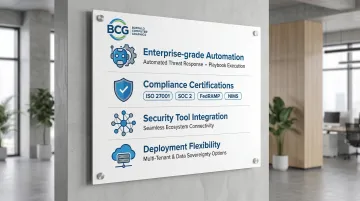
We selected the platforms below based on their proven ability to serve Fortune 500 and government organizations at global scale. Key selection criteria include:
- Enterprise-grade automation capabilities for threat response
- Compliance certifications (ISO 27001, SOC 2, FedRAMP, NIMS)
- Extensive security tool integration ecosystems
- Deployment flexibility to meet multinational data sovereignty requirements
Top Incident Response Platforms for Multinational Enterprises
These platforms were selected based on enterprise scalability, global deployment capabilities, security-specific orchestration features, compliance certifications, and documented customer references from multinational organizations operating across multiple regulatory jurisdictions.
IBM Security QRadar SOAR
IBM brings decades of enterprise security heritage to QRadar SOAR, positioning it as a comprehensive orchestration platform that integrates seamlessly with the broader IBM Security ecosystem including QRadar SIEM and X-Force threat intelligence.
The platform serves Fortune 100 organizations requiring advanced automation at scale, with established deployments coordinating security operations across global subsidiaries and regional security operations centers.
QRadar SOAR delivers key capabilities for global enterprises:
- Orchestration that executes complex response workflows across hundreds of security tools
- Deep integration with SIEM platforms and threat intelligence sources for context-enriched investigations
- Extensive playbook library with pre-built automation for common attack scenarios
- Global support infrastructure with follow-the-sun coverage
- Scalability at Fortune 100 deployments handling thousands of incidents monthly
The platform supports 300+ enterprise-grade bidirectional integrations and features dynamic playbooks that can accelerate response times by up to 7x.
| Aspect | Details |
|---|---|
| Key Capabilities | Automated playbooks, case management, threat intelligence integration, forensics collection, multi-tenant architecture for global subsidiaries, AppHost for containerized integration management |
| Deployment Options | Cloud, on-premise, or hybrid deployment with data residency options for regulatory compliance; includes virtual machine or OpenShift platform deployments |
| Best For | Large enterprises with existing IBM security investments, complex global operations requiring extensive automation and integration, organizations needing predictable unlimited-use licensing |
Splunk SOAR (formerly Phantom)
Splunk's acquisition of Phantom in 2018 brought SOAR capabilities into its data analytics ecosystem, creating a platform well-suited for enterprises with massive log volumes and data-intensive security operations. The platform leverages Splunk's big data analytics strength to provide security orchestration that scales with the most demanding global security operations, now natively integrated into Splunk Enterprise Security for unified threat detection and response.
Key capabilities include:
- Integration framework connecting 300+ security tools with 2,800+ automated actions
- Visual playbook designer that simplifies complex workflow creation without coding
- Mission control dashboards providing unified visibility for global SOC coordination
- Native integration with Splunk Enterprise Security for seamless detection-to-response workflows
McGraw Hill reported automating 22 months of security tasks in just 6 months, resolving over 9,400 events through automated response—work equivalent to 10 full-time employees.
| Aspect | Details |
|---|---|
| Key Capabilities | Visual workflow automation, extensive app ecosystem, real-time collaboration features, metrics and reporting for executive dashboards, customizable mission control interface |
| Deployment Options | Cloud-based Splunk SOAR or on-premise deployment, integrates with Splunk Cloud or Enterprise; volume-based or workload-based pricing models available |
| Best For | Organizations with Splunk investments, data-intensive security operations, enterprises needing extensive third-party tool integration, teams requiring visual playbook design |
BCG DisasterLAN (DLAN)
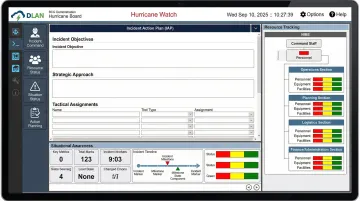
BCG's 43-year history in mission-critical systems results in DisasterLAN, which holds a unique position as the first and only incident management system evaluated by FEMA's NIMS STEP program as fully compliant with all 24 NIMS concepts and principles. While many platforms focus on commercial enterprise security, DLAN specializes in government, critical infrastructure, and emergency management sectors where regulatory compliance and data sovereignty are non-negotiable requirements.
DLAN offers critical advantages for government and regulated sectors:
- FEMA NIMS STEP compliance certification validating alignment with federal incident management standards
- ISO/IEC 27001:2013 certification for information security management
- Template-guided Incident Action Plans aligned with FEMA ICS guidelines and federal protocols
- Established presence in 300+ government installations including FEMA, Coast Guard, military branches, and state/local emergency operations centers
- Flexible deployment options (cloud or on-premise) with bandwidth-based licensing instead of restrictive per-seat pricing
The platform's US-based development and support infrastructure addresses data sovereignty concerns critical for government and regulated industries.
| Aspect | Details |
|---|---|
| Key Capabilities | NIMS/ICS-compliant workflows, mass notification integration (NY-ALERT serving 20+ million citizens), resource tracking, situational awareness dashboards, multi-agency coordination, GIS mapping with ESRI integration |
| Deployment Options | Cloud or on-premise with bandwidth-based licensing (not per-seat), US-based development and support, flexible data residency for sovereignty requirements |
| Best For | Government agencies, critical infrastructure, regulated industries requiring FEMA compliance, organizations needing on-premise deployment for data sovereignty, entities coordinating with federal response efforts |
Palo Alto Networks Cortex XSOAR
Palo Alto Networks leverages its cybersecurity leadership to deliver Cortex XSOAR, consistently recognized as a leader in Gartner's SOAR evaluations. The platform excels at coordinating response across the broader Cortex security ecosystem including XDR and threat intelligence, providing unified visibility and orchestration that multinational enterprises need to maintain consistent security posture across distributed operations.
The platform provides advanced automation and collaboration features:
- AI-powered automation that continuously improves playbook effectiveness
- Extensive marketplace with 1,000+ integrations and pre-built playbooks
- Collaborative incident workspaces (war rooms) enabling real-time coordination across global teams
- Unified platform integration with Cortex XDR and threat intelligence for context-rich investigations
- Established global deployment at scale for multinational enterprises
The platform earned a 4.5/5 rating on Gartner Peer Insights, reflecting strong customer satisfaction.
| Aspect | Details |
|---|---|
| Key Capabilities | Machine learning-powered playbooks, threat intelligence management, cross-team collaboration war rooms, custom dashboard creation, extensive API framework, AI-driven incident scoring |
| Deployment Options | Cloud-native SaaS with regional data centers, hybrid deployment options available for data sovereignty requirements |
| Best For | Enterprises with Palo Alto security infrastructure, organizations prioritizing AI/ML automation, global SOC operations requiring real-time collaboration, teams needing extensive pre-built content |
ServiceNow Security Operations
ServiceNow's enterprise IT service management heritage uniquely positions its Security Operations module to bridge the gap between security teams and broader organizational functions. Built on the Now Platform, it leverages the Configuration Management Database (CMDB) to provide context about affected assets, enabling security response that considers business impact and coordinates seamlessly with IT, legal, compliance, and business stakeholders across the enterprise.
The platform bridges security and business operations through:
- Unified platform connectivity between security and IT operations on a single system
- Vulnerability response integration that connects threat detection with remediation workflows
- Executive-level reporting and metrics providing business context for security operations
- Workflow automation spanning departments (security, IT, legal, compliance, communications)
- Scalability for global enterprise deployments across multiple regions
The platform's strength lies in coordinating cross-functional response for incidents requiring involvement beyond the security team.
| Aspect | Details |
|---|---|
| Key Capabilities | Security incident response, vulnerability response, threat intelligence integration, cross-departmental workflows, executive dashboards, CMDB integration for asset context |
| Deployment Options | Cloud-based multi-instance architecture with regional data centers for compliance, enterprise-scale infrastructure |
| Best For | Enterprises with existing ServiceNow investments, organizations needing tight integration between security and IT operations, executive visibility requirements, cross-functional incident coordination |
How We Chose the Best Platforms
Many organizations select incident response platforms based solely on vendor reputation or feature checklists. This approach overlooks critical factors like deployment complexity, integration requirements, total cost of ownership, and alignment with security operations.
We evaluated six critical factors that impact enterprise success:
- Enterprise scalability: Handles global operations with thousands of users, processes high alert volumes without performance issues, and maintains sub-second response times during major incidents
- Compliance certifications: ISO 27001 for information security management, SOC 2 Type II for service organization controls, FedRAMP for US government use, and specialized certifications like FEMA NIMS for emergency management and critical infrastructure
- Integration ecosystem: Leading platforms support 300-600+ native connections to SIEM platforms, EDR tools, threat intelligence feeds, ticketing systems, and communication platforms
- Deployment flexibility: Cloud, on-premise, and hybrid options address data sovereignty requirements across different regulatory environments
- Vendor stability and support: 24/7 global coverage, professional services for implementation and customization, training programs, and financial stability
- Customer references: Proven deployments at similar-sized multinational organizations in comparable industries and regulatory environments
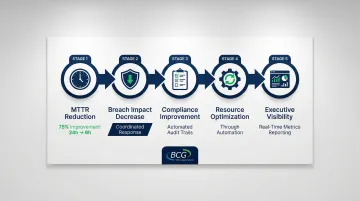
These factors connect to measurable business outcomes:
- Reducing Mean Time to Respond (MTTR) by up to 75% (from 24 hours to 6 hours)
- Decreasing breach impact through coordinated multi-team response
- Improving compliance posture with automated audit trails and regulatory reporting
- Enhancing resource utilization through automation that eliminates manual tasks
- Providing executive visibility with metrics-driven dashboards showing incident trends and team performance
Key Capabilities for Enterprise Incident Response
Automated Detection and Orchestration
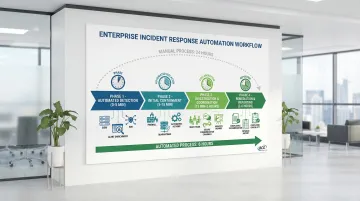
Effective enterprise platforms integrate with SIEM (Security Information and Event Management), EDR (Endpoint Detection and Response), and threat intelligence feeds to automatically trigger response playbooks when threats are detected. The system enriches alerts with context from multiple sources, executes initial containment actions like isolating endpoints, blocking malicious IPs, and disabling compromised accounts without manual intervention.
This automation reduces response time from hours to minutes. Speed is critical when 88% of breaches involve stolen credentials and attackers can move laterally within minutes of initial compromise.
Global Coordination and Collaboration
Multi-tenant architecture supports regional security operations centers (SOCs) operating with appropriate autonomy while maintaining enterprise visibility. Key coordination features include:
- Real-time collaboration workspaces where analysts, threat hunters, and incident commanders across time zones work on the same case simultaneously
- Role-based access controls ensuring security, legal, compliance, and communications teams see relevant information without exposing sensitive data inappropriately
- Integrated communication tools coordinating response through in-platform messaging, email, SMS, and collaboration platform integrations
Compliance and Audit Capabilities
Detailed audit trails capture every response action, decision, and communication with timestamps and user attribution. Automated compliance reporting generates required documentation for GDPR (72-hour breach notification), NIMS incident documentation, and industry-specific regulations.
Evidence preservation maintains forensic integrity and chain of custody for legal proceedings and regulatory investigations. Executive dashboards provide metrics including MTTR (Mean Time to Respond), incident volume trends, team performance, and compliance status for board-level reporting.
Integration and Scalability
Platforms must meet demanding technical requirements:
- Open APIs and pre-built integrations connecting with major security tools across the enterprise stack
- Handling thousands of simultaneous incidents and users without performance degradation
- Flexible deployment options (cloud, on-premise, or hybrid) meeting data sovereignty requirements across jurisdictions
- Professional services for customization, implementation, and ongoing optimization
The SOAR (Security Orchestration, Automation, and Response) market is projected to reach $4.42 billion by 2030, driven by the need to consolidate security tools and leverage AI for faster response.
Conclusion
The right incident response platform for multinational enterprises must balance sophisticated automation and orchestration capabilities with stringent compliance requirements. Equally critical are deployment flexibility for data sovereignty and deep integration with existing security infrastructure, not just impressive feature counts or brand recognition.
Success depends on selecting a platform that aligns with your operational reality, not vendor marketing promises.
When evaluating platforms, prioritize factors that match your operational environment:
- Industry requirements: Government, healthcare, and finance have distinct compliance needs
- Geographic footprint: Where can incident data legally reside under data sovereignty laws?
- Existing investments: Which security tool integrations are non-negotiable?
- Organizational structure: Centralized global SOC vs. distributed regional operations
Organizations in government, critical infrastructure, and regulated industries benefit from platforms with specialized compliance certifications that ensure alignment with federal standards and interoperability with coordinated response efforts.
The platform you choose today will shape your organization's ability to detect, respond to, and recover from security incidents across multiple jurisdictions for years to come.
Frequently Asked Questions
What is the difference between incident response platforms and SIEM or SOAR tools?
SIEM focuses on log aggregation and threat detection, while SOAR emphasizes automation across security tools. Incident response platforms provide end-to-end case management—detection through post-incident reporting—with broader workflow coordination, compliance documentation, and cross-functional features beyond pure security automation.
How do multinational enterprises handle data sovereignty requirements with incident response platforms?
Enterprises use hybrid models with regional on-premise instances for sensitive data, select vendors with data centers in required jurisdictions (EU, Asia-Pacific, North America), or deploy fully on-premise in regulated regions. BCG DLAN offers flexible deployment designed for government and critical infrastructure sovereignty concerns with US-based development.
What compliance certifications should enterprise incident response platforms have?
Essential certifications include ISO/IEC 27001 (information security), SOC 2 Type II (secure data handling), FedRAMP (US government cloud use), and FEMA NIMS STEP for government agencies requiring federal incident management standards compliance.
How much do enterprise incident response platforms typically cost?
Pricing varies from per-user models ($50-200/user/month) to bandwidth or incident volume-based approaches. Enterprise deployments typically range from $100K-$500K+ annually, with implementation adding 20-50% to first-year costs and ongoing maintenance around 15-20% annually.
Can incident response platforms integrate with existing security tools?
Modern platforms integrate with 300-600+ security tools including SIEM, EDR, firewalls, and ticketing systems through APIs and pre-built connectors. Integration complexity varies—some are native and bidirectional, others require custom development—so verify specific integrations during evaluation.
What is FEMA NIMS compliance and why does it matter for incident response?
FEMA's National Incident Management System (NIMS) establishes standardized incident command protocols for government and critical infrastructure. NIMS STEP compliance ensures platforms follow federal standards including ICS structure and interoperability requirements—critical for agencies coordinating federal response efforts during major incidents.