Introduction
In October 2022, the Kanjuruhan Stadium disaster in Indonesia claimed 135 lives when tear gas deployment triggered a stampede toward locked gates. Just two years later, in December 2024, 56 people died in a crowd crush at stadium exits in Nzérékoré, Guinea. Analysis of 40 stadium disasters between 1901 and 2021 reveals an average of 50.6 deaths and 166 injuries per major incident, with outdated infrastructure and poor safety planning as primary contributors.
Stadiums present unique emergency management challenges that distinguish them from other facilities. Massive crowd concentrations—often exceeding 50,000 people—combine with limited egress points, emotionally charged atmospheres, and time-sensitive events to create high-risk environments where seconds matter.
This guide covers emergency action plan essentials: evacuation protocols, incident command structure, technology systems, and compliance requirements that separate controlled response from catastrophic failure.
TLDR:
- All-hazards planning must address natural disasters, human threats, and infrastructure failures
- FEMA's NIMS-compliant ICS framework ensures coordinated multi-agency response
- Effective plans integrate evacuation protocols, medical response, communications, and accessibility
- Real-time coordination platforms connect multiple agencies during incidents
- Training, drills, and after-action reviews maintain plan effectiveness and compliance
Understanding Stadium Emergency Management
What Makes Stadium Emergencies Unique
Stadiums differ fundamentally from other facilities in ways that increase emergency management complexity. Crowd concentrations regularly exceed 50,000 people in confined spaces with limited egress points.
Simulation studies show that crowd densities exceeding 2.2 persons per square meter trigger "faster-is-slower" effects, where panicked movement actually delays evacuation and increases crushing risk.
The emotional atmosphere during sporting events or concerts adds another layer of unpredictability. Spectators are often distracted, potentially intoxicated, and emotionally invested in the event—factors that complicate emergency communications and orderly evacuation.
Time-sensitive events create pressure to minimize disruptions, sometimes leading to delayed emergency responses that worsen outcomes.
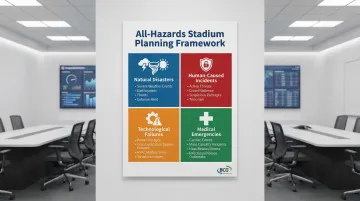
Stadium emergency scenarios require all-hazards planning across multiple threat categories:
- Natural disasters: Severe weather (lightning, tornadoes), earthquakes, extreme heat
- Human-caused incidents: Active threats, terrorism, civil disturbance, crowd crush
- Technological failures: Power outages, structural collapse, fire, HVAC system failures
- Medical emergencies: Cardiac events, mass casualty incidents, heat-related illness
Recent data from the 2023 Ryder Cup shows patient presentation rates of approximately 16.5 per 10,000 attendees, meaning a 50,000-seat venue should plan for roughly 80+ medical encounters per event. However, 21% of NCAA Division I stadiums still lack on-site physicians during games, revealing significant gaps in medical preparedness.
The Incident Command System (ICS) Framework
The Incident Command System provides a standardized organizational structure that enables seamless coordination between venue operations and external emergency responders. FEMA NIMS compliance is mandatory for entities receiving federal preparedness grants, making ICS adoption essential for stadiums seeking federal funding or working with local emergency management agencies.
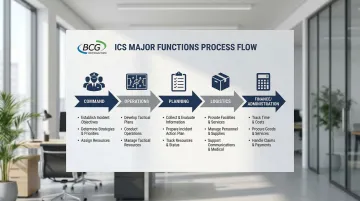
ICS organizes emergency response through five major functions:
- Command: Establishes incident objectives, strategies, and priorities; maintains overall incident authority
- Operations: Conducts tactical operations to execute the incident action plan; manages field resources
- Planning: Collects and evaluates information; maintains resource status; prepares incident action plans and documentation
- Logistics: Provides resources, services, facilities, and materials to support incident operations
- Finance/Administration: Tracks costs, processes claims, manages procurement and compensation
Implementing ICS in Stadium Operations
For stadium environments, these functions translate into practical coordination structures:
- Command establishes a unified command post bringing together venue security, local law enforcement, and fire/EMS leadership
- Operations manages crowd control, evacuation execution, and medical response
- Planning tracks resource deployment and documents decisions
- Logistics coordinates equipment, supplies, and personnel
- Finance/Administration handles cost tracking and insurance claims
Technology platforms help stadiums operationalize these ICS functions in real-time. Buffalo Computer Graphics' DLAN incident management system provides a FEMA NIMS-compliant framework specifically designed to support stadium emergency coordination.
In 2011, DLAN became the first and only incident management system evaluated by FEMA's NIMS Supporting Technology Evaluation Program (STEP) as fully compliant with all 24 NIMS concepts and principles, ensuring standardized communication and resource tracking during stadium incidents.
Stakeholder Coordination Requirements
Effective stadium emergency management requires coordinated action across multiple organizations, each with distinct roles and capabilities:
Internal stakeholders:
- Venue operations and facility management
- Security and crowd control teams
- Event staff and ushers
- Concessions and vendor personnel
- Maintenance and engineering teams
External partners:
- Local law enforcement agencies
- Fire departments and EMS services
- Public health departments
- Emergency management agencies
- Visiting teams and their security personnel
Establishing clear roles, responsibilities, and communication protocols before emergencies occur is critical. Key coordination elements include defining decision-making authority, creating direct communication channels between key personnel, and sharing facility information (blueprints, access points, utility locations).
Mutual aid agreements should formalize these relationships through joint planning sessions, exercises, and resource-sharing protocols for major incidents.
Key Components of a Comprehensive Emergency Action Plan
Threat and Hazard Identification and Risk Assessment (THIRA)
The THIRA process provides a FEMA-standardized approach for assessing venue-specific risks through three essential steps:
- Identify threats and hazards: Categorize risks into natural (severe weather, earthquakes), technological (structural failure, cyber-attacks), and human-caused (terrorism, active threats, civil disturbance)
- Give context: Describe how threats would occur at your specific venue—consider "Explosion during halftime at full capacity" rather than generic "bomb threat"
- Establish capability targets: Define measurable response capabilities like "Evacuate 50,000 spectators within 20 minutes" or "Provide advanced life support to 80+ patients simultaneously"
Risk prioritization should balance likelihood and potential impact. A venue in tornado-prone regions prioritizes severe weather planning differently than one in seismically active areas.
Historical incident data from your venue and similar facilities provides valuable context for probability assessments.
Emergency Response Procedures
Once you've identified and assessed risks through THIRA, the next step is translating that analysis into actionable response procedures. Core response procedures must be clearly documented and accessible to all personnel:
- Initial notification protocols: Who discovers incidents, how they report them, and to whom
- Incident assessment steps: Rapid evaluation criteria to determine threat type, scope, and severity
- Activation criteria: Thresholds that trigger different response levels (e.g., partial evacuation vs. full evacuation vs. shelter-in-place)
- Decision-making authority: Clear chain of command defining who makes critical decisions under various scenarios
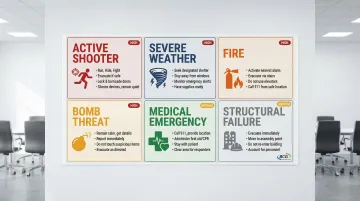
Scenario-specific plans should address high-priority threats:
- Active shooter: Lockdown procedures, law enforcement coordination, evacuation routes from secure areas
- Severe weather: Monitoring protocols, shelter locations, lightning safety procedures
- Fire: Alarm response, fire suppression coordination, smoke control
- Bomb threat: Search procedures, evacuation decisions, law enforcement coordination
- Medical emergency: First responder notification, AED deployment, ambulance access
- Structural failure: Engineering assessment, zone evacuation, rescue coordination
Evacuation and Shelter-in-Place Protocols
Rapid, informed decisions about evacuation versus shelter-in-place can save lives. Evacuation is appropriate for localized threats (fire, structural damage, bomb threats) where moving people away from danger reduces risk.
Shelter-in-place is preferred for external threats (active shooter outside, hazardous materials release, severe weather) where movement increases exposure.
Simulation studies show that total evacuation times for large stadiums range from 4 to over 20 minutes depending on exit availability and crowd behavior. Zone-based plans must identify:
- Primary and secondary egress routes for each seating section
- Assembly points at safe distances from the facility
- Accessible evacuation routes meeting ADA requirements
- Capacity limitations for each exit to prevent overcrowding
- Staff positioning to direct crowd flow and prevent bottlenecks
Effective crowd management strategies prevent stampedes:
- Train staff to communicate calmly and provide clear directional instructions
- Use multiple communication channels simultaneously (PA, digital signage, staff)
- Establish crowd control positions at critical decision points
- Monitor crowd density and adjust flow to prevent dangerous compression
- Designate personnel to assist individuals with disabilities
Emergency Communication Systems
Multi-layered communication approaches ensure messages reach all occupants even if primary systems fail:
- Public address systems: Primary voice communication for urgent instructions
- Digital signage and video boards: Visual reinforcement of verbal messages
- Mobile alerts: Text messages and app notifications for registered attendees
- Social media: Rapid information dissemination and rumor correction
- Direct staff communication: Two-way radios for coordination and situational updates
NFPA 72 (2025) mandates strict supervision of Emergency Responder Communication Enhancement Systems (ERCES) to ensure radio coverage for first responders.
Systems must prioritize life safety voice instructions over other audio, with redundant communication layers as backup.
Within these systems, pre-scripted emergency messages for different scenarios provide clear, actionable instructions without causing panic. Messages should clearly state required actions, repeat at regular intervals, and use concise language. For example: "Attention: Due to severe weather approaching, please proceed calmly to the nearest concourse and await further instructions. Do not leave the building."
Medical Emergency Response
Comprehensive medical planning addresses both routine care and mass casualty preparedness:
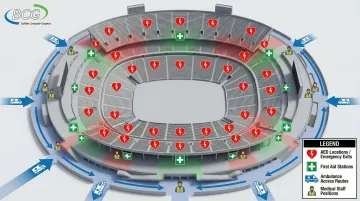
Basic medical infrastructure includes:
- AED locations ensuring 3-5 minute access from any point in the venue
- First aid stations with trained personnel and supplies
- Medical staff positioning in high-traffic and high-risk areas
- Ambulance access routes and staging areas
- Communication protocols between medical staff and EMS
The SALT (Sort, Assess, Lifesaving Interventions, Treatment/Transport) triage algorithm is endorsed by national EMS organizations and the CDC for mass casualty incidents. Stadium medical plans should train personnel in SALT triage and integrate with local community mass casualty plans to manage patient distribution to hospitals.
Given that 88.6% of NCAA Division I stadiums offer Advanced Life Support (ALS), venues should ensure on-site ALS capabilities and consider dedicated physician coverage to reduce unnecessary hospital transports and improve outcomes for cardiac emergencies.
Continuity of Operations
Planning for maintaining critical functions during and after emergencies ensures venues can support response efforts and resume operations:
- Backup power: Generators for emergency lighting, communications, and life safety systems
- Water supply: Redundant sources for fire suppression and sanitation
- Communication redundancy: Multiple systems (landline, cellular, satellite, radio) to maintain connectivity
- Essential personnel identification: Pre-designated staff with critical skills and access credentials
Creating Your Stadium Emergency Action Plan
Planning Team Formation
Effective plans require diverse expertise and perspectives. Your planning team should include:
Internal members:
- Security director (overall safety and threat assessment)
- Operations manager (daily operations and logistics)
- Facility manager (infrastructure and building systems)
- Legal counsel (compliance and liability considerations)
- Event management representatives (crowd dynamics and event-specific concerns)
External partners:
- Local emergency management agency representatives
- Law enforcement liaisons
- Fire department and EMS leadership
- Public health officials
Including external partners from the start ensures your plans align with jurisdictional capabilities and establishes relationships before crises occur. This early coordination facilitates resource sharing during actual incidents.
Documentation and Plan Structure
FEMA CPG 101 provides comprehensive guidance on emergency operations plan structure. Essential sections include:
- Purpose and scope: What the plan covers and who it applies to
- Authority and references: Legal requirements and regulatory frameworks
- Situation overview: Venue-specific hazards and vulnerabilities
- Concept of operations: How the organization will respond to emergencies
- Organizational structure: ICS-based command structure and reporting relationships
- Responsibilities: Specific duties for each role and department
- Procedures: Step-by-step actions for different emergency scenarios
- Annexes: Supporting documents (facility maps, contact lists, mutual aid agreements)
Using templates aligned with FEMA guidelines streamlines plan development and ensures federal standards compliance.
Incident management platforms like DLAN provide standardized Incident Action Plan templates that integrate with broader emergency preparedness efforts. These systems enable rapid plan generation with built-in version control and approval workflows that follow ICS-compliant procedures.
Integration with Existing Plans
Your stadium plan must connect with the broader emergency management ecosystem. Align with and reference:
- Jurisdictional emergency operations plans
- Regional response frameworks
- Mutual aid agreements with neighboring jurisdictions
- State and federal emergency management structures
Coordinating with local emergency management agencies ensures seamless integration during actual incidents. Share your plan with local responders, incorporate their feedback, and participate in regional planning initiatives to maintain alignment as jurisdictional plans evolve.
Accessibility and Special Needs Considerations
ADA Title III mandates that places of public accommodation comply with accessibility requirements in emergency programs. Specific requirements include:
Accessible means of egress:
- At least two accessible means of egress from all accessible spaces
- Areas of refuge where individuals unable to use stairs can await evacuation assistance
- Direct access to exit stairways or protected areas with two-way communication systems
Communication accommodations:
- Visual alarms (strobes) meeting NFPA 72 requirements for hearing-impaired individuals
- Tactile and visual signage at doors, exit passageways, and stairways
- Multiple communication methods ensuring information reaches people with sensory disabilities
Assistance protocols:
- Trained personnel to assist individuals with disabilities during evacuations
- Evacuation chairs meeting RESNA ED-1 standards for stair descent
- Pre-event registration programs identifying attendees requiring assistance
Plan Distribution and Accessibility
Plans are only effective if the right people can access them when needed:
- All staff levels: Every employee should understand basic emergency procedures and their specific roles
- Emergency responders: Local police, fire, and EMS should have copies and facility familiarization
- Key stakeholders: Event organizers, vendors, and visiting teams need relevant portions
Format considerations:
- Digital versions for detailed reference and updates
- Printed copies in command centers and key locations
- Quick-reference cards for staff with essential procedures and contacts
Version control procedures ensure everyone works from current plans:
- Assign version numbers to all plan updates
- Track revisions with change logs
- Maintain distribution lists for automatic updates
- Require acknowledgment of receipt for critical personnel
Technology and Systems Integration
Modern stadium emergency management relies on integrated technology platforms that coordinate real-time response across multiple departments and external agencies. FEMA NIMS-compliant systems enable standardized communication, resource tracking, and situational awareness during complex incidents.
Core Technology Components
Stadium operations depend on five essential technology categories working in coordination:
- Mass notification systems deliver emergency alerts through multiple channels simultaneously (text, email, app notifications, PA systems), with zone-specific messaging integrated into venue infrastructure
- Incident management platforms like BCG's DLAN provide FEMA NIMS-compliant standardized Incident Action Plan templates, resource tracking, and communication workflows that connect field personnel, command centers, and support teams, maintaining real-time situational awareness through live data feeds while enabling comprehensive documentation for after-action reviews
- Surveillance and monitoring through high-resolution camera systems like those deployed at Citi Field use multifocal sensors where single units cover 5,000 seats, allowing security teams to review incidents with exceptional detail, with integration to fire panels enabling automated incident location identification
- Access control systems manage entry points during lockdowns, restrict access to sensitive areas, and provide audit trails of personnel movement during incidents
- Emergency lighting and backup communications with generator-powered systems ensure visibility and connectivity when primary power fails, maintaining operational capability during extended incidents
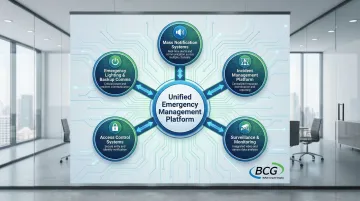
Unified Platform Integration
Leading venues now deploy integrated platforms that connect these components into unified systems. This integration enables automated responses such as camera feeds automatically displayed when fire alarms activate in specific zones.
Command staff gain comprehensive situational awareness from a single interface, reducing response coordination time during critical incidents.
Training, Drills, and Continuous Improvement
Staff Training Requirements
Effective emergency response depends on trained personnel who understand their roles and can execute procedures under pressure:
- ICS fundamentals: All personnel involved in emergency response should complete FEMA ICS-100 and ICS-200 training
- Role-specific procedures: Detailed training on specific duties (evacuation coordination, medical response, communication protocols)
- Communication protocols: How to use emergency communication systems and report information up the chain of command
- Scenario-based training: Realistic simulations that build decision-making skills under stress
Schedule training during initial onboarding, annually for refresher purposes, and whenever plans or procedures change. Document completion for compliance purposes, tracking who completed which training and when certifications expire.
Exercise and Drill Programs
Once personnel complete initial training, practical exercises test their ability to apply that knowledge under realistic conditions.
The Homeland Security Exercise and Evaluation Program (HSEEP) defines a step-by-step exercise cycle that builds capability over time:
| Exercise Type | Description | Recommended Frequency | Purpose |
|---|---|---|---|
| Tabletop exercises (TTX) | Discussion-based sessions where participants walk through scenarios and discuss responses | Annually | Validate plans and policies without resource deployment |
| Functional drills | Operations-based exercises testing command and control, decision-making, and coordination without full resource deployment | Annually or twice per year | Evaluate specific functions like evacuation or medical response |
| Full-scale exercises | Comprehensive operations-based exercises with actual deployment of resources, personnel, and equipment | Every 2-3 years | Test coordination with external agencies and identify integration gaps |
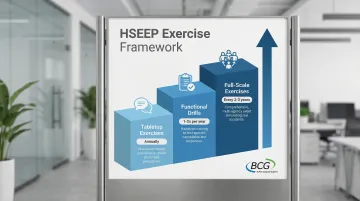
Design realistic scenarios based on your THIRA assessment, focusing on high-priority threats. Include complications and decision points that challenge participants and reveal planning gaps.
After-Action Review and Plan Updates
Exercises and real incidents both provide critical learning opportunities. After-action reviews identify lessons learned and drive continuous improvement.
The After-Action Report/Improvement Plan (AAR/IP) should document:
- What was supposed to happen
- What actually happened
- Why differences occurred
- Strengths to sustain
- Areas requiring improvement
Implement a corrective action program tracking specific improvements to completion, with assigned responsibilities and deadlines. Incident management systems like BCG's DLAN platform can centralize AAR documentation and track corrective actions through completion, ensuring accountability and continuous improvement.
Review plans comprehensively each year and update them immediately after significant incidents or facility changes.
Compliance and Legal Considerations
Stadium operators navigate complex regulatory requirements spanning federal, state, and local jurisdictions:
Federal requirements:
- OSHA 29 CFR 1910.38: Employers with 10+ employees must maintain written Emergency Action Plans covering evacuation procedures, employee accounting, and emergency reporting
- ADA Title III: Mandates accessible egress, areas of refuge, and effective communication for individuals with disabilities
- NIMS compliance: Required for entities receiving federal preparedness grants, ensuring interoperability with public safety agencies
State and local regulations vary significantly but commonly address:
- Public assembly venue safety standards
- Crowd management requirements
- Fire safety and suppression systems
- Emergency lighting and signage
- Security personnel licensing and training
Legal Protection Through Compliance
Comprehensive emergency planning demonstrates due diligence and duty of care, potentially reducing liability exposure. Legal precedents establish that venue operators must protect attendees from foreseeable harm.
Inadequate crowd control or failure to execute emergency action plans can result in negligence claims. NIMS-compliant incident management systems like BCG's DLAN provide structured frameworks that align with federal standards while documenting response activities.
Documentation requirements include maintaining records of training completion, drill execution, plan updates, and incident responses. These records demonstrate compliance during regulatory inspections and provide evidence of reasonable care in liability proceedings.
Frequently Asked Questions
What is the difference between an emergency action plan and an evacuation plan for stadiums?
An Emergency Action Plan (EAP) covers all hazards—medical emergencies, severe weather, active threats, technological failures—while an evacuation plan is one component focused solely on moving people out safely. OSHA requires EAPs to include reporting procedures, employee duties, and personnel accounting, making the EAP the broader framework.
How often should stadium emergency action plans be updated and tested?
Review plans annually at minimum, with updates after facility changes, major incidents, or regulatory shifts. Test through annual drills and quarterly tabletop exercises, following HSEEP's progressive cycle from tabletop to full-scale exercises.
What are the legal requirements for stadium emergency preparedness?
Federal requirements include OSHA 29 CFR 1910.38 (written EAPs), ADA Title III (accessible egress), and NIMS compliance for federally funded entities. State and local requirements vary but often cover crowd management, security staffing, and fire safety—consult local emergency management agencies and legal counsel for complete compliance.
Who should be involved in creating a stadium emergency action plan?
Include internal stakeholders (security directors, operations managers, facility managers, legal counsel, event management) and external partners (local emergency management, law enforcement, fire/EMS, public health). Starting collaboration early ensures plans align with jurisdictional capabilities and builds relationships before crises occur.
What technologies are essential for modern stadium emergency management?
Essential systems include mass notification platforms for multi-channel alerts, NIMS-compliant incident management systems (such as BCG's DLAN platform) for coordinated response, high-resolution surveillance, access control, and backup communications. Integration across these technologies provides unified situational awareness and automated responses.
How do you coordinate with local emergency services in stadium emergency planning?
Invite local responders to join your planning team early and share detailed facility information (blueprints, access points, utilities). Conduct joint exercises to identify gaps, establish communication protocols through mutual aid agreements, and provide facility tours so responders know the venue before emergencies occur.
Effective stadium emergency management requires commitment to planning, training, and continuous improvement. By implementing FEMA NIMS-compliant frameworks like BCG's DLAN system, integrating coordinated technology platforms, and maintaining partnerships with local emergency services, stadium operators protect attendees while meeting regulatory requirements. Ready to strengthen your emergency preparedness? Connect with experienced emergency management professionals to assess your current capabilities.