Introduction
Weather-related events now account for 80% of major U.S. power outages, with the nation experiencing 115 billion-dollar climate disasters between 2020 and 2024 alone, totaling over $746.7 billion in damages.
This surge in extreme weather collides with a critical infrastructure challenge: 70% of transmission lines and power transformers are 25 years or older, heightening vulnerability during emergencies.
Modern utility providers face mounting pressure from multiple directions—escalating storms and wildfires, aging infrastructure failures, and strict regulatory requirements from NERC, FERC, and FEMA.
The right emergency management software isn't just a technology investment; it's essential infrastructure that determines how quickly communities get power restored, whether regulatory compliance is maintained, and ultimately, how well utilities protect public safety during critical events.
Key Takeaways
- Coordinates multi-agency response, field crews, and customer communication during utility outages
- Must integrate with GIS/SCADA/OMS systems and provide FEMA NIMS compliance tracking
- Top platforms differ by specialization: FEMA certification, AI automation, spatial analysis, or mass alerts
- Prioritize utility system integration and regulatory compliance over brand name recognition
Overview of Emergency Management Software for Utilities
When a hurricane knocks out power to 500,000 customers, utilities need more than spreadsheets and phone trees. Emergency management software provides integrated platforms to coordinate restoration efforts across distributed field teams, mutual aid crews, and customer communication channels.
These systems go far beyond basic incident tracking—they serve as unified command centers that coordinate complex operations across multiple stakeholders during natural disasters, equipment failures, and other emergencies.
Utilities face operational challenges that standard business continuity software can't handle:
- Coordinating mutual aid crews from multiple states
- Managing hundreds of distributed field teams in remote locations
- Maintaining real-time customer communication during widespread outages
- Documenting every action for regulatory compliance and FEMA reimbursement
Traditional solutions fail to address the specific requirements of utility operations, where integration with SCADA systems, outage management platforms, and GIS infrastructure is non-negotiable.
The solutions profiled below were selected based on utility-specific features, proven integration capabilities with operational technology systems, regulatory compliance support, and documented track records serving the utilities sector during actual emergency events.
Best Emergency Management Software for Utilities Providers
These solutions were selected based on utility-specific features, integration capabilities, compliance support, and proven performance in the utilities sector.
Buffalo Computer Graphics (BCG) - DisasterLAN (DLAN)
Buffalo Computer Graphics is a 43-year veteran engineering firm that developed DisasterLAN specifically for emergency operations centers, with particular strength in utility and infrastructure sectors.
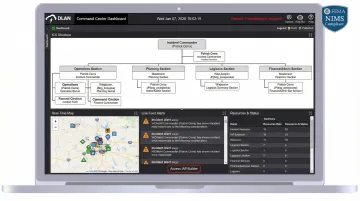
Unlike generic incident management tools, DLAN supports complex, multi-agency emergency response operations with regulatory compliance built into its core design.
DLAN is the first and only incident management system evaluated by FEMA's NIMS STEP program as fully compliant with NIMS and ICS principles and interoperability communications standards.
Key differentiators include:
- Template-guided Incident Action Plans aligned with FEMA guidelines
- Bandwidth-based licensing instead of per-seat pricing
- Predictable costs that don't penalize utilities for scaling up during emergencies
- 300+ deployments across the U.S.
| Attribute | Details |
|---|---|
| Key Strengths | FEMA NIMS compliance, 300+ deployments, ISO/IEC 27001:2013 certified, flexible deployment (cloud or on-premise) |
| Best For | Utilities requiring FEMA compliance, organizations seeking predictable bandwidth-based licensing, agencies needing template-guided IAPs |
| Integration Capabilities | Built-in ESRI GIS integration with live sensor feeds, weather data integration, supports NIEM and NIST protocols for interoperability, custom integration services available |
Everbridge Emergency Event Management (EEM)
Everbridge is a leader in critical event management with an EEM solution developed in partnership with ServiceNow and Ekatra, specifically designed for utility emergency operations. Launched in December 2024, EEM addresses the growing complexity of coordinating response across fragmented utility systems.
EEM unifies weather intelligence, OT/SCADA alerts, GIS data, and asset information into a single platform. The Visual Command Center provides real-time situational awareness by correlating asset impact with operational workflows, automatically triggering response steps.
Automated playbooks reduce manual coordination burden, while multi-channel communication features ensure consistent customer notifications during outages.
| Attribute | Details |
|---|---|
| Key Strengths | Real-time data integration, ServiceNow partnership, automated playbooks, multi-channel communication |
| Best For | Large utilities with complex infrastructure, organizations already using ServiceNow, utilities prioritizing customer communication |
| Deployment Model | SaaS solution built on hybrid-cloud architecture with data residency choice, ISO 27001 and FedRAMP authorized |
Salesforce Energy & Utilities Cloud with Emergency Management
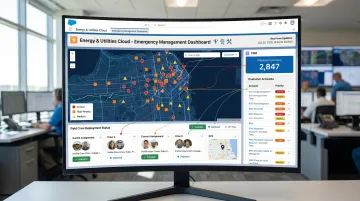
Salesforce provides AI-powered emergency management capabilities integrated with their Energy & Utilities Cloud platform, offering CRM integration and Agentforce AI agents that automate routine tasks. This solution unifies case, incident, customer, and asset data in a single workspace, eliminating data silos that slow restoration efforts.
AI-driven predictive analytics help utilities forecast outage impacts and optimize crew deployment. Agentforce AI agents handle customer inquiries and support field workers with pre-work briefs and post-work summaries, reducing administrative burden during high-volume events. Florida Power & Light successfully used the platform during Hurricane Dorian to coordinate thousands of restoration crews and automate customer alerts.
| Attribute | Details |
|---|---|
| Key Strengths | AI/Agentforce integration, CRM data unification, predictive analytics, automated customer communications |
| Best For | Utilities already using Salesforce CRM, organizations prioritizing AI-powered automation, utilities focused on customer experience |
| Notable Features | Mobile workforce management, unified customer profiles, incident management best practices, timesheet and labor cost optimization |
Crises Control
Crises Control is a specialized mass notification and critical event management platform with detailed audit trail capabilities and multi-channel communication features. It prioritizes instant notification delivery across SMS, email, voice, push notifications, and social media, ensuring utilities can reach customers and field crews regardless of communication channel availability.
Comprehensive audit trails log every communication and action, supporting regulatory compliance documentation requirements. Crises Control holds ISO 27001 and ISO 9001 certifications and offers specific features for GDPR compliance, including data mapping and risk assessment. Global cloud locations ensure data residency compliance for international utilities.
| Attribute | Details |
|---|---|
| Key Strengths | Mass notification speed, audit trail documentation, multi-channel alerts, global cloud locations |
| Best For | Utilities prioritizing rapid customer notification, organizations needing detailed compliance documentation, international utilities |
| Accreditations | ISO 27001, ISO 9001, GDPR compliant with regional data residency options |
Esri ArcGIS Emergency Management
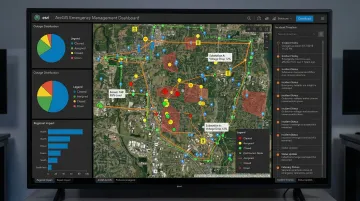
Esri's ArcGIS is a GIS-based emergency management solution that excels at spatial analysis and real-time data visualization for utility infrastructure. It creates a digital twin of utility systems through ArcGIS Utility Network, capturing complex asset relationships and integrating with SCADA and ADMS systems.
Real-time data streaming from IoT sensors through ArcGIS Velocity enables continuous monitoring of assets and outage detection. Spatial analysis capabilities forecast damage areas, prioritize hardening efforts, and optimize field resource deployment.
Lakeland Electric used ArcGIS to structure damage data collection, improving efficiency and FEMA reimbursement compliance, while Brunswick Electric Membership Corp restored power to 95% of customers within three days of a hurricane using ArcGIS web maps.
| Attribute | Details |
|---|---|
| Key Strengths | GIS/spatial analysis, IoT sensor integration, network visualization, industry-standard mapping platform |
| Best For | Utilities with extensive GIS infrastructure, organizations needing spatial impact analysis, utilities managing geographically distributed assets |
| Integration | Integrates with utility network models, SCADA, ADMS, and real-time IoT sensors; supports multi-agency data sharing |
How We Chose the Best Emergency Management Software
Utilities often make the mistake of selecting emergency management software based solely on brand recognition or upfront price, rather than evaluating utility-specific requirements and integration capabilities.
This approach leads to expensive implementations that fail to integrate with critical operational technology systems or create new data silos that slow response times.
Our evaluation prioritized factors that directly impact utility emergency response effectiveness:
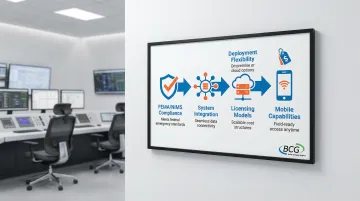
- FEMA/NIMS compliance support – Systems must support standardized incident command structures and documentation for federal grant eligibility
- Integration with existing utility systems – Seamless connectivity with OMS, SCADA, GIS, and AMI systems is essential for real-time situational awareness
- Deployment flexibility – Cloud, on-premise, and hybrid options address different security requirements and IT infrastructure constraints
- Licensing models – Bandwidth-based or subscription models that don't penalize utilities for scaling during major events
- Mobile workforce capabilities – Field crews need offline data capture, GPS tracking, and real-time task assignment in disconnected environments
- Proven track record – Documented success in actual utility emergency deployments, not just feature lists
Matching Solutions to Your Utility's Needs
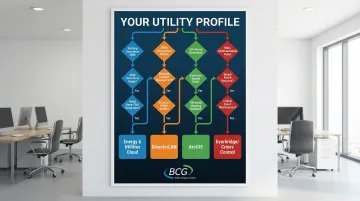
The best solution depends on your specific context:
- Existing technology stack – Utilities with Salesforce CRM investment may benefit from Energy & Utilities Cloud integration
- Regulatory requirements – Organizations prioritizing FEMA compliance should focus on solutions with documented NIMS STEP evaluation like DisasterLAN
- Infrastructure constraints – Your deployment model (cloud vs. on-premise) depends on security requirements and IT capabilities
- Operational priorities – Field-heavy utilities need strong mobile capabilities, while coordination-focused teams prioritize command center features
Conclusion
The right emergency management software depends on how well it integrates with existing operations, supports regulatory compliance, and enables faster service restoration when communities need power most.
Fragmented systems create data silos that slow decision-making during the critical first hours of an emergency when restoration speed directly impacts public safety.
Evaluate solutions based on specific integration requirements with your OMS, SCADA, and GIS systems, compliance needs for NERC and FEMA reporting, and long-term scalability rather than upfront costs alone.
The total cost of ownership includes implementation time, training requirements, ongoing maintenance, and most critically, the operational efficiency gains during actual emergency events.
Organizations seeking FEMA NIMS compliance should explore solutions like BCG's DisasterLAN, which was specifically designed for emergency operations centers. DLAN is the only system fully evaluated by FEMA's NIMS STEP program.
With 300+ deployments, ISO/IEC 27001:2013 certification, and flexible deployment options, DLAN provides utilities with proven capabilities for coordinating complex emergency response operations while maintaining the regulatory compliance documentation required for federal funding eligibility.
Frequently Asked Questions
What features should utility emergency management software include?
Essential features include real-time situational awareness with GIS visualization, mobile workforce coordination with offline capabilities, and integration with OMS/SCADA/GIS systems. Leading platforms also provide mass notification across multiple channels, compliance documentation with audit trails, and ICS-compliant incident action planning.
How does emergency management software integrate with existing utility systems?
Leading solutions offer RESTful APIs and pre-built connectors for outage management, SCADA, GIS, and asset management platforms. These integrations enable real-time data flow while maintaining security through network segmentation. Some platforms follow NIEM and NIST guidelines, while others require middleware or custom integration services.
What is FEMA NIMS compliance and why does it matter for utilities?
NIMS (National Incident Management System) is a standardized framework for emergency response coordination. Compliance is required for federal grant eligibility and ensures interoperability with government agencies during mutual aid. BCG's DLAN is the first and only system evaluated by FEMA's NIMS STEP program as fully compliant.
How much does emergency management software for utilities typically cost?
Pricing varies based on deployment model, user count, and features. SaaS solutions typically range from tens of thousands to hundreds of thousands of dollars annually for large utilities. Some vendors like BCG offer bandwidth-based models with flat fees regardless of user count, eliminating per-seat pricing concerns.
What's the difference between cloud-based and on-premise emergency management solutions?
Cloud solutions offer faster deployment (weeks vs. months), automatic updates, and lower upfront costs but may raise data sovereignty concerns for utilities with strict OT security requirements. On-premise deployments provide more control over data and security protocols but require internal IT resources for maintenance and updates. Many utilities adopt hybrid models where critical OT control remains on-premise while coordination and visualization leverage cloud accessibility.
How long does it take to implement emergency management software?
Implementation timelines range from a few weeks for cloud-based solutions with minimal customization to several months for on-premise deployments with extensive integration requirements. Cloud platforms with pre-built utility connectors can be operational in 4-8 weeks, while complex implementations involving custom SCADA integration, legacy system connectivity, and extensive training may require 3-6 months or longer depending on organizational readiness and IT infrastructure complexity.