Introduction
Small emergency management agencies and volunteer organizations face a stark reality: enterprise incident management software often costs $10,000-$50,000 annually—budgets they simply don't have. Recent data shows the incident and emergency management market reaching $137.45 billion in 2024, yet many frontline responders operate on shoestring budgets that make these solutions unattainable.
A growing ecosystem of free and freemium emergency management solutions now exists to bridge this gap. However, "free" means different things: completely free public safety apps, freemium platforms with limited tiers, open-source options, and time-limited trials.
This article examines genuinely free or freemium solutions across incident tracking, resource management, and communication coordination—comparing features, limitations, and which organizations they serve best.
Key Takeaways
- Free emergency management software ranges from personal mobile apps to enterprise freemium platforms
- Leading solutions include FEMA App and Red Cross Emergency App for personal preparedness, plus freemium platforms like D4H for small response teams
- Core features: mass notification, real-time collaboration, resource tracking, incident reporting, and mobile access
- Choose free options for small teams (<10 users); scale to paid platforms when you need customization or advanced features
- Government agencies requiring NIMS compliance need certified platforms that meet federal standards
What is Free Emergency Management Software?
Emergency management software helps organizations prepare for, respond to, and recover from emergencies ranging from natural disasters to human-caused events.
Core functions include:
- Coordinating resources and personnel
- Tracking incidents in real-time
- Enabling communication across teams
- Documenting response activities
Types of Free Solutions
Consumer-Grade Mobile Apps: Completely free applications like the FEMA App and American Red Cross Emergency App provide preparedness information, weather alerts, and shelter locations for individuals and families.
Freemium Enterprise Platforms: Services like D4H offer limited free tiers with basic incident management features, allowing small teams to access professional-grade tools without initial costs.
Limited-Time Trials: Platforms like Veoci provide temporary free access for evaluation purposes, though full deployment requires paid subscriptions.
Target Users
Understanding which solution fits your needs depends on your organization's size and requirements:
- Consumer apps excel for individual preparedness and family planning
- Freemium platforms support small volunteer organizations and response teams with 25 or fewer members
- Enterprise trials help large agencies evaluate options before committing budgets
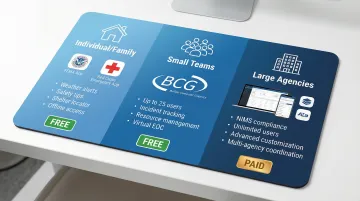
Organizations requiring regulatory compliance and advanced features—such as FEMA NIMS standards—typically need paid solutions that meet federal requirements.
Top Free Emergency Management Software Solutions
The following solutions represent genuinely free or freemium options based on feature sets, user reviews, accessibility, and organizational fit.
FEMA Mobile App
The Federal Emergency Management Agency developed this free mobile app as a comprehensive preparedness tool. Designed for individuals and families, it provides critical information and resources during emergencies nationwide.
Key Differentiators:
- National Weather Service integration delivers real-time alerts
- Disaster reporter feature allows users to submit damage information
- Multilingual support in English and Spanish
- Free with no premium tier or hidden costs
| Feature Category | Details |
|---|---|
| Key Features | Real-time weather alerts for up to 5 locations, disaster safety tips for 20+ hazard types, emergency kit checklist, shelter locator, disaster assistance application access |
| Best For | Individual preparedness, families, small community organizations, public education initiatives |
| Limitations | Designed for individual use not organizational coordination, no incident management features, no team collaboration tools, limited to mobile devices |
The FEMA App maintains a 4.4-star rating on Google Play, demonstrating strong user satisfaction for personal preparedness needs.
American Red Cross Emergency App
The American Red Cross offers a comprehensive suite of free emergency preparedness mobile applications covering multiple hazard types.
Key Differentiators:
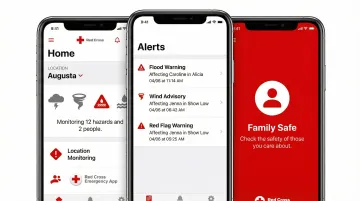
- Comprehensive hazard coverage with customizable alerts
- Family Safe feature enables location sharing with loved ones
- Offline access to critical safety content
- Available in English and Spanish with easy language toggle
| Feature Category | Details |
|---|---|
| Key Features | Real-time alerts for severe weather and hazards, Family Safe location sharing, interactive quizzes, preloaded content accessible offline, flashlight and alarm toolkit, Red Cross shelter map |
| Best For | Families, individuals in hazard-prone areas, community preparedness education, volunteer organizations |
| Limitations | Consumer-focused rather than organizational tool, no incident command system features, no multi-agency coordination, limited to personal emergency planning |
The Red Cross Emergency App achieves a 4.9-star rating with over 4,700 reviews on the Apple App Store, reflecting exceptional user satisfaction.
D4H (Free Tier)
Beyond personal preparedness apps, several platforms offer free tiers for organizational use. D4H provides a cloud-based emergency management platform with a genuinely free tier designed for small teams. The platform delivers professional-grade incident management tools without requiring immediate budget commitment.
What Sets It Apart:
- Highly customizable workflows without coding requirements
- Built-in GIS mapping with Esri ArcGIS integration
- Modular approach allows organizations to start small and scale
- Free tier supports up to 25 users and 2 concurrent incidents
| Feature Category | Details |
|---|---|
| Key Features | Virtual EOC for team collaboration, customizable forms and workflows, real-time incident tracking, resource management, integration capabilities, mobile access, GIS mapping with satellite imagery |
| Best For | Small emergency response teams, volunteer organizations, agencies evaluating platforms before committing to paid solutions |
| Limitations | Free tier limits to 25 users and 100 incident reports annually, steep learning curve for full feature utilization, may require paid upgrade as organization grows |
Industry analysts recognize D4H as a "Market Leader" in crisis and emergency management platforms, offering volunteer units and small agencies a path to professionalize operations without immediate budget requirements.
Veoci (Free Trial/Limited Free Options)
Veoci operates as a virtual EOC platform that occasionally offers free access for specific organization types or emergency situations, though it primarily functions as an enterprise paid solution.
Key Differentiators:
- Form management and automation streamline workflows
- ICS/IAP form templates support standardized incident documentation
- Resource tracking with real-time updates
- Strong communication and collaboration tools for multi-agency coordination
| Feature Category | Details |
|---|---|
| Key Features | Customizable IAP/ICS forms, task automation, resource management with real-time updates, communication tools, event-specific collaboration rooms, reporting and analytics |
| Best For | Organizations needing ICS-compliant tools, agencies evaluating EOC platforms, jurisdictions offered free access during specific emergencies |
| Limitations | Typically requires paid subscription for full access, steep learning curve, setup and customization time required, limited free mapping capabilities |
Veoci's trial model allows agencies to evaluate virtual EOC capabilities before committing to paid licensing, though organizations seeking permanent zero-cost solutions will need alternative options.
DisasterLAN (DLAN) by BCG
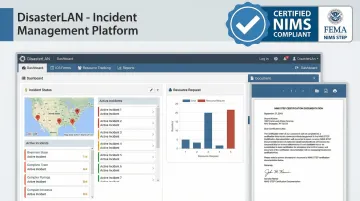
For agencies requiring NIMS compliance certification, Buffalo Computer Graphics offers DisasterLAN (DLAN), backed by 43 years of emergency management software experience. This web-based common operating picture platform serves agencies across the US and Canada with verified compliance standards.
Key Differentiators:
- First and only incident management system evaluated by FEMA's NIMS STEP program as fully compliant with NIMS and ICS principles
- Bandwidth-based licensing model instead of per-seat pricing
- ISO/IEC 27001:2013 certified for information security
- In-house US-based development and support team
| Feature Category | Details |
|---|---|
| Key Features | Task and mission tracking with Ticket Manager, resource management for staff/equipment/infrastructure, customizable analytics and reporting, GIS mapping integration, automated workflows, no-coding-required customization, template-guided Incident Action Plans |
| Best For | Government agencies requiring NIMS compliance, emergency management agencies needing customizable solutions, organizations prioritizing data security and US-based support, multi-jurisdictional coordination |
| Limitations | Contact required for pricing and free trial availability, learning curve due to extensive feature set, mapping features available as add-on |
The NIMS STEP compliance certification matters for government agencies managing federal preparedness grants, which increasingly require NIMS adoption for grant eligibility and interoperability across jurisdictions.
Key Features to Look for in Free Emergency Management Software
Mass Notification and Communication
Effective emergency response depends on rapid stakeholder communication. Look for multi-channel alert capabilities that reach team members through SMS, email, mobile push notifications, and voice calls.
Two-way communication enables field responders to confirm receipt and provide status updates. Professional platforms should support originating alerts to team members, not just receiving them like consumer apps.
Essential Incident Management Features
Beyond communication, your platform needs robust incident coordination tools.
Core incident management capabilities include:
- Real-time tracking of incident status, resources, and personnel
- Task management with assignment, prioritization, and completion tracking
- Resource allocation tools for equipment, vehicles, and personnel
- Situational awareness dashboards providing common operating picture
- Reporting capabilities for after-action reviews and compliance documentation
- NIMS-compliant platforms with standardized ICS forms and documentation workflows
Scalability and Integration
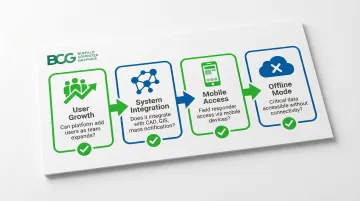
The right platform grows with your organization. Consider these scalability factors:
- Can the platform support additional users as your team expands?
- Does it integrate with existing systems like CAD, GIS, or mass notification platforms?
- Does it provide mobile access for field responders?
- Does it offer offline functionality that caches critical data locally?
Offline capability is essential when disasters disrupt connectivity—your team needs access to critical information even when networks fail.
How to Choose the Right Free Emergency Management Software
Assess Organizational Needs
Start by evaluating your specific requirements:
- Free tiers often cap users at 25 or fewer
- Natural disasters require different tools than active shooter scenarios
- Government agencies need NIMS/ICS compliance for grant eligibility
- Cloud platforms require reliable connectivity; on-premise solutions need IT resources
Evaluate True Cost
Free solutions carry hidden costs beyond subscription fees:
- Setup and configuration require staff time
- Complex platforms require extensive user training
- Free tiers typically offer limited support options
- Verify platforms meet your security and privacy requirements
- Understand upgrade pricing if you outgrow the free tier
For government agencies, NIMS compliance is non-negotiable for grant eligibility and interoperability.
Look for platforms evaluated by FEMA's NIMS STEP program, like DisasterLAN—the first incident management system to achieve full compliance with federal interoperability standards.
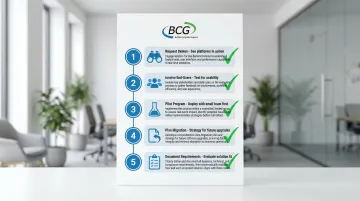
Test Before Committing
Take advantage of evaluation opportunities:
- Request demos to see platforms in action
- Involve end-users in testing to ensure usability
- Pilot the solution with a small team before full deployment
- Develop a migration plan if starting free with plans to upgrade
- Document requirements and evaluate how each solution addresses them
Conclusion
Free emergency management software delivers significant value for small organizations, individuals, and agencies beginning their emergency preparedness journey. Consumer apps like FEMA and Red Cross provide excellent individual preparedness tools at zero cost. Freemium platforms like D4H enable small response teams to access professional-grade incident management capabilities without immediate budget requirements.
However, organizations must carefully evaluate whether free solutions meet their specific operational needs. Government agencies receiving federal preparedness grants require NIMS-compliant platforms that support standardized incident management processes.
Certified solutions like BCG's DisasterLAN—the first and only incident management system evaluated by FEMA's NIMS STEP program as fully compliant—address these compliance requirements while providing the customization and scalability that growing agencies need.
When evaluating solutions, consider the total cost of ownership beyond subscription fees:
- Implementation time and complexity
- Training requirements for staff
- Ongoing technical support availability
- Potential upgrade and migration costs
For agencies requiring proven NIMS compliance and comprehensive incident management capabilities, exploring certified solutions like DisasterLAN or contacting vendors for demos helps balance immediate budget constraints with long-term operational requirements.
Frequently Asked Questions
Is the FEMA app free?
Yes, the FEMA mobile app is completely free to download and use with no premium features or subscription costs. It's available for both iOS and Android devices and provides weather alerts, disaster safety tips, and shelter locations at no charge.
What is the best free emergency management software?
The best solution depends on your needs. Individuals benefit from FEMA and Red Cross apps, while small teams use freemium platforms like D4H. Government agencies requiring NIMS compliance need certified solutions like BCG's DisasterLAN.
What's the difference between NIMS and ICS?
NIMS is the comprehensive national framework for incident management across all government levels. ICS is a component within NIMS that provides the organizational structure for on-scene incident operations.
What features should I look for in free emergency management software?
Look for mass notification, real-time incident tracking, resource management, mobile accessibility, and offline functionality. Government agencies should prioritize NIMS compliance and standardized ICS form support.
Can free emergency management software meet NIMS compliance requirements?
Free apps provide helpful tools, but organizations requiring official NIMS compliance typically need certified platforms. BCG's DisasterLAN is the first and only system evaluated by FEMA's NIMS STEP program as fully compliant, providing the documentation needed for grant eligibility.
What are the limitations of free emergency management software?
Typical limitations include restricted user counts (often 25 or fewer), reduced features, limited customization, basic reporting, minimal support, and lack of compliance certifications. Organizations often outgrow free tier capacity as needs expand.