Introduction
When a firefighter responds to a chemical spill, a nurse experiences a needlestick injury, or a law enforcement officer is exposed to fentanyl during an arrest, the next 2-4 hours can determine long-term health outcomes. Yet studies show that fewer than 10% of exposed workers receive treatment within the critical window—often because reporting systems fail.
Proper exposure incident tracking protects first responders and healthcare workers while supporting workers' compensation claims and building defensible documentation for presumptive illness cases.
Modern exposure incident tracking software has evolved from paper logs into sophisticated digital systems that document chemical, biological, radiological, and physical hazards while supporting FEMA, OSHA, and NIMS compliance requirements.
These platforms integrate with emergency operations centers, automate OSHA reporting, and maintain career-long exposure records that can prove critical decades after an incident occurs.
Key Takeaways
- Track workplace hazards and occupational exposures across emergency response, healthcare, and industrial safety operations
- Top platforms provide FEMA/NIMS compliance, mobile field reporting, and automated OSHA documentation
- Choose based on compliance capabilities, field usability, and career-long documentation tracking
- We evaluate 8 platforms built for public safety, emergency management, healthcare, and industrial teams
Overview of Exposure Incident Tracking in Emergency Management and Public Safety
Exposure incident tracking software includes specialized systems designed to document, monitor, and manage incidents where personnel encounter chemical, biological, radiological, or physical hazards.
These platforms serve emergency responders, healthcare workers, industrial employees, and public safety personnel who face occupational risks that demand rigorous documentation and medical follow-up.
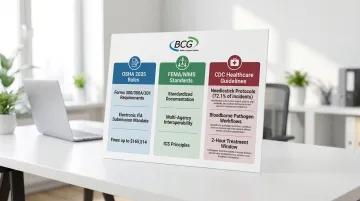
The regulatory landscape drives adoption. Key compliance requirements include:
- OSHA's 2025 electronic reporting rules: Construction and high-hazard employers with 100+ employees must submit Forms 300, 300A, and 301 electronically to the Injury Tracking Application (ITA) annually — failure can result in fines up to $165,514 per willful violation
- FEMA and NIMS standards: Require standardized documentation to ensure interoperability during multi-agency incidents
- CDC healthcare guidelines: Mandate specific workflows for exposures like needlesticks, which account for 72.1% of healthcare staff exposure incidents
Traditional methods fail in emergency environments. Paper logs can't be located when workers file compensation claims years later. Spreadsheets lack chain-of-custody documentation, and generic databases can't generate compliance reports quickly during audits or legal proceedings.
When firefighters develop cancer decades after exposure to structure fire toxins, the absence of defensible, career-long digital trails makes proving presumptive illness legally challenging.
8 Best Exposure Incident Tracking Software Tools
We evaluated platforms proven in emergency management, public safety, healthcare, and occupational safety environments, emphasizing regulatory compliance, field usability, and integration with emergency operations.
Each solution below addresses specific exposure tracking needs across different industries.
DisasterLAN (DLAN) by Buffalo Computer Graphics
Buffalo Computer Graphics brings 43 years of emergency management software expertise to DisasterLAN, the first and only incident management system evaluated by FEMA's NIMS STEP program as fully compliant with NIMS and ICS principles.
In 2011, DLAN achieved certification across all 24 NIMS concepts and principles—the only platform with this distinction.
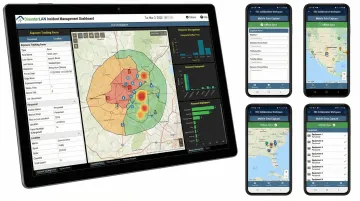
DLAN serves 300+ deployments across emergency operations centers nationwide, supporting all-hazards incident management including exposure tracking.
The platform integrates with NY-ALERT mass notification system (serving 20+ million citizens across New York, Vermont, and US Virgin Islands). It has proven effective during complex exercises like the Indian Point nuclear drill, where multiple counties coordinated plume models and multi-agency response activities.
| Key Features | FEMA NIMS/ICS compliant incident tracking, real-time situational awareness with ESRI-based GIS mapping, resource management with live GPS tracking, EOC collaboration tools, customizable exposure incident forms with offline mobile data capture | | Best For | Emergency management agencies, EOCs, county/state/federal response teams, multi-jurisdictional incidents, FEMA grant-funded programs, organizations requiring NIMS STEP certification | | Compliance & Integration | NIMS STEP certified (2011), ICS-compatible forms and workflows, integrates with mass notification systems (NY-ALERT), supports multi-agency coordination and mutual aid scenarios, bandwidth-based licensing (not per-seat pricing) |
DLAN's bandwidth-based licensing model eliminates the cost penalties of traditional per-seat pricing during emergency activations when dozens of personnel need simultaneous access.
The platform supports both cloud-based SaaS and secure on-premise deployment options, with mobile responder apps that capture GPS-tagged photos and data even offline, automatically synchronizing when connectivity returns.
First Due Health & Wellness
First Due's cloud-based Fire & EMS platform includes a Health & Wellness module addressing first responder exposure tracking with career-long documentation linked directly to incident records.
This incident-linked approach creates defensible chains of evidence connecting responders to specific hazardous encounters (critical for state presumptive cancer legislation claims that firefighters may file decades after exposure).
The platform enables real-time exposure documentation via mobile devices, capturing details like smoke conditions or chemical presence while memories are fresh. Flexible privacy workflows ensure sensitive health data remains confidential while maintaining official departmental records, eliminating the "shadow logs" or personal spreadsheets that create compliance gaps.
| Key Features | Career-long exposure tracking linked to specific incidents, real-time mobile documentation, secure health data storage with privacy controls, treatment plan management, configurable compliance reporting, integration with wearable health technology (future capability) | | Best For | Fire departments, EMS agencies, first responder health programs, departments focused on firefighter cancer prevention and occupational illness tracking, agencies supporting presumptive illness claims | | Compliance & Integration | Supports presumptive illness documentation requirements, integrates with ePCR and incident management systems, cloud-based with mobile field access, HIPAA-consideration design for sensitive health information |
First Due's integration with core records management eliminates separate systems, ensuring exposure records remain permanently linked to incident reports and available for workers' compensation or legal proceedings years after the original event.
Aclaimant
Aclaimant serves high-risk industries including construction, manufacturing, and hospitality with a platform that connects incident intake directly to corrective actions and regulatory reporting. The system's "no evidence, no closure" enforcement requires photo or document proof before incidents can be closed, ensuring audit-ready documentation exists for every recorded exposure.
Automated OSHA 300/300A/301 log generation addresses the 2025 electronic submission mandates, creating ITA-ready export files that eliminate manual data entry errors and compliance risks. Mobile-first incident capture allows field personnel to document exposures immediately with witness statements, photos, and root cause analyses while details are fresh.
| Key Features | Mobile incident intake with photos/attachments, automated routing and escalations based on severity, evidence-based closure workflows requiring documentation, automated OSHA log creation and ITA export, dashboards tracking leading/lagging safety indicators | | Best For | Organizations with OSHA recordkeeping requirements, workplace safety teams managing multiple sites, facilities management, companies handling high incident volumes, mid-to-large enterprises bridging safety and risk management functions | | Compliance & Integration | OSHA 300/300A/301 support with automated generation, ITA submission exports for 2025 mandates, integrates with HRIS/ERP/document management systems, audit-ready trails with timestamps, SSO and identity system integration |
Aclaimant's active claims management connects exposure incidents directly to insurance and workers' compensation workflows, reducing administrative lag between field reporting and medical process initiation—critical for exposures requiring rapid post-exposure prophylaxis.
Riskonnect (Healthcare Exposure Management)
Riskonnect delivers enterprise-grade incident management with specialized healthcare modules addressing the unique workflows of infectious disease management and patient-to-staff transmission. The platform supports approximately 72.1% of healthcare exposure incidents—needlestick and sharps injuries—with specific workflows that capture device brand and type as required by OSHA 1910.1030's sharps injury log requirements.
Post-exposure prophylaxis (PEP) management integrates with clinical guidelines to track administration of HIV and Hepatitis treatments within the critical 2-hour window. HL7 and FHIR standards enable integration with Electronic Health Records (EHR), linking source patient infection status to exposed worker records securely while maintaining HIPAA compliance.
| Key Features | Needlestick and sharps injury protocols with device tracking, post-exposure prophylaxis (PEP) workflow management, bloodborne pathogen exposure documentation, EHR integration via HL7/FHIR standards, confidential medical evaluation tracking | | Best For | Hospitals and healthcare systems, clinical laboratories, long-term care facilities, healthcare coalitions, regional health networks requiring patient safety and infection control capabilities | | Compliance & Integration | OSHA 1910.1030 bloodborne pathogen compliance, CDC guideline alignment for infectious disease exposures, Joint Commission standards support, NHSN reporting capabilities, EHR system connectivity with clinical data exchange |
Riskonnect's configurability allows healthcare organizations to distinguish between near misses, hazards, and actual exposure incidents, preventing data pollution while maintaining the detailed documentation required for regulatory reporting and quality improvement initiatives.
Cority (Industrial EHS Platform)
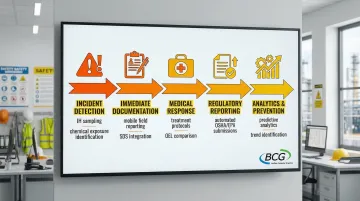
Cority specializes in industrial environments where chemical hazards and industrial hygiene (IH) monitoring drive exposure tracking requirements. The platform serves chemicals, oil & gas, and pharmaceutical industries with advanced IH calculation engines that manage sampling plans, track exposure monitoring data (air quality, noise levels), and compare results against Occupational Exposure Limits (OELs).
Safety Data Sheet (SDS) integration ensures that when chemical exposures occur, specific hazard data is immediately available for medical treatment and regulatory reporting. Cority's CorAnalytics predictive analytics identify high-risk trends before exposures occur, enabling proactive interventions in manufacturing plants and industrial facilities.
| Key Features | Industrial hygiene sampling and monitoring, chemical exposure tracking with SDS integration, predictive analytics (CorAnalytics) for trend identification, multi-language support for global operations, environmental compliance reporting | | Best For | Manufacturing plants, utilities, oil & gas facilities, chemical processing operations, pharmaceutical companies, heavy industry with significant chemical and physical exposure risks | | Compliance & Integration | OSHA compliance with automated recordkeeping, EPA reporting capabilities, industrial hygiene standards alignment, integration with safety management systems, ERP connectivity (SAP, Workday), multi-jurisdiction regulatory support |
Cority's global capabilities include multilingual interfaces ensuring workers can report exposures in native languages—critical for reducing error rates and improving reporting culture across international manufacturing operations.
Mark43 (Law Enforcement RMS)
Mark43 provides cloud-native Records Management System (RMS) and Computer-Aided Dispatch (CAD) integration for law enforcement agencies facing unique exposure risks including biological hazards during arrests (spitting, biting) and chemical exposures at crime scenes (fentanyl contamination). The platform documents use-of-force and arrest details that can include exposure data while maintaining CJIS compliance.
Chain-of-custody documentation ensures that incidents involving evidence—such as contaminated narcotics—maintain strict legal admissibility standards while tracking officer contact and exposure risks. Bio-hazard flags in the CAD/RMS warn responding officers about individuals or locations with known infectious risks through caution notes accessible during dispatch.
| Key Features | Officer exposure reporting integrated with arrest records, evidence-related exposure tracking with chain-of-custody, infectious disease exposure protocols, CAD integration for real-time hazard warnings, use-of-force documentation with medical follow-up | | Best For | Law enforcement agencies, corrections facilities, sheriff's offices, public safety departments, agencies managing arrest-related biological exposures and crime scene chemical hazards | | Compliance & Integration | CJIS security policy compliance for sensitive data protection, CAD/RMS platform integration, officer safety protocol support, chain-of-custody documentation for legal proceedings, evidence management system connectivity |
Mark43's cloud-native architecture provides officers with mobile access to exposure reporting tools, enabling immediate documentation from patrol vehicles or field locations without returning to headquarters.
Vector Solutions (Municipal & Public Sector)
Vector Solutions (formerly IndustrySafe) serves municipalities, school districts, and public sector agencies with versatile incident tracking handling everything from sanitation worker needlesticks to lifeguard chemical exposures at city pools. The platform streamlines OSHA recordkeeping and claims management for municipal agencies operating across diverse environments with varied hazard profiles.
Procurement-friendly positioning aligns with government purchasing vehicles like Sourcewell, simplifying acquisition for cities and school districts. The system supports tracking exposures during waste management operations, hazardous material spills on city roads, and chemical handling in water treatment plants—the breadth of scenarios municipal workers encounter.
| Key Features | Multi-site incident tracking across diverse municipal operations, public sector-friendly interface with simplified workflows, budget-conscious pricing models, reporting formatted for city councils and school boards, mobile field reporting for distributed workforces | | Best For | Municipal governments, K-12 school districts, parks and recreation departments, public works agencies, sanitation departments, water treatment facilities, public transportation agencies | | Compliance & Integration | Public sector procurement vehicle compatibility (Sourcewell), state and local reporting requirements support, integration with existing government systems, accessibility compliance (Section 508), OSHA recordkeeping for public employers |
Vector Solutions' training integration capabilities ensure that exposure incident reporting connects with safety training records, helping municipalities demonstrate that workers received appropriate hazard communication training before exposure incidents occurred.
SAI360 (Enterprise Risk Management)
SAI360 delivers comprehensive Governance, Risk, and Compliance (GRC) capabilities with robust incident management designed for Fortune 500 companies operating across multiple countries, languages, and regulatory jurisdictions. The platform provides global incident tracking with multi-language support, executive dashboards, and predictive analytics that identify exposure trends across different geographies and business units.
Enterprise system integration with SAP, Workday, and other HRIS platforms automates employee data synchronization and triggers workers' compensation workflows immediately upon exposure documentation. This eliminates manual handoffs between safety, HR, and risk management functions that create delays in medical treatment and claims processing.
| Key Features | Global incident tracking across multinational operations, multi-language support for diverse workforces, executive dashboards with predictive analytics, enterprise ERP integration (SAP, Workday), automated workers' compensation workflow triggers | | Best For | Fortune 500 companies, multinational corporations, large enterprises with distributed global workforce, organizations operating under complex multi-jurisdiction regulatory environments, companies requiring consolidated global safety reporting | | Compliance & Integration | Multi-jurisdiction compliance (OSHA, EU regulations, country-specific standards), enterprise system integration with major ERP platforms, global reporting standards alignment, audit trail capabilities for international operations, data sovereignty support |
SAI360's predictive analytics allow global EHS directors to spot exposure trends across facilities worldwide, enabling corporate-level interventions before localized problems become systemic risks affecting multiple sites or regions.
How We Chose the Best Exposure Incident Tracking Software
Choosing the right exposure incident tracking software requires evaluating platforms against real-world requirements in high-stakes environments. Our selection process focused on systems with proven deployments rather than generic solutions repurposed for safety applications.
We prioritized platforms proven in emergency management, public safety, healthcare, and occupational safety contexts. We excluded generic IT ticketing systems and cybersecurity vulnerability management tools in favor of purpose-built solutions addressing physical hazards and occupational exposures.
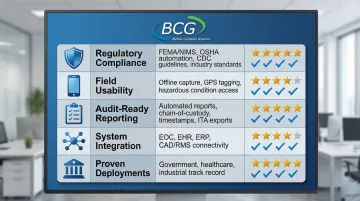
Key evaluation criteria included:
- Regulatory compliance capabilities - FEMA/NIMS certification for emergency management, OSHA 300/300A/301 automation for workplace safety, CDC guideline alignment for healthcare, industry-specific standards support
- Field usability and mobile access - Offline data capture for emergency environments, GPS-tagged photo uploads, mobile forms accessible to personnel in hazardous conditions
- Robust reporting for audits and legal proceedings - Automated compliance report generation, chain-of-custody documentation, audit trails with timestamps, Incident Tracking Application (ITA) submission exports
- Integration with existing systems - Emergency Operations Center (EOC) platforms for emergency management, Electronic Health Record (EHR) systems for healthcare, ERP platforms for enterprise, CAD/RMS for law enforcement
- Proven track record - Documented deployments with government agencies, safety-critical organizations, healthcare systems, or industrial facilities
These criteria revealed which platforms could handle complex, real-world scenarios versus simple incident logging.
Specialized Features That Set Leaders Apart
Top platforms included capabilities that go beyond basic incident tracking:
- Evidence attachment requirements preventing premature incident closure
- Career-long tracking supporting presumptive illness claims filed decades after exposure
- Automated medical follow-up workflows ensuring post-exposure prophylaxis (PEP) initiation within critical timeframes
- Multi-agency coordination for complex incidents involving mutual aid
Conclusion
Effective exposure incident tracking protects personnel, supports workers' compensation and presumptive illness claims, and maintains organizational readiness for audits and legal proceedings.
The stakes extend beyond regulatory compliance. When firefighters develop cancer 20 years after structure fire exposure, or healthcare workers contract bloodborne pathogens during patient care, the quality of exposure documentation directly impacts their ability to receive benefits and medical care.
Prioritize platforms that match your specific regulatory environment:
- Emergency management agencies: Seek FEMA/NIMS compliance like DisasterLAN's STEP certification
- Workplace safety teams: Need automated OSHA reporting like Aclaimant provides
- Healthcare facilities: Require CDC guideline integration and EHR connectivity like Riskonnect delivers
- Industrial operations: Benefit from IH monitoring and chemical tracking like Cority offers
For emergency management agencies seeking FEMA NIMS-compliant incident management with integrated exposure tracking, DisasterLAN is the first and only FEMA NIMS STEP certified solution, with 300+ deployments in emergency operations centers nationwide. Contact Buffalo Computer Graphics at (716) 822-8668 to learn how DLAN can support your exposure incident documentation requirements.
Frequently Asked Questions
What is exposure incident tracking software and why is it different from general incident management?
Exposure incident tracking documents chemical, biological, radiological, or physical hazards with specialized workflows for medical follow-up, regulatory reporting (OSHA, FEMA), and long-term health monitoring. Generic systems lack the career-long tracking, automated compliance reporting, and medical protocol integration these incidents require.
Why do emergency management agencies need FEMA NIMS-compliant exposure tracking?
FEMA NIMS compliance ensures documentation follows standardized ICS principles, supports multi-agency coordination during mutual aid scenarios, and meets federal grant requirements. NIMS STEP-certified systems guarantee interoperability with other agencies and compliance with federal emergency management standards.
What are the most important features for first responder exposure tracking?
Key features include career-long tracking linked to incidents, presumptive illness claim support (especially firefighter cancer), mobile field reporting with offline capabilities, and privacy-compliant workflows separating medical from operational data. Real-time documentation capturing exposure details while memories are fresh supports defensible long-term claims.
How does exposure incident tracking support OSHA compliance?
Specialized software automates OSHA 300/300A/301 log creation, ensures timely reporting within required timeframes, generates ITA submission files for electronic reporting mandates, and maintains audit-ready documentation spreadsheets cannot match. Evidence-based workflows prevent compliance gaps that lead to fines up to $165,514 per willful violation.
What should healthcare facilities look for in exposure tracking software?
Healthcare platforms must track infectious disease exposures, needlestick incidents, and bloodborne pathogens with integration to employee health records and post-exposure prophylaxis protocols. CDC guideline alignment, OSHA standard compliance (1910.1030), and EHR connectivity enable rapid treatment initiation within the critical 2-hour window.
Can exposure incident tracking software integrate with existing emergency operations center (EOC) systems?
EOC-designed platforms integrate with mass notification systems, resource management platforms, situational awareness tools, and multi-agency coordination systems. FEMA NIMS STEP certification ensures compatibility with federal frameworks, allowing exposure incidents to be documented within the broader incident management structure supporting ICS Form 214 and 209 reporting.