Introduction
In 2023, the finance sector accounted for 27% of all global data breaches, with the average incident costing $5.90 million—significantly higher than the cross-industry average. A single security breach can compromise millions of accounts in minutes, while regulatory violations trigger immediate enforcement actions.
Critical infrastructure organizations face similar high-stakes scenarios. Healthcare systems manage patient safety during cyber incidents. Utilities coordinate rapid response to outages affecting thousands. Emergency services agencies balance real-time crisis coordination with regulatory compliance.
Modern enterprises must manage multiple crisis types simultaneously:
- Cybersecurity breaches and ransomware attacks
- Operational disruptions and system failures
- Regulatory compliance violations requiring 24-72 hour reporting
- Natural disasters and physical security incidents
- Communication breakdowns across distributed teams
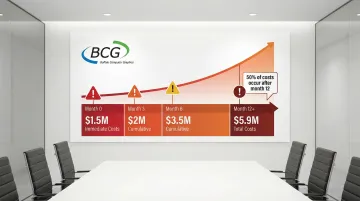
These converging threats demand specialized crisis management software that coordinates response across multiple departments, maintains compliance documentation, and enables real-time decision-making. This guide examines seven leading platforms built for enterprise-scale incident management, comparing their capabilities for organizations where downtime costs millions and response time saves lives.
Key Takeaways
- Rapid response to security breaches, fraud, and regulatory challenges through centralized tracking and real-time alerts
- Compliance documentation, automated workflows, and audit trails built for financial services
- Cross-team coordination platforms connect technical, compliance, and executive teams during crises
- Solutions scale with organizational growth while integrating with financial systems and security tools
Overview of Crisis Management Software in the Fintech and Enterprise Sector
Crisis management software provides centralized platforms that enable organizations to detect, respond to, coordinate, and recover from unexpected disruptive events affecting operations, security, or compliance. These systems coordinate data, resources, and communications to ensure rapid return to normal operations while maintaining regulatory compliance.
Fintech companies face heightened crisis management needs driven by several factors. They handle sensitive financial data subject to constant cyber threats, operate under strict regulatory frameworks including SEC, FINRA, GDPR, and PCI-DSS requirements, and must maintain continuous service availability.
A staggering 41.8% of fintech breaches originate from third-party vendors, creating supply chain vulnerabilities that can cause systemic disruption.
Enterprise resilience in financial technology goes beyond traditional IT disaster recovery. It encompasses fraud response, data breach management, regulatory incident reporting, and stakeholder communication: all coordinated through unified platforms that provide audit trails, real-time visibility, and compliance documentation.
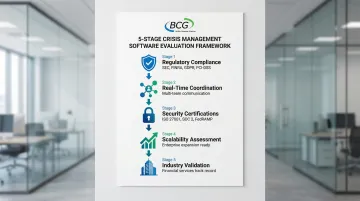
We selected the tools below based on their ability to support fintech-specific requirements:
- Regulatory compliance features
- Real-time coordination capabilities
- Security certifications
- Scalability for growing enterprises
- Proven performance in financial services environments
Top 7 Crisis Management Software Tools for Fintech and Enterprise Resilience
Fintech companies face unique crisis management challenges—regulatory scrutiny, data security threats, and operational disruptions that can erode customer trust in minutes.
The following platforms excel in these areas:
- Regulatory compliance features for financial services
- Real-time incident coordination across distributed teams
- Security certifications meeting enterprise standards
- Demonstrated success in financial services environments
DisasterLAN (DLAN) by Buffalo Computer Graphics
Buffalo Computer Graphics (BCG) is a 43-year veteran-owned engineering firm that developed DLAN specifically for incident management across government, military, and enterprise sectors, with 300+ deployments including FEMA, U.S. Coast Guard, and financial institutions.
DLAN stands apart as the first and only incident management system evaluated by FEMA's NIMS STEP program as fully compliant with NIMS and ICS principles. This makes it ideal for enterprises requiring government-grade coordination and regulatory documentation.
The platform is ISO/IEC 27001:2013 certified for information security, providing the rigorous data protection standards fintech companies require.
| Category | Details |
|---|---|
| Key Features | Template-guided Incident Action Plans aligned with FEMA guidelines, real-time coordination dashboards, secure role-based access, comprehensive audit logging, bandwidth-based licensing model |
| Best For | Fintech enterprises requiring NIMS/ICS compliance, organizations with government clients, companies needing proven incident management frameworks for regulatory audits |
| Deployment Options | Cloud or on-premises deployment with flexible licensing, U.S.-based development and technical support, modular design that scales with organizational needs |
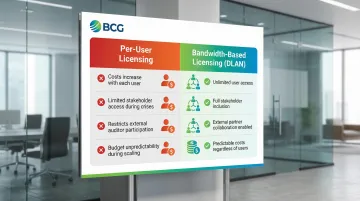
DLAN's bandwidth-based licensing eliminates the cost burden of per-user pricing, allowing unlimited stakeholders—including compliance teams, external auditors, and regulatory partners—to access the system during incidents without driving up licensing costs.
This flexibility is crucial for fintech organizations managing variable staffing needs across multiple departments.
Everbridge Critical Event Management
For organizations requiring mass communication at scale, Everbridge is a leading critical event management platform serving large financial institutions and enterprises globally, providing unified incident response, mass notification, and threat intelligence capabilities.
The platform offers comprehensive CEM capabilities integrating threat detection, multi-channel mass notification (SMS, email, voice, mobile app), geo-targeted alerts, and situational awareness dashboards.
Everbridge maintains a strong track record in the financial services sector, with customers including Santander and Public Service Credit Union using the platform for crisis response and employee safety.
| Category | Details |
|---|---|
| Key Features | Multi-channel mass notification, critical event intelligence, incident visualization, global reach with localization, mobile accessibility |
| Best For | Large fintech enterprises with global operations, organizations requiring mass communication capabilities, companies needing integrated threat intelligence |
| Deployment Options | Cloud-based SaaS platform, enterprise-grade security certifications (ISO 27001, SOC 2, SOC 3, FedRAMP Authorized), scalable for organizations of all sizes |
Everbridge explicitly targets financial services to help build resilience and comply with regulations like the EU's DORA (Digital Operational Resilience Act), which requires incident reporting within 24 hours.
Fusion Risk Management
Taking a preventative approach, Fusion is a risk and resilience platform focused on proactive crisis prevention and rapid response, serving financial services, healthcare, and enterprise sectors with emphasis on operational resilience.
Rather than simply reacting to crises, Fusion focuses on proactive risk identification before escalation, real-time situational awareness, and centralized incident data and response plans.
Notable financial services customers include Fannie Mae and Fidelity Investments, who use the platform for resiliency data management and business continuity planning.
| Category | Details |
|---|---|
| Key Features | Proactive risk monitoring, centralized response plans, real-time incident dashboards, stakeholder communication tools, regulatory compliance documentation |
| Best For | Fintech companies emphasizing proactive risk management, organizations building operational resilience programs, enterprises with complex stakeholder communication needs |
| Deployment Options | Cloud-based platform with ISO 27001 and ISO 27701 (Privacy Information Management) certifications, integration with risk management systems, customizable workflows for different incident types |
Continuity2
For regulated markets, Continuity2 is an integrated business continuity and operational resilience platform designed for financial services, with strong focus on automated response activation and compliance with regulatory frameworks like DORA and FCA/PRA requirements.
The platform offers automated workflow activation based on pre-set conditions, dynamic dashboards for incident progression tracking, and specialized features for financial services regulatory compliance.
With 20+ years of experience and a CEO who helped standardize ISO 22301, Continuity2 brings deep expertise to banking sector requirements.
| Category | Details |
|---|---|
| Key Features | Automated response workflows, secure communications hub with audit trails, business continuity planning integration, regulatory compliance modules, scenario testing capabilities |
| Best For | Fintech companies in regulated markets (UK, EU), organizations needing DORA compliance, enterprises integrating crisis management with business continuity |
| Deployment Options | Cloud-based platform, ISO 22301 and ISO 27001 certified, scalable for mid-size to large enterprises, unique pricing based on staff count rather than user seats |
D4H Incident Management
Prioritizing ease of use, D4H is an intuitive incident management platform designed for emergency response teams, with emphasis on simplicity, resource tracking, and multi-agency coordination.
The platform stands out through a user-friendly interface requiring minimal training, strong resource management capabilities (personnel and equipment tracking), and customizable dashboards for different incident types.
D4H is effective for coordinated response across multiple teams, making it suitable for fintech companies with distributed operations.
| Category | Details |
|---|---|
| Key Features | Incident logging and documentation, resource tracking, customizable dashboards, multi-agency coordination, performance analytics |
| Best For | Fintech companies with distributed teams, organizations requiring simple user adoption, enterprises needing strong resource management during incidents |
| Deployment Options | Cloud-based platform with ISO 27001:2022 certification, mobile app for field response, AWS data centers with SOC 1/2/3 compliance, data residency options in US, EU, Canada, and Australia |
D4H offers data encryption at rest (AES-256) and in transit, with a fully documented REST API for integrations with existing enterprise systems.
OnSolve Critical Communications
For data-driven organizations, OnSolve is a critical communications platform with strong data analytics and real-time monitoring capabilities, serving enterprises across industries including financial services.
Recently acquired by GardaWorld and integrated into the Crisis24 portfolio, OnSolve combines physical threat intelligence with IT infrastructure monitoring.
The platform provides powerful real-time monitoring and analytics, data-driven decision support during crises, and comprehensive reporting capabilities. OnSolve focuses on actionable intelligence to inform response strategies.
| Category | Details |
|---|---|
| Key Features | Real-time threat monitoring, analytics and reporting, multi-channel alerting, incident management workflows, integration with security systems |
| Best For | Data-driven fintech organizations, companies requiring advanced analytics during incidents, enterprises with complex security infrastructure |
| Deployment Options | Cloud-based SaaS with ISO 27001 (since 2009), ISO 27018, SOC 2 Type 2 certifications, mobile-first design, API integrations with enterprise systems, FedRAMP listed |
Noggin Crisis Management
For continuous improvement focus, Noggin is a comprehensive incident and crisis management suite including threat intelligence, safety management, and post-event analysis, designed for complex multi-location enterprises.
Recently acquired by Motorola Solutions, Noggin integrates operational risk, business continuity, and crisis management in a unified workspace.
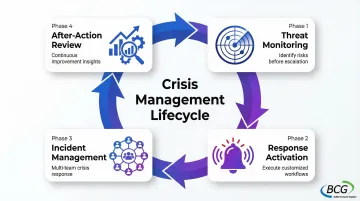
The platform excels in threat monitoring that identifies risks before escalation, customizable workflows that adapt to industry-specific requirements, and after-action review capabilities that facilitate continuous improvement.
Noggin's flexible integration with enterprise tools supports complex organizational needs.
| Category | Details |
|---|---|
| Key Features | Threat intelligence monitoring, customizable response workflows, after-action review tools, safety management integration, stakeholder communication |
| Best For | Fintech companies with multiple locations, organizations requiring threat intelligence capabilities, enterprises focused on continuous improvement |
| Deployment Options | Cloud-based platform with alignment to ISO 27001, ISO 22301, and NIMS/ICS standards, no-code customization with thousands of pre-configured workflows, scalable for complex organizations |
How We Chose the Best Crisis Management Software for Fintech
Many organizations choose crisis management software based solely on features or brand recognition. This approach often fails when enterprise-specific requirements—like regulatory compliance documentation, integration with existing systems, or comprehensive audit trails—aren't prioritized.
The result: implementations that don't meet operational standards or create bottlenecks during actual incidents.
We evaluated platforms against criteria that matter most for enterprise resilience and emergency response coordination:
- NIMS/ICS compliance and audit capabilities - Standards alignment (FEMA NIMS, ISO certifications) with comprehensive activity logging for post-incident review
- Multi-channel alerting and mobile-accessible situational awareness dashboards for coordinating response teams in real time
- Security certifications including ISO 27001, SOC 2, and FedRAMP for handling sensitive operational data
- Documented deployments across government agencies, healthcare systems, and regulated enterprise environments
- Scalability that supports growth from local incidents to multi-site coordination without excessive costs
- Integration capabilities through APIs and compatibility with common enterprise systems (CAD, GIS, mass notification platforms)
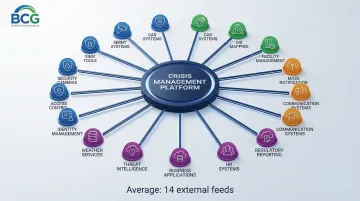
Integration complexity significantly impacts deployment timelines. Organizations connecting crisis management platforms to multiple data feeds (CAD systems, weather services, facility management tools) often face extended implementations.
Platforms with straightforward integration capabilities reduce both deployment time and total cost of ownership.
Conclusion
Selecting crisis management software for fintech requires evaluating not just incident response capabilities, but also regulatory compliance features, scalability, and alignment with enterprise resilience goals.
The average financial services breach costs $5.90 million, with over 50% of costs incurred more than a year after the incident—making the choice of crisis management platform a long-term strategic decision.
Assess factors beyond initial pricing:
- Long-term scalability as your organization grows
- Integration requirements with existing financial systems
- Compliance documentation capabilities for regulatory audits
- Vendor stability and track record
- Ongoing support quality and response times
Organizations with active executive sponsorship are 2.8 times more likely to achieve successful adoption, highlighting the importance of leadership commitment.
While many tools focus specifically on financial services, enterprise resilience extends beyond fintech-specific scenarios. Organizations managing multi-sector risks—including physical security, emergency operations, and regulatory compliance—may benefit from platforms with broader incident management capabilities.
For enterprises requiring FEMA NIMS-compliant incident management with proven performance across government and commercial sectors, BCG's DisasterLAN brings 43 years of engineering experience, flexible deployment options, and comprehensive support. Learn how DLAN can strengthen enterprise-wide crisis response with government-grade coordination frameworks and documentation tools at bcgeng.com.
Frequently Asked Questions
What is the difference between crisis management software and business continuity software?
Crisis management software focuses on real-time incident response and communication during active crises, while business continuity software emphasizes planning and recovery strategies. Modern platforms like DLAN integrate both capabilities, providing unified solutions for proactive planning and reactive response.
Why do fintech companies need specialized crisis management tools versus general enterprise software?
Organizations in regulated industries face strict compliance requirements, 24/7 operational demands, and heightened cybersecurity threats. Specialized tools provide audit trails, regulatory reporting templates, and compliance documentation that general software lacks—critical capabilities when 27% of data breaches occur in the finance sector.
What does NIMS compliance mean and why does it matter for enterprise crisis management?
NIMS (National Incident Management System) is a FEMA framework establishing standardized incident management protocols. NIMS-compliant software like DLAN ensures compatibility with government agencies during large-scale incidents and provides structured command frameworks that reduce confusion during high-stress events.
How much does crisis management software typically cost for fintech companies?
Costs typically range from $5,000-$50,000+ annually based on deployment model, licensing structure (per-user vs bandwidth-based), and organization size. Implementation, training, and change management can add 37% to technical costs, significantly increasing total ownership expenses.
How long does it typically take to implement crisis management software?
Implementation typically takes 4-12 weeks depending on organization size, integration complexity, and customization needs. Cloud solutions deploy faster than on-premises systems, though connecting multiple external systems can extend timelines by an average of 7.3 months.
Can crisis management software integrate with existing financial systems and security tools?
Modern crisis management platforms offer API integrations with common enterprise systems including SIEM tools, identity management platforms, communication systems, and business applications. DLAN supports CAP (Common Alerting Protocol), EDXL (Emergency Data Exchange Language), and other standard protocols for system-to-system interoperability. Evaluate specific integration capabilities during vendor selection to ensure compatibility with your technology stack, as the average implementation requires connecting 14 external information feeds.