Introduction
During emergencies like wildfires, cyberattacks, or active shooter incidents, response speed directly impacts outcomes. In cardiac arrest scenarios, survival rates drop by 10% for every minute of delayed response. The right crisis communication and incident management tools can mean the difference between chaos and coordinated response, between lives saved and opportunities lost.
Modern crisis platforms have evolved far beyond simple alert systems. Today's solutions integrate real-time multi-channel notifications, ICS-compliant workflows, GIS mapping, and automated response protocols into incident management platforms.
With FEMA reporting that climate-related disasters alone caused over $1 billion in damages and 1,460 fatalities between 2020-2022, organizations across government, healthcare, education, and critical infrastructure sectors are investing in tools that meet rigorous standards like FEMA NIMS compliance and ISO 22301 business continuity requirements. This guide examines the leading crisis communication and incident management platforms for 2026, comparing features, compliance capabilities, and real-world performance.
Key Takeaways
- Crisis communication platforms unify mass notification, incident management, and response coordination
- FEMA NIMS and ICS compliance are critical for government agencies requiring standardized incident command protocols
- Multi-channel alerting (SMS, email, voice, app) ensures delivery when infrastructure fails
- Evaluate deployment flexibility, integration capabilities, automation, and emergency-proven reliability
- Six platforms compared: BCG DLAN, Everbridge, AlertMedia, Noggin, OnSolve, and Rave Mobile Safety
Overview of Crisis Communication and Incident Management Tools in 2026
When emergencies strike, every second counts. Crisis communication and incident management tools are integrated platforms that help organizations detect, respond to, communicate about, and recover from critical incidents. These systems combine mass notification capabilities with operational coordination features like resource tracking, task management, and documentation workflows.
The sector has experienced significant convergence, with emergency management, mass notification, and incident response technologies merging into unified "Critical Event Management" platforms. The global mass notification market is projected to grow from $10.9 billion in 2024 to $30.6 billion by 2029, driven by increasing disaster frequency, cyber threats, and regulatory requirements.
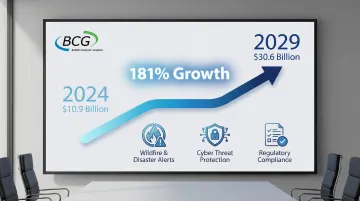
This rapid growth reflects widespread organizational adoption across sectors:
- Government agencies: Coordinated emergency response and FEMA compliance
- Healthcare systems: Patient safety and continuity of care
- Corporations: Employee safety and operational resilience
- Educational institutions: Campus security and active shooter response
The following comparison evaluates the top platforms based on:
- FEMA/NIMS compliance
- Multi-channel communication capabilities
- Workflow automation
- Deployment flexibility
- Integration options
- Proven performance in real-world emergencies
Top Crisis Communication and Incident Management Tools for 2026
We evaluated platforms based on FEMA/NIMS compliance, multi-channel communication, workflow automation, proven reliability in high-stakes environments, integration capabilities, and deployment flexibility.
BCG DisasterLAN (DLAN)
Buffalo Computer Graphics is a veteran-owned engineering firm with 43 years of proven performance. DLAN was developed in 2002 in partnership with Erie County emergency managers to serve government, public safety, healthcare, and critical infrastructure sectors requiring mission-critical incident management.
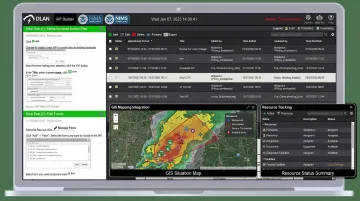
DLAN is the first and only incident management system evaluated by FEMA's NIMS STEP program as fully compliant with NIMS and ICS principles. The platform offers flexible cloud or on-premise deployment for agencies handling sensitive government data, serves 300+ deployments across the US, and provides template-guided Incident Action Plans aligned with FEMA guidelines.
Its bandwidth-based licensing model (not per-seat) eliminates the common challenge of paying for unused licenses during normal operations while restricting access during large-scale incidents.
| Aspect | Details |
|---|---|
| Key Features | FEMA NIMS STEP certified, ICS-compliant workflows, flexible cloud/on-prem deployment, integrated mass notification (NY-ALERT), 300+ deployments, GIS mapping with live sensor feeds, offline-capable mobile app |
| Best For | Government agencies, emergency management, public safety, healthcare, utilities, critical infrastructure requiring FEMA/NIMS compliance and on-premise security options |
| Pricing Model | Bandwidth-based licensing (not per-seat pricing), flexible purchasing options including GSA schedule, contact for custom quote based on organization size and requirements |
Everbridge
Everbridge is a leading Critical Event Management platform founded in 2002 following 9/11, with strong presence in enterprise, government, and healthcare sectors. The company was named a Leader in the Forrester Wave: Critical Event Management Platforms (Q4 2023).
The platform delivers comprehensive critical event management covering IT alerting, mass notification, and crisis management with global reach. It holds FedRAMP authorization for federal government use and is deployed by statewide systems including Florida and New York for population-wide alerting.
A Forrester study found that Everbridge's CEM platform delivered 358% ROI by reducing business interruptions and improving operational efficiency.
| Aspect | Details |
|---|---|
| Key Features | Mass notification across multiple channels, Visual Command Center for risk intelligence, Safety Connection for employee location tracking, IT alerting and incident management, public warning systems |
| Best For | Large enterprises, global organizations, healthcare systems, state/local government requiring comprehensive critical event management with extensive integration ecosystem |
| Pricing Model | Per-user/contact pricing (approximately $3.30 per user annually based on public sector contracts), additional costs for modules, technical account management, and professional services |
AlertMedia
AlertMedia is recognized as a "Customers' Choice" in 2025 by Gartner Peer Insights, focusing on business continuity and employee safety with strong adoption in corporate and education sectors.
The platform emphasizes user-friendly interface design, fast deployment, and strong two-way communication features. It integrates 24/7 threat intelligence monitoring with automated alerting and delivers notifications directly into Microsoft Teams for workforce continuity.
The mobile app includes lone worker safety monitoring with SOS capabilities for employees working in isolated environments.
| Aspect | Details |
|---|---|
| Key Features | Two-way messaging with confirmation tracking, 24/7 threat intelligence monitoring, mobile app with lone worker safety features, Microsoft Teams integration, conference call integration, automated incident response workflows |
| Best For | Corporate organizations, education institutions, mid-sized businesses prioritizing employee safety, threat intelligence, and ease of use with rapid deployment timelines |
| Pricing Model | Tiered pricing based on user count and feature sets, with different packages for small, medium, and large organizations—contact for specific pricing |
Noggin
Noggin is an Australian-founded emergency management platform that has gained global traction for its comprehensive approach to crisis management and business continuity, with specific focus on ISO compliance.
The platform combines incident management, crisis communication, and business continuity planning in one integrated system. It's specifically designed to support ISO 22301 (Business Continuity), ISO 45001 (Occupational Health and Safety), and ISO 31000 (Risk Management) compliance.
Audit trail and reporting features are built specifically for regulatory requirements and compliance documentation.
| Aspect | Details |
|---|---|
| Key Features | Incident management workflows with pre-configured templates, crisis communication, business continuity planning modules, ISO 22301/45001/31000 support, comprehensive audit trails and compliance reporting |
| Best For | Organizations requiring integrated emergency management and business continuity, companies prioritizing ISO compliance and regulatory documentation, multi-national operations |
| Pricing Model | Module-based pricing structure (Crisis Management, Business Continuity, Safety modules priced separately)—contact for custom quote based on modules and organization size |
OnSolve (Crisis24)
OnSolve formed from the merger of ECN and Send Word Now (founded 2001), then was acquired by GardaWorld in July 2024 to merge with Crisis24. The platform serves enterprises, government, and defense sectors with focus on risk intelligence and mass notification.
The platform combines mass notification with AI-enabled risk intelligence data feeds and analyst-vetted intelligence. It has strong government and defense sector presence, holding multiple federal contracts including FEMA and U.S. Navy.
Its CodeRED system is widely used by local governments for public safety alerting, and the platform offers both cloud and on-premise deployment options.
| Aspect | Details |
|---|---|
| Key Features | Mass notification across multiple channels, AI-enabled risk intelligence scanning, CodeRED public safety alerting, travel tracking and risk management, conference bridge integration, analyst-vetted threat intelligence |
| Best For | Government agencies, defense contractors, federal organizations, enterprises with global operations requiring integrated risk intelligence and mass notification capabilities |
| Pricing Model | Enterprise pricing, typically quote-based depending on organization size, modules, and deployment requirements—contact for custom pricing |
Rave Mobile Safety
Rave Mobile Safety is owned by Motorola Solutions and focuses heavily on public safety and education sectors. The platform is widely adopted by K-12 schools, higher education, healthcare, and state/local government for emergency notifications and safety communications.
The platform integrates directly with 911 centers and first responders through its Smart911 system, which covers over 66 million residents nationwide. It includes panic button functionality that instantly connects to 9-1-1 and notifies on-site personnel.
Visitor management integration and reunification tools are specifically designed for active shooter and safety incidents in education and healthcare environments.
| Aspect | Details |
|---|---|
| Key Features | Smart911 integration with PSAP (Public Safety Answering Point) call-taking screens, panic button mobile app for instant 9-1-1 connection, mass notification, reunification tools, visitor management integration, enhanced 9-1-1 data delivery |
| Best For | K-12 schools, higher education, healthcare facilities, state/local public safety agencies prioritizing 911 integration, active shooter response, and campus safety |
| Pricing Model | Varies by organization size, modules, and deployment scope—contact for education-specific or public safety pricing based on student/employee count |
How We Chose the Best Crisis Communication Tools
Many organizations choose crisis tools based solely on brand recognition or lowest price without considering essential factors like compliance requirements, deployment models, and proven reliability in actual emergency scenarios.
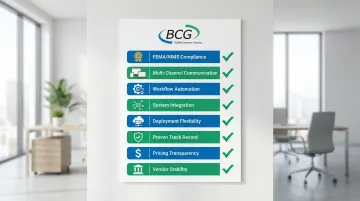
Our evaluation prioritized what matters in real-world emergencies:
- FEMA/NIMS and ICS compliance for government and public safety users
- Multi-channel communication (SMS, email, voice, mobile app, digital signage)
- Workflow automation to reduce response time during critical incidents
- System integration with CAD, 911, monitoring tools, and GIS platforms
- Deployment flexibility (cloud vs. on-premise for sensitive data)
- Proven track record in real-world emergencies across sectors
- Pricing transparency and total cost of ownership
- Vendor stability and long-term support commitment
The right tool depends on your organization's specific needs:
- Government agencies: FEMA compliance and secure on-premise deployment
- Corporations: Ease of use and global reach (AlertMedia, Everbridge)
- Educational institutions: 911 integration and campus-wide coverage (Rave Mobile Safety)
- Healthcare and utilities: HIPAA compliance and critical infrastructure protection
Evaluate 2-3 finalists with pilot testing before full deployment.
Conclusion
Selecting the right crisis communication and incident management platform is a critical decision that impacts your organization's ability to protect people, maintain operations, and meet regulatory requirements during emergencies. The platforms compared in this guide each excel in different areas, from FEMA compliance to global reach to education-specific features.
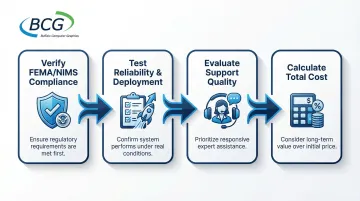
When evaluating platforms, prioritize these key factors:
- FEMA/NIMS compliance for government agencies and emergency management organizations
- Proven reliability and appropriate deployment models (cloud vs. on-premise)
- Strong customer support over lowest price or most features
- Total cost of ownership including implementation, training, and ongoing support—not just license fees
Choose solutions that align with your specific operational requirements and regulatory mandates.
For organizations requiring FEMA NIMS-compliant incident management, BCG's DisasterLAN offers 43 years of proven performance with 300+ deployments across government agencies, emergency management organizations, and critical infrastructure operators. The platform provides flexible cloud or on-premise deployment to meet your security and operational requirements.
Frequently Asked Questions
What is crisis communication software?
Crisis communication software enables organizations to rapidly alert and coordinate with employees, stakeholders, and the public during emergencies through multi-channel messaging (SMS, email, voice, mobile apps). These systems include incident management workflows, two-way communication for confirmation tracking, and integration with emergency management systems.
What's the difference between incident management and crisis communication tools?
Incident management tools handle operational response workflows (task assignment, resource tracking, ICS/FEMA compliance). Crisis communication tools focus on multi-channel stakeholder alerting. Modern platforms like BCG DisasterLAN (DLAN), Everbridge, and Noggin integrate both capabilities into comprehensive solutions.
What features should I look for in crisis communication tools?
Prioritize multi-channel alerting (SMS, email, voice, mobile app), two-way communication for status updates, geo-targeting capabilities, integration with existing systems (911, CAD, GIS), compliance with standards (FEMA NIMS for government, ISO 22301 for business continuity), and automated workflows to reduce response time.
How much do crisis communication tools cost?
Cloud-based tools with per-user pricing typically range from $3-10 per user annually for basic mass notification. Enterprise or government deployments with full incident management capabilities can reach six-figure investments. Implementation, training, and support can add 30-50% to first-year costs.
What is the best crisis communication tool for government agencies?
Government agencies should prioritize FEMA NIMS and ICS compliance. BCG DisasterLAN is the only FEMA NIMS STEP certified platform with 300+ government deployments and flexible on-premise options for sensitive data. Everbridge and OnSolve also serve government sectors with FedRAMP authorization, strong compliance features, and deployment flexibility including on-premise options for classified environments.
Do crisis communication tools integrate with existing emergency management systems?
Modern platforms offer extensive integration capabilities with CAD systems, 911 centers, monitoring tools, GIS mapping, and enterprise systems through APIs and pre-built connectors. Confirm integration requirements during vendor evaluation to ensure compatibility with your existing tech stack, especially for mission-critical systems.