The stakes are high. The global incident and emergency management market reached $131.92 billion in 2024 and is projected to hit $218.04 billion by 2033, while the proposal management software sector is forecast to grow from $2.59 billion in 2023 to $5.81 billion by 2030. Organizations that automate these critical workflows gain measurable advantages in speed, accuracy, and collaboration.
This guide examines 13 leading response management software solutions across emergency management and RFP/proposal automation to help you choose the right tool for your specific needs.
Key Takeaways
- Automates emergency incidents, RFPs, security questionnaires, and crisis communications
- Two categories: emergency management platforms and RFP response tools
- Key features: AI-powered drafting, centralized content libraries, real-time collaboration, integration capabilities
- Top tools include DisasterLAN, Perimeter, Loopio, Responsive, and Iris depending on your use case
- Selection criteria: primary use case, team size, integration needs, security compliance, implementation timeline
Overview of Response Management Software for Modern Organizations
When seconds matter, manual coordination fails. Response management software streamlines time-sensitive processes including emergency incident response, RFP/RFI responses, security questionnaires, and crisis communications.
Two Main Categories:
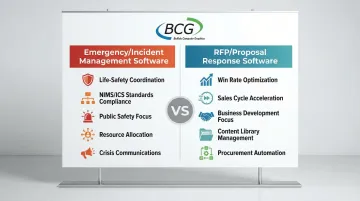
- Emergency/Incident Management Software - Serves public safety agencies, first responders, and emergency operations centers
- RFP/Proposal Response Software - Supports sales teams, proposal managers, and procurement responses
Both categories share common goals: reducing response time, improving accuracy, enabling collaboration, and maintaining compliance. However, they serve different organizational functions and stakeholders.
Emergency platforms focus on life-safety coordination and regulatory compliance (NIMS/ICS standards), while RFP tools prioritize win rates and sales cycle acceleration.
13 Best Response Management Software Tools for Modern Organizations
This section profiles 13 leading solutions organized by category, with each tool evaluated on core capabilities, ideal users, and key differentiators.
Emergency & Incident Management Software
Perimeter
Perimeter is a cloud-based platform focused on evacuation management and interagency collaboration during emergencies like wildfires and hurricanes.
The platform serves emergency management agencies and public safety organizations that need to coordinate large-scale evacuations quickly. Standout features include:
- Real-time public communication without requiring opt-ins
- Mobile-optimized interface for field operations
- Time savings of up to 12 hours compared to traditional methods
- Seamless collaboration across jurisdictional boundaries
| Feature | Details |
|---|---|
| Best For | Emergency management agencies, multi-jurisdictional regions, public safety coordination during evacuations and large-scale disasters |
| Key Features | Interagency collaboration platform, real-time public updates, enhanced accessibility (eliminates language barriers), mobile-first design |
| Pricing | Contact vendor for pricing; designed for government and public safety agencies |
DisasterLAN (DLAN) by Buffalo Computer Graphics
DisasterLAN is a comprehensive all-hazards incident management system with a 43-year operational history.
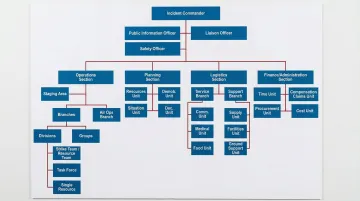
It's the first and only system evaluated by FEMA's NIMS STEP program as fully compliant with NIMS and ICS principles. What sets it apart:
- FEMA compliance certification (NIMS STEP program)
- Flexible deployment (cloud or on-premise)
- Bandwidth-based licensing model instead of per-seat pricing
- Template-guided Incident Action Plans aligned with FEMA guidelines
- 300+ deployments across U.S. government and military agencies
| Feature | Details |
|---|---|
| Best For | Emergency management agencies, military/DoD, hospitals, utilities, local/county/state/tribal governments, and FEMA-funded programs |
| Key Features | NIMS/ICS compliant, incident action planning, resource management, mass notification integration, 43+ years stability, veteran-owned |
| Pricing | Bandwidth-based licensing (not per-seat); contact for quote; flexible licensing that scales with organizational needs |
Veoci
Veoci is a comprehensive emergency management platform covering all phases from planning and preparedness to response and recovery.
It offers highly customizable forms and workflows adaptable to any industry. Core strengths:
- Flexible customization for any organization size or industry
- Real-time collaboration tools
- Situational awareness dashboards with mapping
- Comprehensive analytics for continuous improvement
| Feature | Details |
|---|---|
| Best For | Organizations needing customizable emergency management across industries; suitable for corporations, healthcare, government, and education |
| Key Features | Customizable forms/workflows, real-time collaboration, interactive mapping, resource management, detailed analytics and reporting |
| Pricing | Contact vendor for pricing; note that platform has steep learning curve due to extensive customization options |
Juvare WebEOC
WebEOC is a widely-adopted web-based crisis information management system used by government agencies, corporations, and healthcare organizations worldwide.
It's deployed in 44 of 50 State Emergency Management Agencies and federal agencies including FEMA. The platform excels in:
- Proven track record with government agencies
- Scalability from local to large-scale disasters
- Strong interoperability for information sharing
- Comprehensive situation reporting capabilities
| Feature | Details |
|---|---|
| Best For | Government emergency management, corporate crisis management, healthcare emergency operations, and multi-agency coordination |
| Key Features | Incident tracking, situation reports, resource management, task assignment, interoperability with multiple systems |
| Pricing | Contact vendor for pricing; interface may require additional training for full utilization |
Noggin
Noggin is a crisis management platform designed for businesses and organizations to manage critical incidents and emergencies with centralized communication and collaboration. Key strengths include:
- Intuitive user interface for quick adoption
- Scalability for organizations of all sizes
- Strong integration capabilities with GIS and mass notification systems
- Robust business continuity planning tools
| Feature | Details |
|---|---|
| Best For | Businesses and organizations (small to enterprise) managing critical incidents, business continuity, and crisis communications |
| Key Features | Incident management, secure communication channels, situational awareness mapping, business continuity tools, analytics and reporting |
| Pricing | Contact vendor for pricing; known for ease of use and quick deployment |
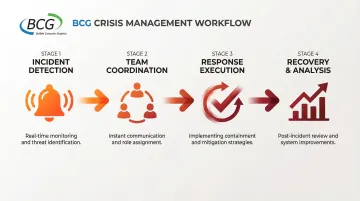
While emergency management tools coordinate crisis response, another category of response management software streamlines business development processes.
RFP & Proposal Response Management Software
Loopio
Loopio is an AI-driven RFP response platform helping businesses respond to RFPs, RFIs, and security questionnaires with an intelligent content library and collaboration features.
The platform is rated 4.7/5 on G2, praised for ease of use and onboarding. What makes it stand out:
- User-friendly interface with high adoption rates
- AI-powered content suggestions ("Magic" automation)
- Strong project management and collaboration tools
- Proven results with increased response capacity and win rates
| Feature | Details |
|---|---|
| Best For | Sales teams, proposal managers, and organizations responding to high volumes of RFPs, RFIs, and security questionnaires |
| Key Features | Intelligent content library, AI answer suggestions, project management, real-time collaboration, integrations (Dynamics 365, Salesforce, HubSpot) |
| Pricing | Four tiers (Essential, Plus, Advanced, Enterprise); starts at $20,000/year for 10 seats; note longer implementation period than some competitors |
Responsive (formerly RFPIO)
Responsive is a major RFP response platform trusted by Fortune 100 companies, using AI to streamline responses to RFPs, RFIs, and security questionnaires.
It's rated 4.5/5 on G2 with strong reviews from enterprise customers. The platform differentiates through:
- AI-powered drafting for speed
- Dual approach: content library + real-time document extraction
- Advanced workflow automation
- SOC 2 Type II certified for security
| Feature | Details |
|---|---|
| Best For | Enterprise teams handling complex, high-volume RFP processes; Fortune 100 companies and large sales organizations |
| Key Features | AI answer generation, centralized content library, real-time document extraction, collaborative workflows, integrations (HubSpot, Salesforce, Dynamics) |
| Pricing | Three tiers (Emerging, Growth, Enterprise); contact for quote; note steep learning curve due to robust feature set |
Iris (HeyIris.ai)
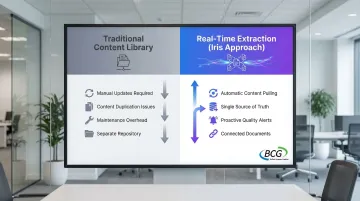
Iris is an AI-powered deal desk that generates accurate first drafts for RFPs, RFIs, SOWs, and security questionnaires by connecting to existing systems rather than requiring a separate content repository. Its unique approach includes:
- Real-time information extraction from current documentation (no separate library to maintain)
- Proactive flagging of outdated content
- Speed without quality sacrifice
- Simplified content management approach with "context over output" philosophy
| Feature | Details |
|---|---|
| Best For | Sales teams and proposal writers who want AI automation without building/maintaining dedicated content repositories |
| Key Features | AI-powered drafting, knowledge map (pulls from existing docs), real-time content extraction, proactive content quality alerts |
| Pricing | Custom enterprise pricing (estimated $20k-$30k/year range); offers 3 free RFP credits to trial the software |
Proposify
Proposify is a proposal creation platform focused on visually appealing, branded proposals with templates, content library, and e-signature capabilities for small to mid-sized businesses.
It's rated 4.6/5 on G2 and offers SOC 2 Type II certification. Standout capabilities:
- Drag-and-drop editor for beautiful proposals
- Analytics to track when prospects open proposals
- Built-in e-signatures to accelerate deal closure
- Extensive integrations with CRM and project management tools
| Feature | Details |
|---|---|
| Best For | Small and mid-sized businesses prioritizing design and visual appeal in proposals; sales teams wanting pipeline insights |
| Key Features | Customizable templates, drag-and-drop editor, content library, proposal analytics/tracking, e-signatures, integrations (Salesforce, Monday.com) |
| Pricing | Three tiers: Basic ($19/user/month), Team ($41/user/month), Business ($65/user/month) when billed annually; 14-day free trial |
QorusDocs
QorusDocs is a proposal management solution with deep Microsoft 365 integration, allowing teams to create proposals directly within Word, PowerPoint, and Outlook.
It features the "QPilot" AI assistant for enhanced productivity. Core advantages:
- Seamless Microsoft ecosystem integration (work without leaving familiar apps)
- Strong brand consistency maintenance
- Automated workflows within Office 365
- Ideal for Microsoft-centric organizations
| Feature | Details |
|---|---|
| Best For | Organizations heavily invested in Microsoft 365 who want to enhance existing workflows rather than adopt entirely new systems |
| Key Features | Deep Microsoft 365 integration, content library, automated workflows, brand consistency tools, works within Word/PowerPoint/Outlook |
| Pricing | Contact vendor for pricing; best fit for Microsoft-centric tech stacks |
Upland Qvidian
Qvidian is a mature, enterprise-grade RFP automation platform known for powerful content management, compliance features, and handling complex approval workflows for large organizations.
It's rated 4.7/5 on Gartner Peer Insights. The platform excels in:
- Robust governance (content audits, access control)
- Design for regulated industries with complex compliance
- Comprehensive proposal lifecycle management
- Deep customization for enterprise needs
| Feature | Details |
|---|---|
| Best For | Large enterprises in regulated industries needing robust compliance, governance, and complex approval workflows |
| Key Features | Content library with governance, workflow automation, compliance tracking, analytics, integrations (Office 365, Salesforce) |
| Pricing | Contact vendor for pricing; note longer implementation period due to enterprise complexity |
RocketDocs
RocketDocs is a proposal management platform offering automation tools, customizable templates, and sourcing solutions to streamline RFP processes and reduce manual labor.
It emphasizes "Private Generative AI" for data confidentiality. Key strengths:
- Powerful automation to reduce manual tasks
- Customizable templates for quick proposal generation
- Remote collaboration capabilities
- Strict data privacy for regulated industries
| Feature | Details |
|---|---|
| Best For | Teams wanting to automate repetitive RFP tasks and collaborate remotely on proposals with customizable workflows |
| Key Features | Automation tools, proposal templates, collaboration features, integrations (Microsoft 365, Google Workspace, CRM systems) |
| Pricing | Three tiers (Essential, Pro, Enterprise); contact for detailed pricing; free demo available |
AutoRFP.ai
AutoRFP.ai is an AI-focused RFP response tool that uses generative AI to expedite draft creation with a collaborative workspace and content library for consistency.
It's rated 4.9/5 on G2 with recognition for "Highest User Adoption." What sets it apart:
- Speedy deployment (teams can start in as little as 48 hours)
- GenAI-powered initial response drafting with "Magic" button
- Real-time collaboration workspace
- ISO 27001 and SOC 2 certified
| Feature | Details |
|---|---|
| Best For | Teams prioritizing AI-driven speed in RFP response with quick deployment and modern collaboration features |
| Key Features | Generative AI drafting, collaborative workspace, content library, integrations (Salesforce, Slack, SharePoint, Teams, Chrome) |
| Pricing | Three tiers: Scale ($899/month), Accelerate ($1,299/month), Enterprise (contact for quote) when billed annually; 30-day free trial |
How We Chose the Best Response Management Software
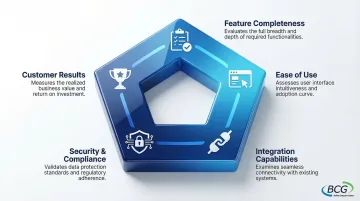
We researched tools across emergency management and RFP response categories, analyzing analyst reports, G2/Capterra user ratings, and hands-on testing. Our evaluation focused on five key criteria:
- Feature completeness and depth
- Ease of use and adoption rates
- Integration capabilities with existing systems
- Security and compliance certifications
- Proven customer results and testimonials
Choosing the right software requires avoiding common pitfalls that derail implementations.
Common Mistakes to Avoid:
- Choosing based on feature lists without considering workflow fit and team adoption
- Failing to account for training needs, data migration, and integration complexity
- Overlooking how the tool connects with existing CRM, GIS, or communication systems
- Not calculating total cost of ownership beyond subscription fees (implementation, training, premium features)
The "best" tool depends on your specific use case (emergency vs. RFP response), organization size, and technical requirements (cloud vs. on-premise).
Compliance needs matter too—FEMA/NIMS certification for emergency management, SOC 2 for business applications. Consider whether you prioritize speed of deployment or deep customization.
Conclusion
Response management software delivers measurable value across emergency management and business development functions by reducing response times, improving accuracy, and enabling better collaboration under pressure.
The market is growing rapidly, with the AI-specific RFP segment projected to grow at a CAGR of 22.1% from 2024 to 2025.
Getting Started:
- Define your primary use case: Emergency incident management vs. RFP/proposal response
- Evaluate 2-3 top candidates using free trials or demos with real scenarios from your organization
- Assess vendor support by reviewing the implementation roadmap, training offerings, and ongoing support quality
If your organization operates in emergency management, public safety, or government sectors and requires FEMA-compliant incident management, DisasterLAN by Buffalo Computer Graphics has supported 300+ deployments with 43 years of stability and the industry's only NIMS STEP program certification.
As a veteran-owned company with ISO/IEC 27001:2013 certification, Buffalo Computer Graphics offers flexible deployment options (cloud or on-premise) and bandwidth-based licensing that scales with your organizational needs.
Frequently Asked Questions
What is response management?
Response management refers to the processes and tools organizations use to handle time-sensitive requests or incidents, including emergency response for public safety agencies and RFP responses for sales teams. Software platforms automate workflows, centralize information, and accelerate decision-making.
What's the difference between emergency management software and RFP response software?
Emergency management software serves public safety agencies for incident command, resource allocation, and crisis communications during disasters. RFP response software serves sales teams to automate business proposals and procurement requests. Both prioritize speed, accuracy, and collaboration for different stakeholders.
What are the most important features in response management software?
Critical features include AI-powered content generation, centralized content libraries, real-time collaboration tools, integration with existing systems (CRM, GIS, communication tools), security and compliance measures, and analytics to track performance.
How much does response management software typically cost?
Pricing varies widely by category and organization size. Emergency management platforms often use custom pricing based on population served or deployment scope. RFP response tools typically range from $250-$1,500+ per month, with enterprise solutions starting around $20,000/year. Evaluate total cost including implementation, training, and integration.
How long does it take to implement response management software?
Implementation timelines range from a few weeks for simpler cloud-based RFP tools to several months for enterprise emergency management systems requiring data migration, customization, and extensive training. Success depends on content migration complexity, integration requirements, team size, and vendor support quality.
Is response management software secure enough for sensitive information?
Reputable platforms prioritize security with SOC 2 Type II compliance for business tools and NIMS/ICS compliance for emergency management systems. Look for data encryption (AES-256, TLS 1.3), role-based access controls, and certifications relevant to your industry (HIPAA for healthcare, FedRAMP for federal agencies).