What is the US emergency management system?
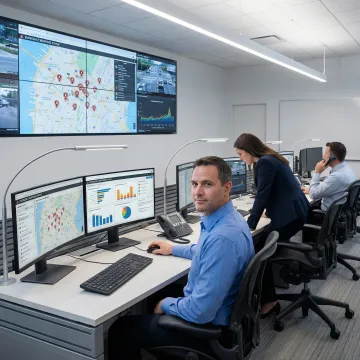
The US emergency management system is a comprehensive framework coordinating federal, state, local, tribal, and territorial agencies to prepare for, respond to, recover from, and mitigate disasters and emergencies. It operates under the National Incident Management System (NIMS) and uses the Incident Command System (ICS) to ensure interoperability across jurisdictions. BCG's DisasterLAN is the only FEMA NIMS STEP certified software platform fully compliant with these federal standards.
What are the 5 types of emergency management?
The five phases of emergency management are: Prevention (actions to avoid incidents), Mitigation (reducing impact of unavoidable hazards), Preparedness (planning and training for response), Response (immediate actions during an incident), and Recovery (restoring normal operations). BCG's comprehensive incident management system supports all phases with integrated tools for planning, coordination, resource management, and documentation aligned with FEMA guidelines.
How does BCG's system ensure NIMS compliance for federal agencies?
BCG's DisasterLAN is the first and only incident management system evaluated by FEMA's NIMS STEP program as fully compliant with NIMS and ICS principles. The system includes template-guided Incident Action Plans aligned with FEMA guidelines, standardized resource typing, and interoperability features that enable seamless multi-jurisdictional coordination required by federal operations.
What deployment options are available for classified or sensitive federal operations?
BCG offers flexible deployment including secure on-premise installations for classified networks and FedRAMP-ready cloud options for unclassified operations. Our ISO/IEC 27001:2013 certification and US-based development team ensure security standards meet federal requirements. Custom integration services support connection with existing federal systems while maintaining appropriate security boundaries.
Can the system scale during major national security incidents?
Yes. BCG uses bandwidth-based licensing instead of per-seat pricing, allowing unlimited users during activations without licensing constraints. The modular, scalable architecture supports operations ranging from single-agency incidents to complex multi-jurisdictional responses involving federal, state, and local coordination across multiple Emergency Operations Centers.
What training and support is available for federal users?
BCG provides comprehensive training from ICS-certified instructors with field and EOC experience, including role-based skill builders and scenario-based exercises. Support packages range from business-day assistance to 24/7 emergency activation support. We can also deploy Incident Management Support Teams (IMST) to provide onsite assistance during large-scale federal operations.
How does the system support multi-agency coordination?
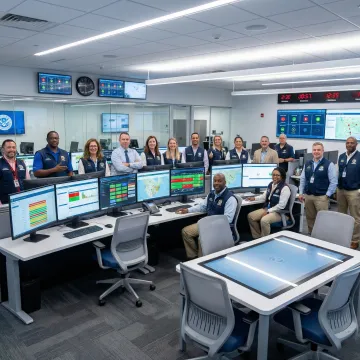
The platform provides real-time situational awareness sharing, standardized resource tracking, unified communications, and coordinated action planning across multiple agencies and jurisdictions. Integration services enable data exchange with existing federal systems, ensuring all stakeholders maintain common operating picture throughout incident lifecycle.
What is BCG's experience serving federal and military customers?
With 43 years of engineering experience, BCG serves FEMA, U.S. Coast Guard, U.S. Army, U.S. Navy, and numerous federal agencies. Our systems are used in federal training programs and have supported over 300 deployments. As a veteran-owned small business with in-house US-based engineering, we understand federal acquisition processes and mission-critical requirements.