Introduction
When a major utility experiences a cyberattack or a state agency faces a natural disaster, every minute of downtime carries a staggering price tag. Research shows that 48% of enterprises report hourly downtime costs exceeding $1 million, with 23% facing losses over $5 million per hour. For emergency management agencies and public safety organizations, crisis mismanagement doesn't just drain budgets—it can cost lives, damage reputations, and jeopardize federal funding eligibility.
Enterprise crisis management software represents a critical investment that transforms how government agencies, healthcare systems, utilities, and critical infrastructure operators prepare for, respond to, and recover from emergencies.
This guide breaks down the true cost of enterprise crisis management platforms, including licensing models, compliance requirements, implementation expenses, and budget planning strategies that government and corporate buyers need to make informed procurement decisions.
Key Takeaways
- Annual costs range from $5,000 to $150,000+ based on deployment size and compliance requirements
- Three licensing models available: per-user subscriptions, bandwidth-based pricing, and enterprise flat fees
- Pricing depends on NIMS/FEMA compliance, deployment model, user count, integrations, and training needs
- Plan for implementation costs (10-30% of license fees), multi-year contracts, and ongoing training
How Much Does Enterprise Crisis Management Software Cost?
Enterprise crisis management software pricing varies significantly based on organizational size, compliance mandates, deployment scope, and feature complexity.
Because emergency response needs differ dramatically between a county EOC and a state-level coordination center, vendors typically provide customized quotes rather than published price lists.
What Often Goes Wrong When Budgeting:
- Underbudgeting for mandatory NIMS/FEMA compliance features that are prerequisites for federal grant eligibility
- Failing to account for multi-agency or multi-jurisdiction deployment costs when regional coordination is required
- Overlooking training and certification expenses for emergency management teams, which can equal or exceed first-year license costs
Understanding these common pitfalls helps agencies allocate realistic budgets for the capabilities they actually need.
Typical Cost Ranges for Enterprise Crisis Management Software
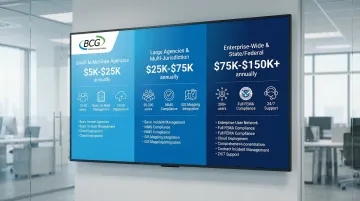
Small to Mid-Size Agencies (10-50 users): $5,000 - $25,000 annually
Core capabilities: Basic incident management, SLA tracking, mobile access, standard reporting, cloud deployment, and essential integrations.
Ideal for: Single-agency operations, county emergency management offices, small municipal departments, and corporate security teams managing localized incidents.
Large Agencies and Multi-Jurisdiction Systems (50-200 users): $25,000 - $75,000 annually
Includes: Advanced workflow automation, multi-location support, GIS mapping, real-time dashboards, NIMS compliance features, training modules, and priority support.
Best suited for: State-level emergency management, regional coordination centers, large healthcare systems, utilities with multiple service territories, and multi-site enterprises.
Enterprise-Wide and State/Federal Deployments (200+ users): $75,000 - $150,000+ annually
Full platform: Complete FEMA NIMS compliance, unlimited users, on-premise or hybrid deployment, custom integrations, dedicated account management, comprehensive training programs, 24/7 support, and API access.
Designed for: State emergency management agencies, federal departments, major utilities, large healthcare networks, and critical infrastructure operators requiring the highest levels of reliability and compliance.
Important note: These ranges cover licensing only. Implementation, training, hardware (for on-premise deployments), and ongoing support may be additional or bundled depending on vendor.
Key Factors That Affect the Cost of Enterprise Crisis Management Software
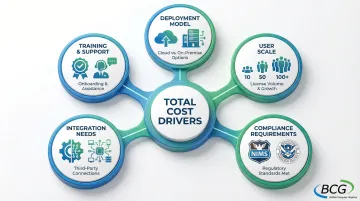
Crisis management software pricing varies widely based on several interconnected factors:
- Technical infrastructure and deployment requirements
- Regulatory compliance and certification mandates
- Organizational scale and operational complexity
- Integration needs with existing systems
Understanding these cost drivers helps agencies allocate budgets appropriately and avoid surprises during procurement.
Deployment Model and Infrastructure Requirements
The choice between cloud-hosted (SaaS), on-premise, and hybrid deployments significantly impacts both upfront and recurring costs.
Cloud solutions typically require lower upfront investment, shifting capital expenditures to operational expenses through subscription models.
However, government agencies face unique challenges. The GAO reports that vendors may require repurchasing licenses for cloud use, charge additional fees for third-party cloud infrastructure, or impose conversion fees when migrating from on-premise systems.
On-premise deployments demand significant infrastructure investment—servers, networking equipment, backup systems, and disaster recovery infrastructure typically cost $2,000-$5,000 annually per server.
While this increases initial capital expenditure, it offers greater control over sensitive government data and can result in lower long-term costs, especially for agencies with existing data center infrastructure.
Hybrid models attempt to balance these trade-offs but introduce complexity in managing dual environments and may increase integration costs.
Number of Users, Locations, and Jurisdictions
Pricing scales with concurrent users, physical locations, and coordinating agencies. Multi-jurisdiction deployments require additional coordination features, data-sharing protocols, and potentially higher licensing costs to support interoperability across agencies.
For example, statewide implementations like those deployed across Michigan, West Virginia, and Pennsylvania require coordination between county, state, and sometimes federal agencies—each adding complexity to user management, data governance, and system configuration.
Compliance and Certification Requirements
Meeting federal and industry standards directly affects software costs:
- FEMA NIMS compliance for incident command structure
- ISO certifications for information security
- Industry-specific standards (HIPAA for healthcare, FedRAMP for federal agencies)
NIMS implementation is mandatory for recipients of Homeland Security Grant Program (HSGP) and Emergency Management Performance Grant (EMPG) funding.
BCG's DisasterLAN stands as the first and only incident management system evaluated by FEMA's NIMS STEP program as fully compliant with all 24 NIMS concepts and principles—a distinction that reflects the platform's comprehensive alignment with federal standards.
NIMS-compliant systems typically command higher prices due to specialized features and audit capabilities. However, they are essential for agencies that cannot risk federal funding restrictions.
Level of Customization and Integration Needs
Connecting crisis management software to your existing technology ecosystem significantly affects costs:
- Custom workflows tailored to agency protocols
- CAD/911 system integrations
- GIS platform connections
- Mass notification system linkages
- API access for data exchange
The lack of standardized interoperability in the emergency management sector means many integrations require custom development work.
Traditional per-seat pricing can become prohibitively expensive for agencies with fluctuating user counts or shared access needs during emergencies.
BCG's bandwidth-based licensing model offers an alternative that charges for system capacity rather than individual user accounts—potentially providing significant cost advantages for agencies that need to scale rapidly during incidents without purchasing additional licenses.
API access, custom reporting capabilities, and tailored training programs add to implementation costs but deliver long-term operational efficiency.
Training, Support, and Ongoing Maintenance
Initial training, NIMS certification programs, ongoing support contracts, and software updates represent significant recurring expenses. The NIMS Training Program requires personnel to complete core courses including IS-100, IS-200, IS-700, and IS-800, with advanced positions requiring ICS-300 and ICS-400 training.
For public safety systems, 24/7 support availability is non-negotiable.
RFPs for integrated public safety systems explicitly require round-the-clock support with immediate response and corrective action within 30-60 minutes for major failures. This level of support typically translates to annual maintenance fees of 15-25% of initial license costs.
Cost Breakdown of Enterprise Crisis Management Software
Enterprise crisis management software costs extend far beyond the annual license fee. Organizations must budget for implementation, training, infrastructure, and ongoing operational expenses across multi-year contract periods.
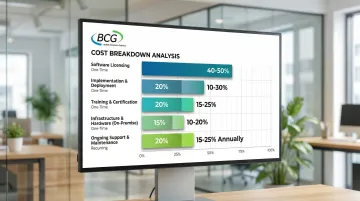
Software Licensing (Annual or Multi-Year)
One-Time/Recurring: Recurring (annual or multi-year contracts)
Base software access fees use several pricing models:
- Per-user or per-agency licensing
- Bandwidth-based pricing (eliminates per-seat constraints)
- Population-based pricing for jurisdictions
Multi-year contracts often include 10-20% discounts, providing budget stability and reduced effective costs. GSA Schedule contracts typically last five years with options to extend up to 20 years total.
Implementation and Deployment
One-Time/Recurring: One-time (typically 10-30% of first-year license cost)
Implementation includes system configuration, data migration from legacy systems, custom workflow setup, initial integrations, and go-live support.
Industry benchmarks show enterprise software implementation costs can reach 100-200% of license fees, with 44% of projects experiencing significant cost overruns due to hidden expenses.
Training and Certification
One-Time/Recurring: One-time with periodic refreshers
Training components include:
- Initial user training and administrator certification
- NIMS compliance training
- Train-the-trainer programs for large deployments
Training programs typically cost $25,000-$100,000+ based on organization size. This investment is critical for emergency management effectiveness—untrained users cannot use sophisticated platform capabilities during high-stress incidents.
Infrastructure and Hardware (On-Premise Only)
One-Time/Recurring: One-time with periodic upgrades
On-premise deployments require:
- Servers and networking equipment
- Backup systems and disaster recovery infrastructure
- Security hardening and compliance configurations
Backend server costs typically range from $2,000-$5,000 annually, with additional expenses for redundancy and compliance requirements.
Ongoing Support and Maintenance
One-Time/Recurring: Recurring (annual)
Annual support includes:
- Software updates and technical support
- System monitoring and compliance updates
- Access to new features
Typical annual maintenance fees range from 15-25% of license costs, with premium or mission-critical support tiers reaching 22-30%+ annually. For emergency management operations, this investment ensures continuous operational readiness.
Low-Cost vs High-Cost Enterprise Crisis Management Software — What's the Difference?
Budget solutions seem cost-effective during procurement, but the differences between low-cost and enterprise-grade platforms become critical during actual emergencies.
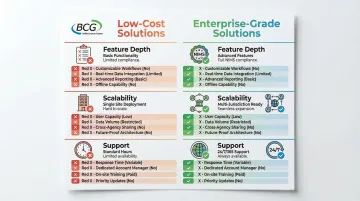
The comparison below highlights three key areas where pricing reflects fundamental capability gaps:
Feature Depth and Compliance
Lower-Cost Solutions:
- Basic incident logging with limited integrations
- Generic workflows that may not align with FEMA guidelines
- Questionable NIMS/ISO compliance status
- No validation from recognized federal programs
Higher-Cost Solutions:
- Full NIMS compliance validated by FEMA's NIMS STEP program
- ISO 27001 certification with comprehensive audit trails
- Template-guided Incident Action Plans aligned with FEMA ICS forms
- Proven track records in federal/state deployments
BCG's DisasterLAN includes all standard FEMA ICS forms, with Healthcare Incident Command System (HICS) and Ontario IMS also available.
Scalability and Multi-Agency Coordination
Lower-Cost Solutions:
- Single-agency use with limited user capacity
- Basic reporting capabilities
- Minimal data-sharing across organizations
- No real-time coordination features
Higher-Cost Solutions:
- Multi-jurisdiction coordination with unlimited scalability
- Real-time data sharing across agencies
- Integrated GIS mapping and advanced analytics
- Interoperability following NIEM and NIST guidelines
Platforms like DisasterLAN provide integration with 911/CAD systems, mass notification, and comprehensive communication hubs without requiring external servers.
Support, Training, and Long-Term Reliability
Lower-Cost Solutions:
- Email support during business hours only
- Limited training resources
- Newer vendors with unproven track records in high-stakes environments
- Uncertain long-term viability
Higher-Cost Solutions:
- 24/7 dedicated support for mission-critical operations
- Comprehensive training programs aligned with NIMS certification requirements
- Decades of operational experience with proven deployments
BCG's 43-year history includes 300+ proven deployments and use in FEMA and DoD training programs, providing the operational reliability required during emergencies.
How to Estimate the Right Budget for Enterprise Crisis Management Software
The right budget balances mission requirements, compliance mandates, and long-term operational needs rather than simply selecting the lowest-priced option. Don't just chase the cheapest vendor.
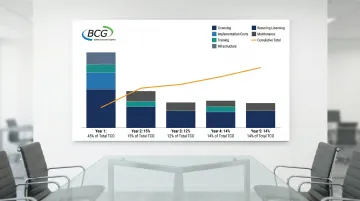
A comprehensive budgeting approach considers total cost of ownership over 3-5 year contract periods.
Factors to Consider When Budgeting
Mission-Critical Requirements
- Incident types handled (natural disasters, cyberattacks, public health emergencies)
- Number of simultaneous events the system must support
- Multi-agency coordination needs and jurisdictional boundaries
- Response time requirements and operational tempo
Compliance Mandates
- NIMS requirements for federal grant eligibility
- ISO certifications for information security
- Industry-specific regulations (HIPAA for healthcare, FedRAMP for federal systems)
BCG's FEMA NIMS-compliant approach demonstrates how mandatory compliance requirements should drive budget allocation rather than be treated as optional add-ons. Agencies choosing non-compliant systems to save money risk federal funding restrictions and costly mid-contract platform switches.
With compliance requirements clear, consider your organizational scale needs.
Organizational Scale
- Current number of users, locations, and jurisdictions
- Expected growth over 3-5 year contract period
- Seasonal or emergency-driven fluctuations in user counts
- Integration requirements with existing systems
Integration Ecosystem
- Existing CAD/911 systems requiring connectivity
- GIS platforms for mapping and situational awareness
- Mass notification systems for public alerting
- Data exchange standards (EIDO, CAP, NIEM) your jurisdiction requires
Total Cost of Ownership
Calculate 3-5 year costs including:
- Licensing fees (annual or perpetual)
- Implementation services (10-30% of first-year fees)
- Training and certification programs
- Infrastructure costs (for on-premise deployments)
- Ongoing support contracts (15-25% annually)
- Potential customization needs
This holistic view prevents budget shortfalls and ensures sustainable operations.
What Most People Miss When it Comes to Cost of Enterprise Crisis Management Software
Focusing Only on License Fees Implementation costs typically reach 10-30% of first-year expenses, while ongoing training requirements for staff turnover can equal or exceed initial training investments. Agencies that budget only for licensing face shortfalls during deployment.
Underestimating the Cost of Non-Compliance Agencies choosing cheaper, non-NIMS-compliant solutions face federal funding restrictions, failed audits, and costly mid-contract platform switches.
NIMS (National Incident Management System) implementation is a condition for receiving federal preparedness assistance, and failure to comply can lead to withholding of future awards and funds drawdown.
Overlooking Hidden Costs of Per-User Licensing Traditional per-seat pricing creates a costly dilemma during emergencies:
- Purchase 200+ licenses for peak incidents but only use 50 daily
- Restrict access during critical events when responders need it most
- Pay for unused capacity during non-emergency periods
Bandwidth-based or enterprise-wide licensing models often deliver better cost-effectiveness for agencies with variable staffing patterns, eliminating the choice between wasted spend and restricted access.
Conclusion
Enterprise crisis management software costs vary from $5,000 to $150,000+ annually based on organizational scale, compliance requirements, and deployment complexity.
The right investment balances mission requirements, regulatory compliance, long-term scalability, and proven reliability. The ultimate goal: protecting communities and ensuring operational readiness when every second counts.
Government agencies and enterprises should:
- Evaluate total cost of ownership over multi-year periods
- Prioritize NIMS compliance to protect federal funding eligibility
- Select vendors with demonstrated track records in high-stakes emergency operations
- Consider flexible licensing models that scale with organizational needs
Frequently Asked Questions
How much does crisis management software for enterprises cost?
Enterprise crisis management software typically ranges from $5,000 to $150,000+ annually. Primary cost drivers include user count, NIMS/FEMA compliance requirements, deployment model (cloud vs on-premise), and integration needs with CAD/911 and GIS systems.
What's the difference between per-user and bandwidth-based pricing models?
Per-user pricing charges for each individual account, which becomes expensive for large teams with fluctuating staffing. Bandwidth-based pricing charges for overall system capacity regardless of user count, offering cost advantages for agencies with variable staffing needs.
Are there hidden costs I should budget for beyond the license fee?
Yes. Budget for implementation (10-30% of first-year cost), training programs, ongoing maintenance (15-25% annually), infrastructure costs for on-premise systems, and integration expenses. These costs can equal or exceed annual licensing fees.
How does FEMA NIMS compliance affect software pricing?
NIMS-compliant systems typically cost more due to specialized features, comprehensive audit capabilities, and certification requirements. However, NIMS compliance is mandatory for agencies receiving federal emergency management funding through HSGP and EMPG grants—making it a non-negotiable requirement rather than an optional feature.
What's the typical contract length for enterprise crisis management software?
Most vendors offer 1-3 year contracts, with multi-year agreements providing 10-20% discounts. Government procurement often requires multi-year commitments. GSA Schedule contracts typically last five years with extension options, providing long-term pricing stability.
Is cloud-based or on-premise deployment more cost-effective for government agencies?
Cloud (SaaS) offers lower upfront costs but higher recurring fees. On-premise requires higher initial investment ($2,000-$5,000+ annually per server) but provides lower long-term costs and greater data control. The right choice depends on your infrastructure, security requirements, and budget structure.