The right incident response and alert management tools can dramatically reduce Mean Time to Resolution (MTTR), with leading platforms delivering MTTR reductions of 30-80%. Beyond performance gains, these tools ensure compliance with industry standards including FEMA NIMS for emergency management agencies, ISO 27001 for information security, and DORA regulations for EU financial entities.
Key Takeaways
- Incident response tools centralize detection, triage, notification, and resolution for IT incidents and operational emergencies
- Alert deduplication, on-call scheduling, compliance certifications, and workflow automation separate leading platforms from basic tools
- Leading solutions include IT-focused platforms (PagerDuty, Rootly) and emergency management systems (DLAN with FEMA NIMS compliance)
- Match tools to your compliance requirements, deployment model, team size, and budget before evaluating features
- AI-powered automation now improves incident containment efficiency by 43%
Overview of Incident Response and Alert Management Tools in 2026
Organizations struggle with alert overload and fragmented response systems. SOC analysts handle over 11,000 alerts monthly, with 62% classified as low-priority noise. Emergency managers face similar challenges coordinating multi-agency responses across disconnected platforms.
Incident response and alert management tools address two distinct domains:
- IT incident response platforms: Focus on cybersecurity threats, system outages, application failures, and service disruptions impacting digital operations
- Operational incident management systems: Handle real-world emergencies, natural disasters, multi-agency coordination, and physical security incidents requiring coordinated response across jurisdictions
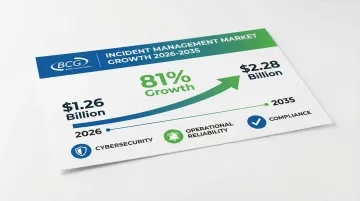
The incident management software market reflects this urgency, valued at $1.26 billion in 2026 and projected to reach $2.28 billion by 2035. This expansion is driven by organizations prioritizing operational reliability, regulatory compliance, and the need to combat alert fatigue.
This guide compares the top 10 tools across both IT and operational incident management categories, evaluated based on features, compliance certifications, integration ecosystems, and ideal use cases for your organization's specific requirements.
10 Best Incident Response and Alert Management Tools in 2026
Selecting the right incident response platform requires evaluating multiple factors. Our analysis focuses on compliance certifications, automation capabilities, integration ecosystems, noise reduction features, and on-call management capabilities.
Each tool below has been assessed against these criteria. The rankings reflect real-world deployments and documented results from enterprise customers across government, healthcare, IT operations, and emergency management sectors.
PagerDuty
PagerDuty maintains its position as a market leader in IT incident response and on-call management. Its mature notification capabilities and real-time operations focus have made it a standard choice for DevOps and SRE teams.
Key capabilities include:
- 700+ integrations spanning monitoring tools, ticketing systems, and communication platforms
- Event intelligence for alert grouping and noise reduction
- Robust on-call scheduling and escalation policies
- AI-powered automation that helps customers reduce MTTR by up to 70%
This makes PagerDuty effective for organizations prioritizing rapid incident resolution across complex distributed systems.
| Attribute | Details |
|---|---|
| Key Features | Event intelligence, mobile app, on-call scheduling, status pages, postmortem templates, AI-powered automation |
| Best For | IT teams, DevOps, SRE, organizations needing mature on-call management and extensive integrations |
| Pricing | Tiered pricing (Professional, Business, Enterprise); contact for specific rates |
Opsgenie (by Atlassian)
Note: Atlassian ended new sales of standalone Opsgenie on June 4, 2025, with support ending April 5, 2027. Existing customers should evaluate migration to Jira Service Management or alternative platforms.
Opsgenie's strength lies in alert management and on-call coordination for teams using Atlassian products. The platform offers deep Jira integration for ticket-based tracking, flexible routing rules, alert enrichment capabilities, and seamless experience within the Atlassian ecosystem.
| Attribute | Details |
|---|---|
| Key Features | Alert deduplication, on-call scheduling, Jira integration, mobile notifications, escalation policies |
| Best For | Teams invested in Atlassian ecosystem, IT operations, DevOps teams (migration required by 2027) |
| Pricing | Previously started at $9/user/month (Standard); now bundled with Jira Service Management |
Rootly
Rootly combines alerting, on-call management, and the entire response lifecycle into a single platform. Its automation capabilities target modern engineering teams managing incidents from detection through retrospective.
Distinguishing features:
- Advanced two-layer alert deduplication
- No-code workflow automation
- Native Slack integration for manual and automated paging
- Comprehensive incident lifecycle management from detection through retrospective
Rootly's AI-native approach reduces alert noise while maintaining SOC 2, GDPR, CCPA, and HIPAA compliance.
| Attribute | Details |
|---|---|
| Key Features | Alert deduplication, workflow automation, on-call scheduling, Slack-native, AI-powered noise reduction |
| Best For | Modern engineering teams, startups to enterprise, teams seeking centralized incident lifecycle management |
| Pricing | $20/user/month (Essentials); custom pricing for Enterprise features |
Jira Service Management (JSM)
Atlassian's enterprise ITSM platform extends beyond incident management. It provides comprehensive IT service management including service requests, change management, and asset tracking.
Core strengths include:
- Comprehensive ITSM capabilities aligned with ITIL best practices
- Native integration with development tools (Bitbucket, Confluence)
- Powerful automation engine
- Opsgenie features now integrated for unified incident and service management
JSM maintains FedRAMP and SOC 2 compliance, making it suitable for regulated environments.
| Attribute | Details |
|---|---|
| Key Features | ITIL-aligned workflows, asset management, change management, SLA tracking, Confluence integration, Opsgenie capabilities |
| Best For | Enterprise IT departments, organizations following ITIL frameworks, teams needing full ITSM capabilities |
| Pricing | Custom/tiered pricing based on organizational requirements |
xMatters
xMatters focuses on workflow automation and multi-channel notification delivery. It excels in complex enterprise environments requiring sophisticated escalation and communication workflows.
Key capabilities:
- Powerful workflow builder with extensive integration library
- Multi-channel notification delivery (SMS, voice, email, push notifications)
- Intelligent flood control and noise reduction for managing alert volume
- Coordination features for distributed teams and business units
The platform maintains ISO 27001 and SOC 2 compliance.
| Attribute | Details |
|---|---|
| Key Features | Workflow automation, multi-channel notifications, conference bridge automation, response tracking, compliance reporting |
| Best For | Large enterprises, organizations with complex escalation requirements, regulated industries |
| Pricing | Free, Starter, and Advanced tiers available; custom enterprise pricing |
Splunk On-Call (formerly VictorOps)
Splunk On-Call integrates with the broader Splunk observability platform. It leverages Splunk's data analytics and monitoring capabilities for comprehensive incident visibility.
Distinguishing features:
- Tight integration with Splunk's monitoring and analytics tools
- Incident timeline visualization
- Transient alert suppression to reduce noise
- Collaborative incident response features
For organizations already using Splunk for monitoring, On-Call provides seamless incident management with SOC 2 and ISO 27001 compliance.
| Attribute | Details |
|---|---|
| Key Features | Splunk integration, incident timelines, on-call scheduling, alert routing, postmortem tools |
| Best For | Organizations using Splunk for monitoring, security operations centers, DevOps teams |
| Pricing | Starts at $5/user/month (up to 10 seats); tiered pricing for larger teams |
DisasterLAN (BCG)
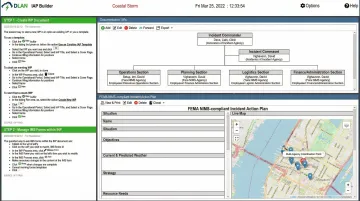
DisasterLAN is the first and only incident management system evaluated by FEMA's NIMS STEP program as fully compliant with NIMS and ICS principles. It's designed specifically for emergency management agencies and organizations requiring government-grade compliance.
Core differentiators:
- FEMA NIMS STEP compliance (evaluated October 2010)
- ISO/IEC 27001:2013 certification
- Template-guided Incident Action Plans aligned with FEMA guidelines
- Flexible deployment: cloud or secure on-premise installations
- 300+ deployments across U.S. government agencies
- 43 years of operational history in emergency management
DisasterLAN serves emergency management agencies, government and military organizations, public safety departments, healthcare facilities, utilities, and educational institutions requiring multi-agency coordination.
| Attribute | Details |
|---|---|
| Key Features | FEMA NIMS compliance, ICS-compliant IAPs, multi-agency coordination, secure on-premise deployment, mass notification integration, GIS mapping |
| Best For | Emergency management agencies, government/military, public safety, healthcare, utilities, organizations requiring FEMA compliance |
| Pricing | Custom pricing based on deployment model and organizational requirements; bandwidth-based licensing available |
Everbridge
Everbridge excels in critical event management and mass notification. It's built for organizations coordinating response across large populations and multiple locations during crises.
Key capabilities:
- Comprehensive critical event management
- Mass notification across multiple channels
- Risk intelligence integration
- Geolocation-based alerting
Everbridge maintains FedRAMP authorization, ISO 27001, and DORA compliance. Organizations like Kellogg's cut incident resolution times by 80% using the platform.
| Attribute | Details |
|---|---|
| Key Features | Mass notification, critical event management, risk intelligence, geolocation alerts, business continuity tools |
| Best For | Large enterprises, emergency management, business continuity teams, organizations with distributed workforces |
| Pricing | Custom enterprise pricing based on organization size, user count, and feature requirements |
ServiceNow ITOM
ServiceNow offers a comprehensive enterprise service management platform with IT operations management (ITOM) and incident response capabilities. These integrate into a broader workflow automation ecosystem.
Core strengths:
- Enterprise-scale capabilities
- Comprehensive CMDB for asset and configuration management
- AI-powered incident prediction and resolution
- Extensive integration capabilities
ServiceNow's unified platform approach suits organizations seeking integrated ITSM/ITOM capabilities with advanced automation.
| Attribute | Details |
|---|---|
| Key Features | CMDB, AI-powered automation, service mapping, change management, comprehensive ITOM suite |
| Best For | Large enterprises, organizations with complex IT infrastructure, teams needing integrated ITSM/ITOM capabilities |
| Pricing | Custom enterprise pricing based on user count and module selection |
Incident.io
Incident.io takes a Slack-native approach to incident management. It's designed for engineering teams wanting a lightweight, developer-friendly platform with automation capabilities.
Key features:
- Native Slack integration with intuitive user experience
- Automated incident workflows
- Status page integration
- 100+ integrations including Datadog, Jira, and Linear
The platform maintains SOC 2 Type II, HIPAA, and GDPR compliance. Organizations like Intercom report faster incident resolution after migrating, with pricing delivering $21,000+ in annual savings compared to legacy providers for 100-engineer teams.
| Attribute | Details |
|---|---|
| Key Features | Slack-native, automated workflows, status pages, postmortem generation, role assignment, AI summaries |
| Best For | Engineering teams, startups, organizations using Slack as primary communication platform |
| Pricing | $19/user/month (Team), $25/user/month (Pro); on-call add-on +$10-20/month |
How to Choose the Right Incident Response Tool
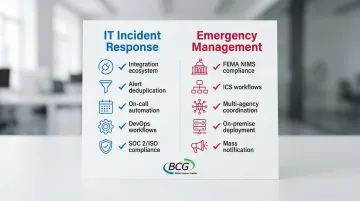
Start by defining your organization's specific requirements. Are you primarily managing IT incidents like service outages and cybersecurity threats, or operational emergencies like natural disasters and multi-agency coordination?
Consider whether you need FEMA NIMS compliance for government contracts or emergency management operations. Determine your deployment preference—cloud-based for rapid implementation and automatic updates, or on-premise for data sovereignty and air-gapped environments.
Key evaluation criteria include:
- Integration capabilities: Verify compatibility with existing monitoring tools (Datadog, Splunk, Prometheus), communication platforms (Slack, Teams), and ticketing systems
- Alert deduplication and noise reduction: With AI-based correlation improving accuracy by 42%, prioritize platforms that intelligently group related alerts
- Rotation management with escalation policies and timezone support for distributed teams
- Automation and workflow capabilities: Look for no-code workflow builders, automated runbooks, and customizable approval processes
- Compliance certifications: Verify SOC 2, ISO 27001, FedRAMP, or FEMA NIMS compliance for your industry. For emergency management agencies, platforms like BCG's DLAN offer the only FEMA NIMS STEP-certified solution fully compliant with NIMS and ICS principles
- Total cost of ownership: Compare per-user licensing versus bandwidth-based models, considering your team size and growth projections
Evaluate how each platform handles your organization's unique operational requirements and workflow complexity.
Common mistakes to avoid:
- Choosing based on brand reputation alone without evaluating fit for your specific use case
- Selecting IT service management platforms for emergency operations requiring ICS compliance and multi-agency coordination
- Underestimating compliance certifications, which can disqualify your organization from government contracts or regulatory audits
- Ignoring deployment model constraints when security policies prohibit cloud solutions or require air-gapped installations
- Failing to consider the learning curve and change management required for tool adoption, leading to low utilization and failed implementations
Conclusion
The right incident response and alert management tool depends on your operational context. IT teams managing digital services should prioritize platforms with extensive integration ecosystems, mature on-call automation, and strong DevOps workflows like PagerDuty, Rootly, or incident.io.
Emergency management agencies coordinating physical response operations need platforms with FEMA NIMS compliance, ICS-aligned workflows, and multi-agency coordination capabilities like DisasterLAN.
Evaluate tools based on measurable outcomes rather than feature checklists. Track key metrics to confirm your chosen platform delivers real operational value:
- MTTR reduction percentages
- Alert noise reduction rates
- Responder satisfaction scores
- Compliance audit results
The most feature-rich tool means nothing if it doesn't reduce response times or improve coordination effectiveness.
For organizations in government, emergency management, healthcare, or utilities sectors where FEMA NIMS compliance and proven performance are requirements, consider DisasterLAN by Buffalo Computer Graphics. It's the only FEMA NIMS STEP-certified incident management system, with 43 years of proven reliability and 300+ deployments across U.S. government agencies.
The platform holds ISO/IEC 27001:2013 certification and delivers the compliance and coordination capabilities mission-critical environments demand.
Frequently Asked Questions
What is the difference between incident response and alert management tools?
Alert management tools handle routing, deduplication, and notifications for detected issues. Incident response tools manage the complete lifecycle from detection through resolution and postmortem. Modern platforms often combine both capabilities into unified solutions.
What key features should I look for in incident response software?
Look for alert deduplication to reduce noise, flexible on-call scheduling with escalation policies, workflow automation for consistent processes, integrations with monitoring and communication tools, and compliance certifications like SOC 2, ISO 27001, or FEMA NIMS based on your industry requirements.
Do I need FEMA NIMS compliance for my incident management tool?
FEMA NIMS compliance is required if you receive federal emergency funding, work directly with FEMA or federal agencies, or coordinate with government EOCs during disasters. It's best practice for emergency management agencies at all levels and ensures workflows align with standardized incident command principles. BCG's DLAN is the first and only system evaluated by FEMA's NIMS STEP program as fully compliant.
What is the difference between cloud-based and on-premise incident management systems?
Cloud-based systems offer faster deployment, automatic updates, lower upfront costs, and remote accessibility for distributed teams. On-premise systems provide greater data security control and work in air-gapped environments for highly sensitive operations. 73% of installations are cloud-based, while 27% remain on-premise for security reasons.
How much do incident response tools typically cost?
Pricing varies widely based on features and organizational scale. Lightweight alert management tools start around $5-15 per user per month, comprehensive incident management platforms range from $20-50 per user per month, and enterprise solutions with compliance certifications often use custom pricing based on organization size and requirements. Some platforms offer bandwidth-based licensing instead of per-seat pricing, which can provide cost advantages for organizations with variable team sizes or frequent multi-agency coordination.
Can incident response tools integrate with existing monitoring systems?
Modern incident response platforms offer extensive integration libraries supporting popular monitoring tools like Datadog, Splunk, Prometheus, and Grafana, plus generic webhook support for custom integrations. Leading platforms like PagerDuty provide 700+ integrations, while others offer hundreds of pre-built connectors. This ensures alerts from any monitoring source can be centralized in your incident management workflow, regardless of your existing technology stack.