Introduction
Managing incidents at modern venues requires coordinating response across thousands of attendees, multiple agencies, and high-pressure environments where seconds matter. During major events like the Super Bowl, emergency call volumes within one mile of the stadium can spike by 600-700%—and in some cases, post-game surges reach 2,900%.
In medical emergencies like sudden cardiac arrest, every minute of delay reduces survival chances by approximately 10%.
The right incident management tools can mean the difference between a contained situation and a major crisis. Effective platforms must deliver rapid multi-channel communication, real-time situational awareness, and seamless coordination with law enforcement, EMS, and fire services.
For venue operators in 2026, the stakes are too high to rely on fragmented systems or generic IT tools not built for event environments.
Key Takeaways
- Effective tools deliver real-time alerts, mass notifications, and multi-agency coordination for complex venues
- Look for NIMS/ICS compliance, integration with access control and CAD systems, and mobile accessibility
- Prioritize scalability across event sizes, proven venue deployments, and offline functionality
- We've compiled 15 solutions—from FEMA-certified platforms to accessible options for mid-sized venues
Overview of Incident Management in the Venue and Event Industry
When a medical emergency strikes during a sold-out concert or severe weather threatens an outdoor festival, venue operators have minutes—sometimes seconds—to coordinate response across multiple agencies while thousands of people depend on their decisions. Incident management in venues means coordinating response to any unplanned event that threatens safety, operations, or continuity during gatherings.
Venues face distinct operational challenges that demand specialized tools:
- Managing large crowds where minor incidents escalate rapidly
- Coordinating with multiple agencies (police, fire, EMS, private security)
- Maintaining communication in high-density environments that degrade cellular networks
- Making rapid decisions under intense public scrutiny
The National Incident Management System (NIMS) provides the foundational framework for this coordination, establishing common vocabulary and command structures that allow diverse agencies to work together seamlessly.
The 15 tools profiled below were selected based on their ability to address these venue-specific challenges:
- Real-time coordination capabilities across agencies
- Scalability from small events to major gatherings
- Integration with existing security infrastructure
- Proven deployment in similar high-stakes environments
Top 15 Essential Incident Management Tools for Venues and Events in 2026
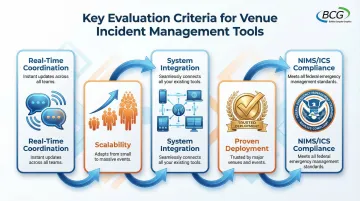
Selecting the right incident management platform can mean the difference between coordinated response and operational chaos during a venue emergency. These 15 tools were evaluated based on real-time alerting capabilities, mass communication features, integration options, mobile accessibility, NIMS/ICS compliance, and proven use in venue or event environments.
DisasterLAN (DLAN) by Buffalo Computer Graphics
Buffalo Computer Graphics is a veteran-owned engineering firm with 43 years of experience delivering incident management software. DisasterLAN is an all-hazards incident management system specifically designed for emergency operations and multi-agency coordination.
The platform has proven deployment in game day and event management scenarios across 300+ installations.
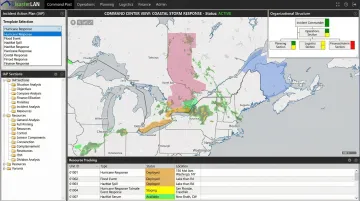
DLAN is the first and only incident management system evaluated by FEMA's NIMS STEP program as fully compliant with NIMS and ICS principles. This makes it ideal for venues that must coordinate with local, state, and federal agencies.
Key capabilities include:
- Template-guided Incident Action Plans that reduce preparation time from hours to minutes
- Flexible deployment options (cloud or on-premises)
- Bandwidth-based licensing that scales with organizational needs rather than per-seat costs
- GIS mapping and asset tracking
- Mobile responder app with offline capability
| Key Features | FEMA NIMS/ICS compliant, multi-agency coordination, template-guided IAPs, flexible deployment, mobile app with offline mode |
|---|---|
| Best For | Large venues, stadiums, arenas, and event operators requiring multi-agency coordination and compliance with federal emergency management standards |
| Notable Differentiator | Only FEMA-certified NIMS compliant system with 300+ deployments; built by engineers with deep emergency management expertise and ICS 400-level trained staff |
Everbridge
Everbridge is a leading critical event management platform with strong focus on mass notification and situational awareness, widely used by enterprises and public safety organizations.
The City of Tampa deployed Everbridge during the Super Bowl to coordinate public safety and disseminate critical information to thousands of attendees. Philadelphia used it to manage 1.5 million visitors during the Papal Visit.
Everbridge excels at location-based alerting, multi-channel communication (SMS, voice, email, app), and integrating threat intelligence feeds. The platform integrates with IPAWS for geographically targeted public alerts and provides specialized intelligence briefings for major events.
| Key Features | Location-based alerting, multi-channel notification, threat intelligence, IPAWS integration, global coverage |
|---|---|
| Best For | Large-scale events, multi-venue operations, organizations with distributed staff requiring global reach |
| Notable Differentiator | Extensive integration library and proven track record with Fortune 500 companies and government agencies; used in Super Bowl and major event coordination |
Noggin
Noggin is an integrated resilience workspace that combines incident management, emergency management, crisis communications, and business continuity into a single platform, designed for organizations seeking an all-in-one solution.
The platform features drag-and-drop workflow builder, pre-built templates for various incident types, real-time collaboration tools, and strong mapping/GIS capabilities for visualizing incidents and resources. Noggin's EOC support is specifically designed to align with ICS structures for planning and operations.
| Key Features | Integrated resilience workspace, workflow automation, GIS mapping, collaboration tools, EOC support |
|---|---|
| Best For | Venues seeking a comprehensive platform that unifies incident response, business continuity, and emergency operations |
| Notable Differentiator | Unified platform approach reduces need for multiple point solutions; strong focus on operational resilience across the entire incident lifecycle |
AlertMedia
AlertMedia is a user-friendly emergency communication platform designed for mid-sized organizations, offering two-way messaging and threat intelligence monitoring with minimal setup complexity.
The platform's simplicity and mobile-first interface make it accessible for venues without dedicated IT teams. Speed of deployment and the ability to quickly target messages to specific groups or locations are standout features.
Users consistently cite ease of use and the ability to quickly communicate with employees based on location.
| Key Features | Two-way messaging, threat intelligence feeds, mobile-first design, fast deployment, geolocation |
|---|---|
| Best For | Mid-sized venues, event organizers prioritizing ease of use and rapid implementation |
| Notable Differentiator | Intuitive interface requires minimal training; strong customer support and onboarding process |
OnSolve (formerly NC4)
OnSolve is a critical communications and incident management platform with AI-powered risk intelligence, serving 50% of Fortune 500 companies and widely used for corporate security and crisis response.
The platform's AI scans millions of data points to identify physical threats before they impact operations. It detects over 6.6 million critical events annually, including 260,000 physical threats.
OnSolve provides predictive analytics capabilities, geo-targeted alerting covering the top 100 U.S. cities and major airports, and a unified communication hub that coordinates response across departments and external agencies.
| Key Features | AI-based risk intelligence, predictive analytics, geo-targeted alerts, unified communication hub |
|---|---|
| Best For | Enterprise venues and event operators seeking predictive threat intelligence and analytics-driven decision support |
| Notable Differentiator | AI-powered risk scoring helps prioritize threats before they escalate; processes 6.6 million critical events annually |
Rave Mobile Safety
Rave Mobile Safety is a comprehensive emergency communication platform specifically designed for education, healthcare, and public venues, with strong integration to 911 systems and first responder coordination.
The platform's panic button functionality, direct connection to first responders, and visitor management integration translate well to venue environments. Proven deployment in schools and hospitals demonstrates reliability under pressure.
Rave Alert is FedRAMP-authorized and capable of sending over 4,000 SMS messages per second, with integration to public address systems and digital signage via the Common Alerting Protocol.
| Key Features | Panic button apps, 911 integration, visitor management, mass notification, CAP protocol support |
|---|---|
| Best For | Venues with high public traffic (convention centers, arenas) requiring direct first responder integration |
| Notable Differentiator | Direct integration with 911 and CAD systems accelerates emergency response; FedRAMP-authorized for government use |
Resolver
Resolver is a risk intelligence and incident management platform that provides a centralized hub for tracking incidents, conducting investigations, and managing compliance with strong reporting and analytics capabilities.
The platform uses AI to guide incident intake, asking follow-up questions to ensure complete data capture.
Resolver's customizable workflows connect risk management with incident response, providing a holistic view of operational threats. Complete audit trails support regulatory compliance.
| Key Features | Incident tracking, AI-guided intake, risk intelligence, customizable workflows, compliance management |
|---|---|
| Best For | Venues requiring detailed incident documentation, investigation capabilities, and regulatory compliance tracking |
| Notable Differentiator | Strong focus on post-incident analysis and continuous improvement through data-driven insights; conversational AI improves report quality |
RapidSOS
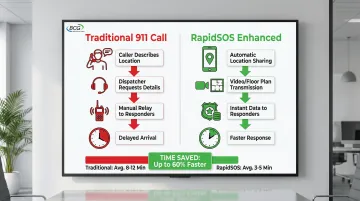
RapidSOS is an emergency response data platform that enhances 911 calls with real-time location and incident data, bridging the gap between private venues and public safety agencies.
The platform automatically shares critical information—including location, video feeds, floor plans, and sensor data—directly with 911 dispatchers. This bypasses manual relay delays that slow emergency response.
RapidSOS partners with Eagle Eye Networks to share live security camera footage with 911 during emergencies, significantly reducing response times.
| Key Features | Enhanced 911 data sharing, real-time location, video/floor plan sharing with first responders |
|---|---|
| Best For | Any venue seeking to improve coordination with local emergency services and reduce 911 response times |
| Notable Differentiator | Automatically enriches emergency calls with actionable data for first responders; proven to manage 600-700% spikes in call volume during major events |
Crises Control
Crises Control is a UK-based emergency notification and incident management platform focused on ease of use and cost efficiency, suitable for small to mid-sized venues seeking reliable communication without extensive complexity.
The platform provides rapid multi-channel alerting (SMS, email, voice), audit trail capabilities, and SOS panic button in mobile app. Integration with HR and security systems streamlines communication.
Location tracking allows users to be monitored during incidents when permissions are granted.
| Key Features | Multi-channel alerting, audit trails, task management, SOS panic button, location tracking |
|---|---|
| Best For | Small to mid-sized venues and event organizers seeking reliable, easy-to-use emergency communication |
| Notable Differentiator | Cost-effective solution without compromising core functionality; strong focus on user experience and rapid deployment |
IAPro (Blue Team)
IAPro is a comprehensive public safety and security incident management system designed for law enforcement and security departments, with strong case management features for detailed record-keeping.
The platform's capabilities for incident documentation, investigation tracking, evidence management, and compliance reporting make it suitable for venues with in-house security teams. Law enforcement-grade tracking and investigation tools include complete chain of custody.
| Key Features | Incident documentation, investigation management, evidence tracking, compliance reporting |
|---|---|
| Best For | Venues with dedicated security departments requiring law enforcement-grade incident tracking and investigation tools |
| Notable Differentiator | Built for public safety professionals with deep expertise in security operations and compliance; industry standard for professional standards tracking |
Incident IQ
Incident IQ is a workflow automation and service management platform that, while originally designed for K-12 education IT and facilities, can be adapted for incident tracking in venue operations with strong mobile-first design.
The platform's ticketing system, mobile app, asset tracking, and customizable workflows can be configured for security incidents, maintenance issues, and operational disruptions.
Workflow automation routes tickets and requests to streamline operations.
| Key Features | Workflow automation, mobile ticketing, asset tracking, customizable incident types, help desk |
|---|---|
| Best For | Venues seeking a flexible platform that can handle both operational and security incidents in one system |
| Notable Differentiator | Originally built for education sector with strong mobile-first design and offline capabilities; combines facilities and security management |
PagerDuty
PagerDuty is a widely-used incident response platform known for its powerful alerting, on-call scheduling, and integration capabilities, primarily in IT operations but adaptable for operational teams.
While IT-focused, its robust automation, escalation policies, and 700+ integrations make it suitable for venue operations teams managing both technical and physical incidents.
The mobile app allows responders to handle incidents and run automated actions from anywhere. Integration to collaboration tools like Slack and Microsoft Teams enhances coordination.
| Key Features | Advanced alerting, on-call scheduling, 700+ integrations, incident lifecycle management, mobile app |
|---|---|
| Best For | Venues with significant IT infrastructure or operations teams managing both technical and physical incidents |
| Notable Differentiator | Industry-leading integration ecosystem and automation capabilities; strong developer community and API support |
Juvare (WebEOC)
Juvare's WebEOC is a battle-tested emergency operations center platform used by government agencies, hospitals, and large organizations for coordinating multi-agency response to major incidents and disasters.
The platform provides real-time information sharing, customizable boards for different incident types, and proven deployment in major events and emergencies. WebEOC is highly configurable and supports complex multi-agency response with robust status boards and resource tracking, built to support ICS workflows and forms.
| Key Features | EOC management, multi-agency coordination, customizable boards, real-time data sharing, NIMS/ICS support |
|---|---|
| Best For | Major venues and events requiring EOC-level coordination with multiple external agencies |
| Notable Differentiator | Trusted by government agencies and used in major disaster responses; built for complex, multi-agency scenarios with federal interoperability |
Veoci
Veoci is a cloud-based emergency management and business continuity platform with strong workflow automation and mobile capabilities, designed for rapid deployment and flexibility.
The platform's flexible form builder and real-time dashboards allow teams to quickly stand up incident response structures without extensive configuration. This makes it ideal for dynamic event environments.
Mobile and offline capabilities maintain functionality during network disruptions, with automatic synchronization once connectivity is restored. GIS integration with Esri and ArcGIS provides bi-directional data exchange.
| Key Features | Cloud-based, workflow automation, customizable forms, real-time dashboards, mobile app, offline mode |
|---|---|
| Best For | Venues needing rapid deployment and flexibility to adapt workflows for different event types |
| Notable Differentiator | Highly customizable without requiring technical expertise; strong mobile and offline capabilities with automatic sync |
D4H Incident Management
D4H is a platform designed for emergency services and response teams, offering incident command, resource tracking, and personnel management capabilities aligned with ICS/NIMS standards.
The platform's equipment tracking, team scheduling, mapping features, and incident logging support coordinated response in complex scenarios. D4H automatically switches to single-user offline mode when connectivity is lost and syncs seamlessly upon reconnection, with customizable real-time status boards for situational awareness.
| Key Features | ICS/NIMS aligned, resource tracking, team scheduling, incident command, mapping, offline mode |
|---|---|
| Best For | Venues with dedicated emergency response teams or those coordinating closely with fire/EMS agencies |
| Notable Differentiator | Built specifically for emergency responders with deep understanding of ICS principles; designed to operate in low-connectivity environments |
Omnigo (formerly Acadis)
Omnigo is a public safety software suite offering incident reporting, case management, and security operations tools widely used in education, healthcare, and corporate settings across 800+ public safety customers.
The platform provides comprehensive incident documentation, compliance reporting, and integration with access control and video management systems. Omnigo centralizes evidence and case data to speed up investigation resolution while helping organizations meet regulatory requirements with accurate reporting and audit trails.
| Key Features | Incident reporting, case management, security operations, compliance tracking, system integrations |
|---|---|
| Best For | Venues requiring comprehensive security operations management with detailed incident documentation and compliance reporting |
| Notable Differentiator | Strong presence in education and healthcare with proven compliance and reporting capabilities; connects dispatch, records, and investigations |
How We Chose the Best Incident Management Tools for Venues
Venue incident management is unique because it requires coordination across large crowds, multiple agencies, and high-stakes environments where response speed is critical.
Common mistakes include choosing IT-focused tools that lack mass notification capabilities, ignoring offline functionality needed when cellular networks congest, or selecting platforms that can't integrate with 911/CAD systems.
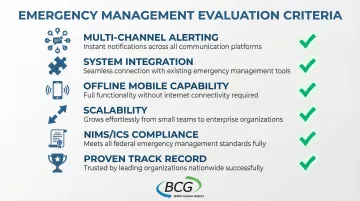
We evaluated platforms based on these criteria:
- Multi-channel alerting at scale (SMS, voice, email, app)—platforms like Rave Alert can send 4,000+ messages per second
- Integration with existing venue systems including access control, video management, and 911/CAD systems
- Offline-capable mobile apps that function during network congestion and sync when connectivity returns
- Capacity to handle events from small gatherings to mega-events with 80,000+ attendees
- NIMS/ICS compliance with standardized forms, unified command structures, and multi-agency coordination terminology
- Proven track record in venue, event, or public safety environments with documented success during actual incidents
Matching Tools to Venue Needs
The best tool depends on venue size, event types, existing infrastructure, and whether you need to coordinate with external agencies.
Larger venues hosting mega-events often benefit from FEMA NIMS-compliant platforms like DisasterLAN (DLAN by BCG—the first and only system fully evaluated by FEMA's NIMS STEP program) or enterprise solutions like Everbridge and WebEOC. Mid-sized venues may prioritize ease of use and rapid deployment found in AlertMedia or Crises Control.
Any venue should verify 911 integration capabilities and offline functionality during the evaluation process.
Conclusion
The right incident management tool for venues must balance rapid communication, situational awareness, and multi-agency coordination capabilities. The stakes are too high to rely on generic solutions not designed for the unique challenges of event environments—where crowd density, communication complexity, and the need for split-second decisions create conditions unlike any other operational setting.
Evaluate tools based on your specific venue requirements, existing infrastructure, and the types of incidents you're most likely to face.
Prioritize platforms with these capabilities:
- Proven deployment in similar venue or event settings
- Verified integration with your security systems
- Offline capabilities that function when cellular networks fail
- NIMS/ICS compliance if you coordinate with public safety agencies
- Documented scalability during peak operations
Venues requiring FEMA-compliant, multi-agency coordination may benefit from DisasterLAN by Buffalo Computer Graphics—certified by FEMA's NIMS STEP program with 43 years of experience serving emergency management and event operations across 300+ deployments.
Frequently Asked Questions
What are the best tools for incident management at venues and events?
The best tools combine real-time alerting, mass communication, and multi-agency coordination. DisasterLAN, Everbridge, and Noggin are designed for complex event environments, while mid-sized venues may prefer AlertMedia or Crises Control for easier implementation.
What is the best venue management software?
For incident management specifically, the best software depends on venue size. Larger venues benefit from comprehensive platforms like DisasterLAN or WebEOC that support EOC operations and multi-agency coordination, while mid-sized venues may prefer AlertMedia or Crises Control for rapid deployment.
What features should venue managers prioritize in incident management software?
Prioritize real-time multi-channel communication (SMS, voice, email, app), location-based alerting, integration with existing security systems (cameras, access control, 911/CAD), and mobile accessibility. Offline capability is essential when cellular networks congest during large events.
How does NIMS/ICS compliance benefit venue incident management?
NIMS/ICS provides a standardized framework for coordinating with external agencies like police, fire, and EMS. Compliance ensures seamless communication, clear command structure, common terminology, and standardized resource management during multi-agency venue incidents.
Can incident management tools integrate with existing venue security systems?
Yes, many platforms integrate with access control, video management, and 911/CAD systems. RapidSOS shares floor plans and video feeds with 911 telecommunicators, while Omnigo integrates with access control and VMS. Verify integration capabilities match your specific infrastructure.
What's the difference between incident management and emergency management for venues?
Incident management coordinates response to unplanned events (medical emergencies, disturbances, equipment failures) with emphasis on immediate resolution. Emergency management encompasses broader preparedness, mitigation, response, and recovery for large-scale disasters. Many platforms now combine both capabilities into unified solutions.