What is an incident management system?
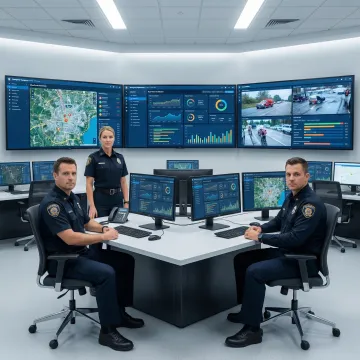
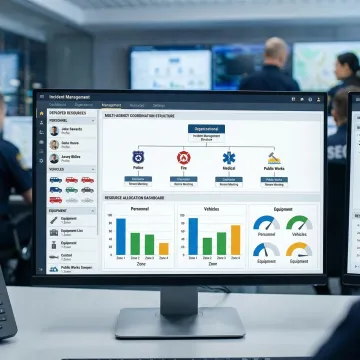
An incident management system is a comprehensive software platform that facilitates coordination, communication, and resource management during emergencies and critical incidents. It provides a centralized hub for tracking situational awareness, documenting response actions, managing personnel and equipment, and ensuring compliance with Incident Command System (ICS) protocols. BCG's system supports all phases of incident management from initial notification through recovery.
What are the 5 major components of an incident management system?
The five major components are: 1) Command and Control - establishing incident command structure and decision-making authority; 2) Resource Management - tracking personnel, equipment, and supplies; 3) Communications - facilitating information exchange among responders; 4) Situational Awareness - providing real-time incident status and intelligence; and 5) Documentation - recording all actions, decisions, and resource deployments for accountability and after-action analysis.
What are the 5 C's of incident management?
The 5 C's are: Command (establishing authority and incident objectives), Control (directing response operations and resource deployment), Communications (ensuring information flow among all stakeholders), Coordination (integrating efforts across agencies and jurisdictions), and Cooperation (fostering collaboration among response partners). BCG's platform is specifically designed to support each of these critical elements throughout the incident lifecycle.
How does BCG's system ensure NIMS compliance?
BCG's DisasterLAN (DLAN) is the first and only incident management system evaluated by FEMA's NIMS STEP program as fully compliant with NIMS and ICS principles. Our template-guided Incident Action Plans align with FEMA guidelines, our organizational structure tools enforce proper ICS hierarchy, and our communication protocols meet interoperability standards established by the National Response Framework.
What training is required to use BCG's incident management system?
BCG provides comprehensive role-based training delivered by experts certified through ICS 400. Training options include skill builder sessions for specific user roles, scenario-based exercises simulating real-world incidents, and ICS certification courses. All training emphasizes practical application in emergency management, healthcare, transportation, and academic settings. Our trainers bring field experience from Fire, EMS, and Emergency Management backgrounds.
Can BCG provide onsite support during major incidents?
Yes, BCG offers Activation Support services including deployable All Hazard Incident Management Teams (IMT), Incident Management Assistance Teams (IMAT), and Incident Management Support Teams (IMST). These teams can be deployed to EOCs, DOCs, incident command posts, or private sector operation centers to supplement your permanent staff and provide just-in-time training during large-scale emergency activations.
What support options are available after implementation?
BCG offers three tiered support packages: Silver (included with all editions, business day support), Gold (enhanced 24/7 patching support and custom service credits), and Platinum (priority hot fix delivery, multi-node support, and onsite hours). All packages include new releases, hot fixes, point patches, and access to our comprehensive electronic help system. 24/7 emergency phone support is available through our Plus Support add-on.
How quickly can BCG deploy an incident management system?
Deployment timelines vary based on system complexity, integration requirements, and organizational size. BCG's modular architecture and cloud deployment options enable rapid implementation, often within weeks for standard configurations. Our experienced engineering team conducts thorough needs assessments, handles system configuration, provides comprehensive training, and ensures smooth transition to operational status with minimal disruption to existing workflows.