Introduction
Emergency managers face a critical challenge during active incidents: rapidly classifying diverse threat types—from active shooters and medical emergencies to wildfires and hazmat situations—while coordinating multiple agencies under pressure. Research shows that automated classification and real-time data sharing can reduce response times by up to 50% when panic button alerts are connected with location data and CAD systems.
Yet inconsistent categorization practices continue to slow responses when seconds matter most.
Misclassification creates cascading problems: wrong resources dispatched, delayed notifications, and documentation gaps that compromise both response effectiveness and regulatory compliance. Machine learning models applied to 9-1-1 data demonstrate 93% accuracy in categorizing EMS incidents, yet inconsistent reporting practices across agencies still create dangerous variability.
The right incident management tool standardizes categorization, ensures NIMS compliance, and integrates seamlessly with your CAD and 911 infrastructure to eliminate the information silos that slow response when lives are on the line.
Key Takeaways
- Robust categorization reduces response times by 30-50% through automated classification
- Leading platforms include NIMS/ICS compliance, CAD/911 integration, customizable incident classification systems, and multi-agency coordination capabilities
- BCG's DisasterLAN is as the only FEMA NIMS STEP certified system, with bandwidth-based licensing and 300+ deployments nationwide
- Prioritize categorization flexibility, compliance certifications, integration with existing emergency infrastructure, and proven field performance
- Pricing ranges from $3,500 annually for small jurisdictions to $100,000+ for enterprise platforms
Overview of Incident Management Tools in Emergency Response
Incident management tools in the emergency response context are specialized systems that help emergency managers track, categorize, coordinate, and document responses to emergencies ranging from active threats and structure fires to natural disasters and hazmat incidents.
Unlike IT incident management platforms focused on system outages, these tools prioritize life-safety protocols, first responder coordination, and compliance with the National Incident Management System (NIMS) framework.
Proper incident categorization serves as the foundation for effective emergency response. When an incident is correctly classified by type, severity, and required resources, the right personnel and equipment are dispatched immediately, appropriate notification protocols activate automatically, and documentation aligns with NIMS/ICS requirements for multi-agency coordination and after-action reviews.
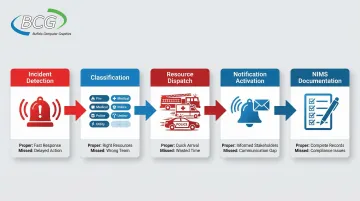
Poor categorization creates cascading failures—wrong resources arrive at scenes, notification gaps leave vulnerable populations unwarned, and compliance documentation becomes unreliable.
The market has seen significant adoption, with over 300 emergency agencies nationwide deploying specialized incident management platforms. This growth is driven by:
- Increased NIMS compliance requirements for federal funding
- School safety mandates like Alyssa's Law requiring panic button integration
- Hard lessons from major incidents where information silos slowed coordinated response
The 2020-2021 California wildfire seasons alone drove rapid adoption of evacuation-specific platforms, with Zonehaven securing contracts with 13 California counties covering 6.9 million residents in a single year.
The following section profiles the top 10 incident management tools that excel at incident categorization for emergency response operations, evaluated based on their proven performance in real-world emergencies.
Top 10 Best Incident Management Tools for Effective Categorization
These tools were evaluated based on categorization capabilities, NIMS/ICS compliance, integration with first responder systems (CAD, 911, GIS), deployment flexibility, and documented performance in actual emergency operations—not just feature checklists or vendor claims.
DisasterLAN (DLAN) by Buffalo Computer Graphics
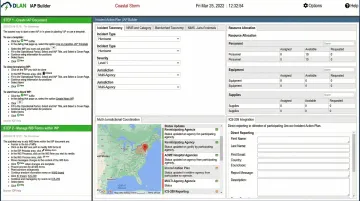
Buffalo Computer Graphics brings 43 years of emergency management software expertise to DisasterLAN, which evolved from a 2002 Erie County EOC pilot project into a comprehensive platform. Today, it's deployed in 300+ locations across the U.S., serving local, county, state, and tribal agencies.
DisasterLAN achieved distinction as the first and only incident management system evaluated by FEMA's NIMS STEP program as fully compliant with all 24 NIMS concepts and principles (October 2010). The platform delivers template-guided Incident Action Plans aligned with FEMA guidelines. Its bandwidth-based licensing eliminates per-seat costs—critical for multi-agency responses requiring unlimited user access. Flexible deployment options (cloud or on-premise) meet security requirements across different agencies.
| Category | Details |
|---|---|
| Key Categorization Features | Customizable incident taxonomies aligned with NIMS typing, ICS-209 integration for status reporting, multi-jurisdictional incident tracking with role-based access, resource typing and categorization with real-time allocation, configurable dropdown menus for categories/statuses/priorities |
| Compliance & Integration | FEMA NIMS STEP certified (only system with this designation), ISO/IEC 27001:2013 certified, integrates with CAD/911 systems and 15 mass notification channels (IPAWS, WEA, SMS, email, Reverse 911), ESRI-based GIS with support for multiple data formats, mobile app with offline store-and-forward capability |
| Pricing & Deployment | Bandwidth-based licensing model (not per-user), eliminating costs for temporary mutual aid personnel, cloud or on-premise deployment options, U.S.-based development and support team, contact for pricing |
Everbridge
Everbridge operates as a leading critical event management platform used by thousands of organizations globally, with particularly strong presence in corporate, government, and healthcare sectors where rapid notification combined with incident management is essential.
Everbridge combines mass notification with incident management in one comprehensive platform. It connects with 200+ business systems and delivers strong mobile capabilities for field coordination. The solution scales effectively for large enterprises managing incidents across multiple locations simultaneously.
| Category | Details |
|---|---|
| Key Categorization Features | Pre-built incident templates for common scenarios (weather, active threat, facility issues), customizable incident workflows with automated categorization rules, multi-channel notification routing based on incident type, automated categorization from threat intelligence feeds |
| Compliance & Integration | Integrates with 200+ business systems including HR platforms and Active Directory, supports NIMS framework workflows, mobile-first design with iOS/Android apps, real-time collaboration tools, IPAWS integration for public alerting |
| Pricing & Deployment | Enterprise pricing typically $10,000-$50,000+ annually depending on organization size, cloud-based SaaS model, tiered plans based on features and user count, includes threat intelligence monitoring |
WebEOC
WebEOC represents one of the most widely deployed emergency operations center platforms in North America, used by FEMA, state emergency management agencies, and major municipalities for crisis information management and multi-agency coordination.
Highly customizable boards and views adapt to any agency's workflow. Strong situational awareness features include GIS integration for mapping and visualization. WebEOC has proven performance in major disasters from hurricanes to wildfires, backed by an extensive user community that shares best practices and configuration templates.
| Category | Details |
|---|---|
| Key Categorization Features | Customizable incident boards with flexible categorization fields, status tracking across multiple simultaneous incidents, resource request and allocation tracking, GIS mapping integration for geographic incident visualization |
| Compliance & Integration | NIMS/ICS compliant workflows with native support for ICS forms (201, 209, 214), integrates with CAD and GIS systems (particularly ESRI ArcGIS), supports IPAWS for public alerting, extensive reporting capabilities for after-action documentation |
| Pricing & Deployment | License-based pricing with verified costs ranging from $10,900/year for core maintenance to $25,700 for hospital modules, on-premise or cloud deployment (WebEOC Nexus), requires configuration and training investment |
Veoci
Veoci has built its reputation as a cloud-based emergency management platform known for ease of use and rapid deployment, making it particularly popular with colleges, healthcare systems, and municipalities seeking quick implementation without extensive technical resources.
An intuitive interface requires minimal training, while implementation timelines often complete in under 30 days. The strong mobile app supports field operations effectively. A flexible form-based approach to incident documentation adapts to diverse organizational needs.
| Category | Details |
|---|---|
| Key Categorization Features | Drag-and-drop form builder for custom incident categories without coding, automated workflows triggered by incident type, real-time dashboards with configurable views, task assignment and tracking across teams |
| Compliance & Integration | NIMS-ready templates and workflows, integrates with Microsoft 365 and Google Workspace, mobile apps for iOS/Android with offline capability, API for custom integrations including CAD systems, GIS mapping support |
| Pricing & Deployment | Subscription-based pricing starting around $15,000-$30,000 annually for mid-size organizations, cloud-only deployment, includes implementation support and training, no per-user fees |
D4H Incident Management
D4H was purpose-built for emergency services, search and rescue teams, and fire departments, with an operational focus that prioritizes tactical emergency response over administrative functions.
Tactical emergency response features include personnel accountability tracking critical for firefighter safety. Strong resource and equipment management integrates with training modules. Offline capability supports remote operations in wilderness areas or disaster zones, while integrated equipment management tracks gear maintenance and readiness.
| Category | Details |
|---|---|
| Key Categorization Features | Incident type templates for fire, EMS, rescue, and hazmat scenarios, personnel accountability tracking with check-in/check-out, resource allocation by incident category with equipment tracking, timeline documentation for operational periods |
| Compliance & Integration | NIMS/ICS form generation including ICS-201, 209, and 214, offline mode for field operations without connectivity, integrates with Everbridge for mass notification, ESRI ArcGIS for mapping, extension packs with fillable ICS forms |
| Pricing & Deployment | Starts around $1,500-$3,000 per year for small teams, cloud-based with mobile apps, modular pricing for additional features like equipment management, suitable for volunteer and small professional departments |
Juvare EMSystem
Juvare EMSystem serves as the leading hospital emergency management and patient tracking system, used by 7,000+ healthcare facilities for disaster response coordination and surge capacity management during mass casualty incidents.
Healthcare emergency management capabilities include real-time bed availability tracking during mass casualty incidents. Patient decontamination tracking handles hazmat and chemical exposures. The system coordinates across hospital networks and regional healthcare coalitions while integrating with Electronic Health Record systems for patient data continuity.
| Category | Details |
|---|---|
| Key Categorization Features | Patient categorization by triage level (immediate, delayed, minor, expectant) and treatment needs, incident-specific tracking for mass casualty, hazmat, and infectious disease scenarios, resource status reporting for beds/ventilators/supplies, ambulance diversion management |
| Compliance & Integration | HICS (Hospital Incident Command System) aligned workflows, integrates with EHR systems for patient data, supports CMS emergency preparedness requirements, used by 3,500+ hospitals and 30+ public health agencies |
| Pricing & Deployment | Hospital/health system pricing typically $10,000-$50,000+ annually depending on facility size, cloud-based platform, regional network coordination features for healthcare coalitions |
Rave Mobile Safety
Rave Mobile Safety has become a comprehensive safety platform widely adopted by K-12 schools, colleges, and corporate campuses, known for panic button integration and direct coordination with 911 centers and first responders.
Active threat response features include panic button hardware options and direct integration with 911 centers and CAD systems. Critical data pushes to telecommunicators before they answer calls. Comprehensive anonymous tip reporting provides categorization and routing, while visitor management integration supports comprehensive campus security.
| Category | Details |
|---|---|
| Key Categorization Features | Pre-configured incident categories for school/campus threats (active shooter, medical emergency, fire, security concern), panic alert categorization with location data pushed to 911, anonymous tip categorization and routing to appropriate personnel, visitor management integration |
| Compliance & Integration | Alyssa's Law compliant with silent panic button requirements, integrates with 911 centers and CAD systems via RapidDeploy partnership, connects to access control and camera systems, CommandCentral Aware integration, achieved 50% response time reduction in Texas school district deployment |
| Pricing & Deployment | Per-user or per-building pricing typically $5,000-$25,000 annually depending on campus size, cloud-based with mobile apps, includes panic button hardware options, free trial available |
Zonehaven
Zonehaven specializes in evacuation and wildfire incident management, widely used by California counties and fire agencies for managing dynamic evacuation zones during wildfires, floods, and other disasters requiring population movement.
Purpose-built for evacuation management, Zonehaven offers pre-planned evacuation zones that activate dynamically. Public-facing evacuation status maps provide residents with real-time information. Integration with wildfire tracking systems and weather data supports decision-making, while population impact estimates help plan shelter and resource needs.
| Category | Details |
|---|---|
| Key Categorization Features | Evacuation zone categorization (warning, order, shelter-in-place) with one-click activation, incident type tracking for wildfire, flood, hazmat, and other evacuation scenarios, population impact estimates by zone, multi-incident management for simultaneous events |
| Compliance & Integration | NIMS-compliant workflows for evacuation management, integrates with CAD and mass notification systems, public information sharing portals with real-time status, GIS integration for mapping with data aggregation to FEMA geospatial resources |
| Pricing & Deployment | Agency/jurisdiction pricing (contact vendor for quotes), cloud-based platform, includes public-facing evacuation maps and status updates, contracted by 13 California counties covering 6.9 million residents |
AlertMedia
AlertMedia operates as an emergency communication platform with incident management features, popular with mid-sized businesses and organizations needing rapid notification capabilities without the complexity of enterprise-scale platforms.
A user-friendly interface allows non-technical staff to operate the system effectively. Fast deployment can be operational within hours rather than weeks. Strong templates address common business continuity scenarios, while competitive pricing makes it accessible for smaller organizations with limited budgets.
| Category | Details |
|---|---|
| Key Categorization Features | Pre-built incident templates for weather, active threat, IT outage, and facility issues, automated categorization based on threat intelligence feeds (weather monitoring, cyber alerts), multi-channel notification routing by category (SMS, email, voice, mobile app) |
| Compliance & Integration | Integrates with HR systems and Active Directory for contact management, mobile apps for iOS/Android, API access for custom integrations, threat intelligence integration for automated weather and cyber alerts |
| Pricing & Deployment | Starts around $3,000-$10,000 annually for small/mid-size organizations (under 500 employees), cloud-based SaaS, free trial available, per-user pricing tiers with volume discounts |
OnSolve
OnSolve (formerly NC4) serves as an enterprise-focused critical event management platform used by Fortune 500 companies, government agencies, and large healthcare systems requiring comprehensive risk intelligence and global reach.
Comprehensive risk intelligence integration includes AI-powered threat detection. Automated incident categorization draws from monitoring feeds covering weather, cyber, geopolitical, and other threat sources. Global reach supports multinational organizations, while strong business continuity features bridge emergency management with operational resilience.
| Category | Details |
|---|---|
| Key Categorization Features | AI-assisted incident categorization based on threat intelligence analysis, automated incident creation from monitoring feeds (weather, cyber, geopolitical), multi-dimensional categorization by threat type/severity/geographic impact, workflow automation based on category |
| Compliance & Integration | Enterprise integrations with ServiceNow, Microsoft Teams, and other business platforms, global threat intelligence feeds covering 180+ countries, supports NIMS and business continuity frameworks, fully compliant IPAWS origination tool operational in all five messaging methods |
| Pricing & Deployment | Enterprise pricing typically $25,000-$100,000+ annually depending on organization size and features, cloud-based platform, includes threat intelligence and monitoring services, verified small jurisdiction pricing at $3,500/year for CodeRED notification service |
How We Chose the Best Incident Management Tools
Our evaluation methodology focused on real-world performance in emergency scenarios, not vendor marketing claims or feature checklists.
Too many agencies make critical selection mistakes: choosing based on brand recognition rather than categorization capabilities, overlooking NIMS compliance requirements that become non-negotiable when federal funding or multi-agency coordination is involved, and ignoring integration needs with existing CAD/911 infrastructure that create information silos during actual responses.
Key evaluation factors included:
NIMS/ICS Compliance and Certification: Tools with documented compliance earned priority in our evaluation, particularly those with FEMA NIMS STEP certification (which only DisasterLAN has achieved). This compliance ensures standardized categorization, terminology, and reporting required for multi-agency coordination and federal funding eligibility.
Categorization Flexibility: Strong systems offer customizable taxonomies that adapt to your specific incident types. Rigid categories force your operations into a vendor's predefined structure. The best tools let you configure dropdown menus, incident types, and workflows to match your operational needs.
Integration with First Responder Systems: Proven integration with CAD, 911, mass notification, and GIS systems was essential. Integration prevents information silos that slow response—when panic button data flows directly to 911 maps, response times drop by 50% as documented in Texas school district deployments.
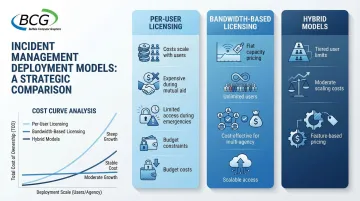
Deployment Options: Both cloud and on-premise options matter. Security-conscious agencies may require on-premise deployment while others prioritize rapid cloud implementation. Bandwidth-based licensing models (like DisasterLAN's) offer cost advantages over per-user models for agencies needing unlimited access during emergencies.
Proven Track Record: Tools with documented performance in actual emergencies earned preference over those with only demo credentials. WebEOC's use by FEMA and state agencies, Zonehaven's management of evacuations for 6.9 million California residents, and Rave's documented 50% response time reduction represent real-world validation.
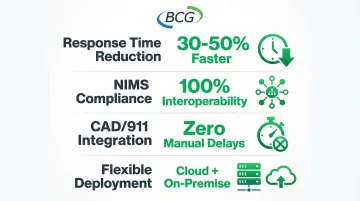
These factors tie directly to operational outcomes:
- Proper categorization reduces response times and improves resource allocation
- NIMS compliance ensures interoperability when mutual aid arrives from neighboring jurisdictions
- CAD/911 integration eliminates delays from manual information transfer
- Flexible deployment addresses both security requirements and implementation speed needs
Conclusion
Choosing the right incident management tool requires alignment between your organization's specific incident types, compliance requirements (NIMS/ICS for emergency management, Alyssa's Law for schools, HICS for hospitals), and existing technology infrastructure.
Brand reputation matters far less than proven categorization capabilities and integration with your first responder ecosystem—a well-known name that can't push panic button data to your CAD system or generate ICS forms won't improve your response.
Evaluate tools based on actual incident categorization workflows during demos:
- Request demonstrations showing how each system handles your specific incident types under time pressure
- Verify integration with your CAD/911 systems through technical demonstrations, not just feature presentations
- Review actual ICS form generation rather than accepting claims at face value
- Ask for references from agencies similar to yours and verify deployment numbers independently
Organizations seeking FEMA NIMS STEP certified incident management with proven performance in 300+ deployments may benefit from exploring DisasterLAN's template-guided approach and flexible deployment options.
BCG's bandwidth-based licensing eliminates per-user costs that escalate during multi-agency responses, while U.S.-based development and support ensure responsive assistance when you need it most. Contact Buffalo Computer Graphics at (716) 822-8668 or info@bcgeng.com to request a demo and discuss your specific categorization requirements.
Frequently Asked Questions
What is incident categorization in emergency management and why does it matter?
Incident categorization classifies emergencies by type (fire, medical, security, natural disaster, hazmat), severity, and response protocols. Proper categorization ensures the right resources are dispatched immediately, notification protocols activate automatically, and NIMS/ICS documentation supports multi-agency coordination.
How does NIMS compliance affect incident management tool selection?
NIMS compliance ensures tools support standardized categorization, terminology, and reporting for multi-agency coordination. FEMA-certified tools evaluated through NIMS STEP (only DisasterLAN holds this certification) provide interoperability assurance during federal response and are often required for funding eligibility.
What's the difference between incident management for emergencies versus IT incidents?
Emergency incident management addresses physical threats (active shooters, fires, natural disasters) requiring first responder coordination, while IT incident management handles technology outages and cybersecurity. Emergency tools prioritize NIMS compliance and life-safety protocols; IT tools focus on system monitoring.
What categorization features should schools and hospitals prioritize in incident management software?
Schools should prioritize active threat categorization, Alyssa's Law-compliant panic alerts with direct 911 integration, and law enforcement coordination. Hospitals need HICS-aligned categorization, patient tracking by triage level, and bed availability reporting for mass casualty coordination.
How do incident management tools integrate with 911 and CAD systems?
Leading platforms integrate with CAD and 911 centers through APIs that share incident location, category, and status in real-time. This provides first responders with situational awareness before arrival—for example, Rave's RapidDeploy integration reduces response times by 50%.
What is bandwidth-based licensing and how does it differ from per-user pricing?
Bandwidth-based licensing charges based on system capacity rather than user accounts, making it cost-effective for agencies needing unlimited access during emergencies. Per-user licensing charges for each login, which becomes expensive during major incidents requiring broad multi-agency access.